
By Olakunle Oke
President Bola Ahmed Tinubu has nominated Joseph Olasunkanmi Tegbe as Nigeria’s new Minister of Power, placing a seasoned private-sector expert at the helm of one of the country’s most troubled sectors.
His appointment, subject to Senate confirmation, follows the exit of Adebayo Adelabu, who resigned to pursue political ambitions.
Tegbe’s emergence comes at a critical time for Nigeria’s electricity industry, long plagued by inefficiency, underinvestment, and systemic bottlenecks.
With a background in finance, consulting, and infrastructure advisory, he is widely seen as a technocrat expected to bring discipline, innovation, and investor confidence to a sector desperate for reform.
Nigeria’s power sector, despite more than a decade since the 2013 power sector privatization, continues to underperform.
Although installed generation capacity exceeds 12,000 megawatts, actual output hovers between 3,500 and 5,000 megawatts—grossly inadequate for a population of over 200 million people.
More than 80 million Nigerians still lack reliable access to electricity, underscoring the scale of the challenge.
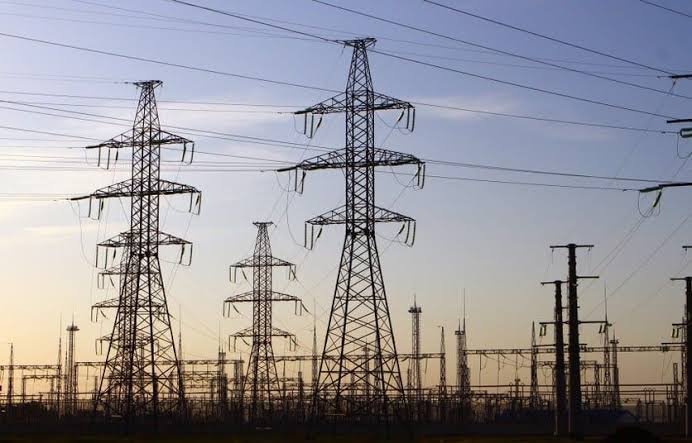
At the heart of the crisis is a fragile value chain involving generation companies (GenCos), the Transmission Company of Nigeria (TCN), and distribution companies (DisCos).
Each segment is burdened by structural weaknesses, from gas supply constraints affecting generation to an overstretched transmission grid prone to frequent collapse. Distribution companies, on their part, continue to grapple with poor metering, energy theft, and weak revenue collection.
A major hurdle awaiting Tegbe is the sector’s deepening liquidity crisis, with debts running into trillions of naira.
This financial strain has crippled the ability of operators to invest in infrastructure upgrades, creating a vicious cycle of poor service delivery and low revenue recovery.
READ ALSO:Net-Zero shipping: Oyetola advocates fairness, equity for developing countries
The politically sensitive issue of electricity tariffs further complicates the situation, as the push for cost-reflective pricing often clashes with public resistance and economic realities.
Tegbe’s private-sector pedigree could offer a pathway out of the impasse. His experience in investment strategy and public-private partnerships is expected to play a crucial role in unlocking much-needed capital and driving structural reforms.
Analysts say restoring investor confidence will be key to stabilizing the sector and improving performance across the value chain.
There is also growing optimism around the expansion of renewable energy solutions, particularly solar mini-grids, which are increasingly seen as viable alternatives to the overstretched national grid.
Agencies like the Rural Electrification Agency have made modest gains in this space, but scaling such solutions will require stronger policy backing and coordination.
For Tegbe, success will hinge not only on technical expertise but also on political will and institutional alignment.
His ability to navigate entrenched interests, enforce accountability, and implement long-overdue reforms will define his tenure.
As Nigeria seeks to power its economic growth, the new minister faces a stark reality: incremental fixes may no longer suffice. The sector demands bold, decisive action to break free from decades of stagnation.