Nigeria’s major investment challenge is not a shortage of capital but a lack of sufficient bankable and investable projects capable of attracting and absorbing available funds, experts at the 2026 Chief Executive Officer Forum of the UN Global Compact Network Nigeria have said.
The experts spoke at the closed-door forum held in Lagos under the theme, “Financing a Dignified Future: Aligning Capital, Policy and Business Action.”
The forum brought together chief executives, policymakers, financiers and development partners to examine how capital, public policy and private enterprise could be better aligned to drive economic productivity and sustainable growth.
The CEO and Executive Director of the UN Global Compact Network Nigeria, Naomi Nwokolo, urged business leaders to move beyond longstanding challenges and focus on practical solutions capable of improving competitiveness, supporting living wages and driving sustainable economic growth.
She said stronger collaboration among government, businesses and investors was required to turn available capital into productive economic activity.

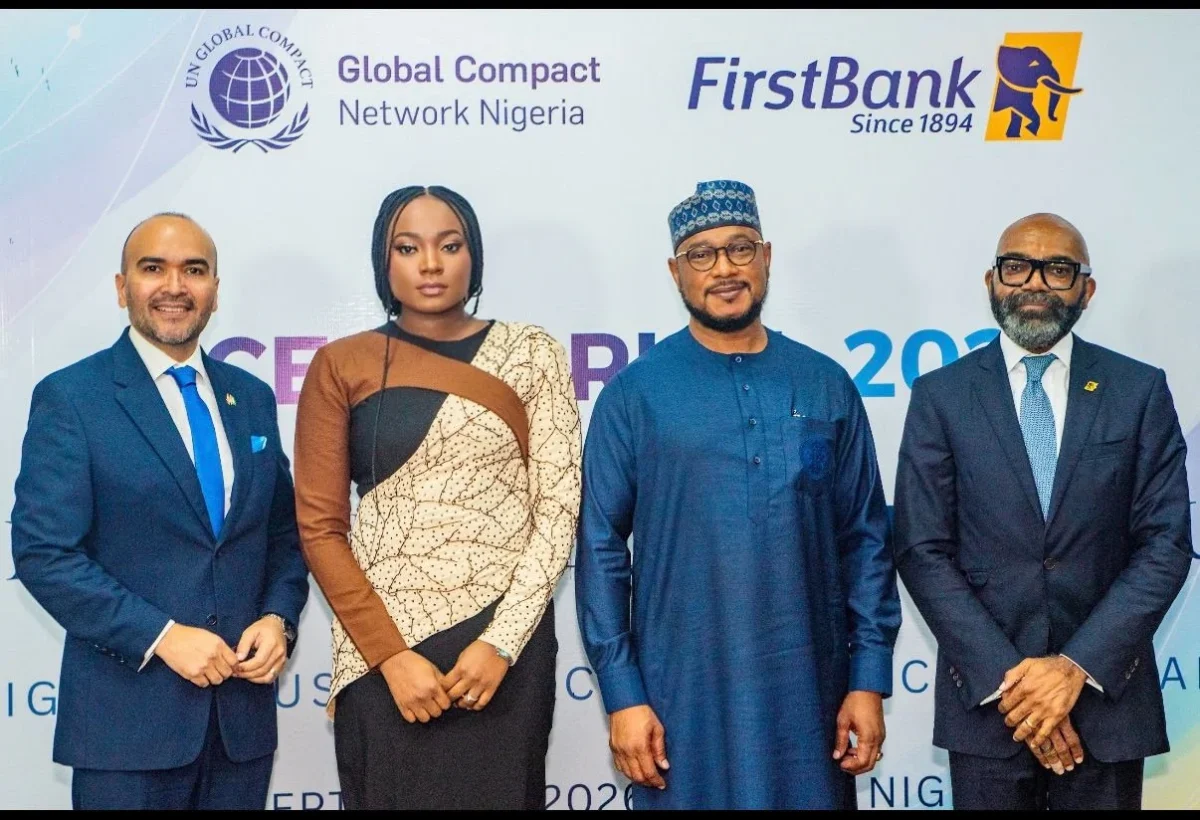
L-R: Deputy High Commissioner of Canada, Carlos Rojas-Arbulu; Executive Director/CEO, UN Global Compact Network Nigeria, Naomi Nwokolo; Executive Governor, Zamfara State, His Excellency Dauda Lawal; and Deputy Managing Director, FirstBank, Ini Ebong. Photo: The Organiser
The Director-General of the Northwest Governors Forum, Maryam Musa Yahaya, said state governments must take a more active role in engaging investors to address structural constraints affecting investment.
She identified inadequate power supply, regulatory bottlenecks and security concerns among the issues requiring targeted intervention by state governments.
Zamfara State Governor, Dauda Lawal, highlighted his administration’s 10-year development plan as an example of efforts to create a more predictable investment environment.
Lawal said the plan was focused on improving policy predictability, strengthening geophysical data and increasing the state’s internally generated revenue from about ₦90 million to approximately ₦45 billion monthly.
The Deputy Managing Director of First Bank of Nigeria, Ini Ebong, said financial inclusion should be treated as critical economic infrastructure rather than merely as a corporate social responsibility initiative.
He, however, noted that access to finance was only part of the challenge, stressing the need for small businesses to improve their record-keeping, governance and overall capacity to become financeable.
The Group Chief Operating Officer of Custodian Investment, Adeniyi Falade, disclosed that less than three per cent of the pension industry’s ₦32 trillion asset pool is currently allocated to infrastructure.
He attributed the low deployment partly to the shortage of properly structured and bankable infrastructure projects capable of meeting institutional investment requirements.
The development highlights the gap between the large pool of domestic institutional capital and the availability of projects with the structure, documentation and risk profile required to attract such funds.
The Managing Director of Sahara Power Group, Anthony Youdeowei, said closing Nigeria’s energy deficit would require substantial investment in electricity distribution infrastructure.
READ ALSO: Wike blasts APC governors as ‘politically lazy’ over Rainbow Coalition
He also stressed the importance of clear and predictable tariff frameworks to provide investors with sufficient visibility on returns.
Providing an international trade perspective, Canada’s Deputy High Commissioner to Nigeria, Carlos Rojas-Arbulú, said bilateral merchandise trade between Canada and Nigeria had surpassed $3 billion.
He noted, however, that international capital had become increasingly selective, with investors placing greater emphasis on transparent data, credible feasibility studies and properly structured projects rather than relying solely on a country’s overall market potential.
The discussions reinforced the need for Nigeria to improve project preparation, policy certainty and investment frameworks if it is to convert available domestic and international capital into productive investment.