By Seun Ibiyemi
Aviation security expert and Chief Executive Officer of Centurion Security Systems & Services Limited, Capt. John Ojikutu (rtd), has called for urgent scrutiny of revenue generation and remittance processes across key aviation agencies in Nigeria, alleging that significant leakages—estimated at about N300 billion—may be occurring within the system.
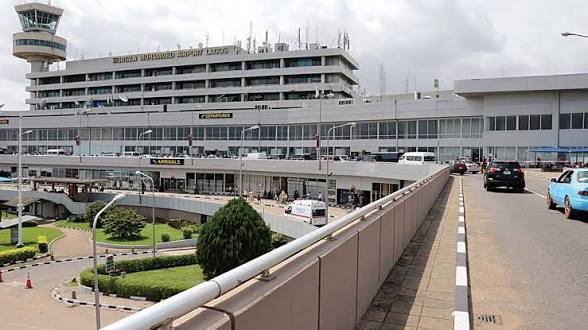
In a chat with BUSINESSPOINTER, Ojikutu, in a detailed breakdown of international aviation earnings, urged stakeholders to first properly examine the revenue streams of the Federal Airports Authority of Nigeria before making renewed calls for government intervention funds.
According to his analysis, international passenger traffic alone presents substantial earnings potential.
He estimated outbound passenger volume at about 2 million, arguing that at an average charge of $100 per passenger, this could generate about $200 million annually.
He further noted that approximately 10,000 international flights, each paying an average of $3,500 in landing, parking, and related charges, could yield an additional $35 million.
He therefore placed total estimated international revenue at about $235 million, which he converted to approximately N324 billion using an exchange rate of N1,380 to the dollar.
He insisted that this figure excludes other revenue sources such as domestic passenger charges, cargo operations, toll gates, car park revenues, land and office rentals, car hire services, and advertising.
Ojikutu challenged stakeholders to compare these estimates with reported earnings by FAAN in recent years, particularly 2024 and 2025, questioning whether actual remittances reflect the scale of operations in the sector.
He also extended his scrutiny to the Nigerian Civil Aviation Authority, focusing on the 5 per cent Ticket Sales Charge (TSC). He estimated that with about 2 million outbound passengers paying an average ticket price of N1 million, total ticket sales could reach N2 trillion, translating to about N100 billion in TSC revenue.
He questioned how much the NCAA has actually collected or reported, suggesting that discrepancies may point to systemic inefficiencies or leakages in revenue administration.
Ojikutu further argued that persistent financial gaps in the aviation sector may be contributing to recurring government borrowing and intervention funding, citing past bailouts including over N200 billion support for domestic airlines in 2012 and a N22 billion COVID-19 intervention in 2021.
He also raised concerns over outstanding debts allegedly owed by airlines to aviation agencies, estimated at about N36 billion in 2021 alone, noting that subsequent years remain unclear.
According to him, similar concerns have been raised in previous years, including 2006, 2012, and 2022, warning that failure to address them could indicate a recurring structural problem rather than isolated incidents.
READ ALSO:SIFAX Group shines as major sponsor at premiere of Nigeria Customs debut film ‘Novara’
He further referenced the Nigerian Airspace Management Agency as part of the broader system requiring review, stressing that aviation economic regulation under existing civil aviation rules may not be fully enforced.
Ojikutu urged lawmakers and relevant authorities to revisit past committee reports and public hearing documents, insisting that a comprehensive audit and enforcement of accountability measures are necessary to restore confidence in the sector.
He concluded that without addressing inefficiencies and leakages in revenue collection and remittance, calls for further government intervention funding may continue to mask deeper structural challenges within Nigeria’s aviation industry.