By Seun Ibiyemi
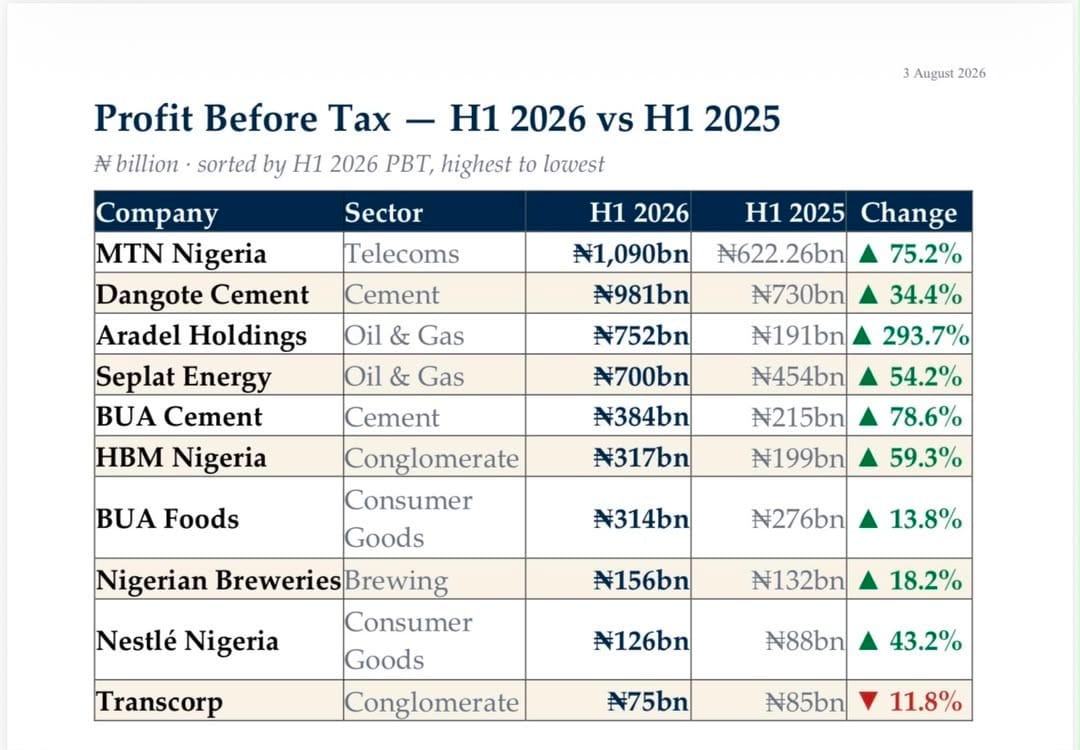
The Presidency has attributed the strong financial performance recorded by many companies listed on the Nigerian Exchange (NGX) in the first half of 2026 to the economic reforms introduced by President Bola Ahmed Tinubu since assuming office in 2023.
In a statement issued on Wednesday, the President’s Special Adviser on Information and Strategy, Bayo Onanuga, said the administration’s policies had created a more stable and predictable business environment, enabling companies to record stronger revenues and improved profitability.
According to the Presidency, the unification of the foreign exchange market has been one of the most impactful reforms, allowing businesses to operate under a market-driven exchange rate that improves price discovery and enables firms with significant foreign currency earnings to better reflect the value of their revenues.
The statement noted that export-oriented energy companies such as Aradel Holdings and Seplat Energy have particularly benefited from the policy due to their foreign currency-denominated earnings linked to international crude oil prices.
The Presidency also cited the government’s approval of major upstream oil and gas transactions, including the acquisition of Shell Petroleum Development Company (SPDC) assets by the Renaissance Africa Energy consortium—of which Aradel Holdings is a member—and Seplat Energy’s acquisition of Mobil Producing Nigeria Unlimited (MPNU) assets.
According to Onanuga, the approvals expanded the reserve base and production capacity of the companies while removing regulatory uncertainties that had delayed some of the country’s largest oil and gas transactions.
He said the policy also strengthened investor confidence and accelerated indigenous participation in Nigeria’s upstream petroleum sector.
The statement further highlighted the administration’s naira-for-crude policy, which it said has boosted domestic refining capacity and contributed to the emergence of the Dangote Refinery as a net exporter of Premium Motor Spirit (PMS) and aviation fuel.
The Presidency said manufacturing firms have also benefited from improved access to foreign exchange and greater exchange-rate predictability.
According to the statement, companies including Dangote Cement, BUA Cement and Lafarge Africa have been able to plan production more efficiently, procure imported raw materials with greater certainty and improve supply chain management under the unified foreign exchange regime.
READ ALSO:Osun drags EFCC to court over frozen state accounts
Onanuga added that the removal of petrol subsidy has strengthened government finances by improving fiscal capacity for infrastructure investment, enhancing revenue mobilisation and supporting macroeconomic stability.
He also pointed to tighter monetary management, banking sector recapitalisation and ongoing tax reforms as additional measures that have improved business confidence, strengthened liquidity and enhanced the financial system’s ability to support large-scale corporate financing.
According to the Presidency, the combined impact of the reforms has improved market efficiency, strengthened macroeconomic stability, increased investor confidence and facilitated more efficient capital allocation across key sectors of the economy.
The statement argued that the strong first-half earnings reported by many NGX-listed companies reflect the broader benefits of structural economic reforms rather than isolated improvements at individual firms.