By Seun Ibiyemi
President Bola Ahmed Tinubu has called for a stronger continental alliance among African countries to end the export of raw minerals and accelerate local processing, manufacturing and value addition across the continent.
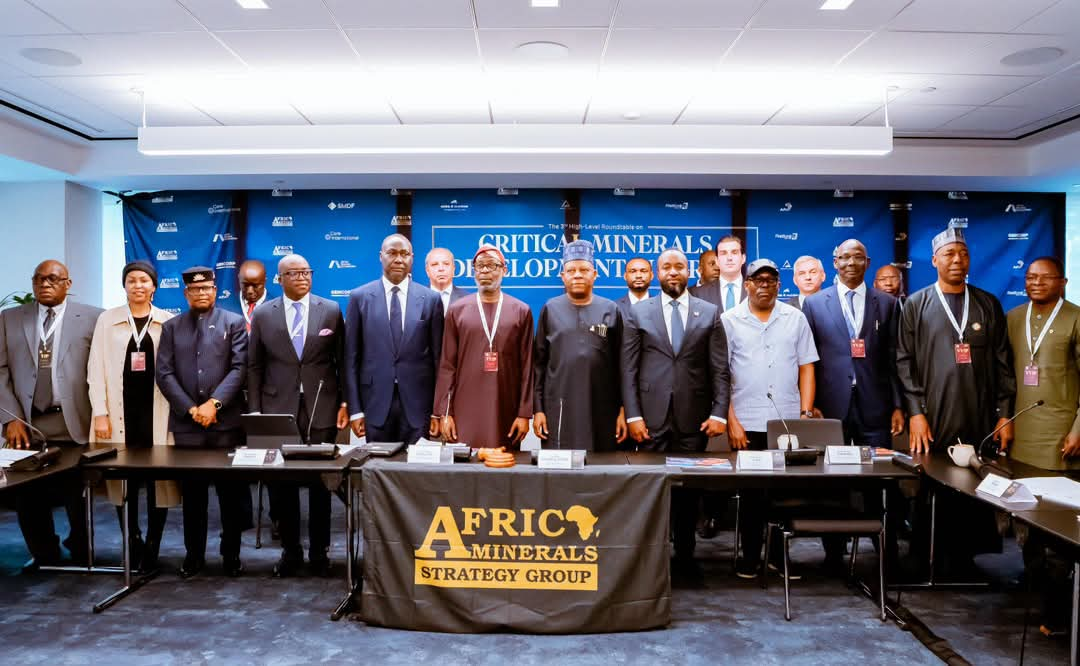
Tinubu made the call on Monday in New York, United States, while declaring open the Africa Minerals Strategy Group (AMSG) High-Level Roundtable on Critical Minerals Development in Africa, held on the sidelines of the 81st Session of the United Nations General Assembly.
The roundtable, themed, “From Resources to Wealth: Continental Cooperation for Mineral Value Addition, Data Sovereignty, Innovative Financing and Critical Minerals Security,” brought together African leaders, ministers and other stakeholders to discuss strategies for transforming the continent’s mineral resources into sustainable economic wealth.
In an address delivered by Vice President Kashim Shettima, Tinubu said Africa could not continue to export its mineral wealth while importing finished products manufactured from the same resources.
“For generations, Africa has furnished the materials of prosperity elsewhere. Our duty is to ensure that the future being fashioned from African minerals has room for African ambition,” he said.
The President noted that mineral-rich communities across Africa continue to suffer from inadequate infrastructure, limited employment opportunities and little participation in the wealth generated from their natural resources.
He said the growing global demand for clean energy, artificial intelligence and advanced manufacturing had made critical minerals such as cobalt, copper, lithium and rare earth elements increasingly important to global supply chains and economic security.
According to him, Africa’s response must focus on processing and refining minerals, producing batteries and components, developing African technologies and building competitive skills.
“The worth of a mine must be counted in the lives it improves,” Tinubu said, adding that jobs, industries, infrastructure, technology transfer, African enterprise participation and wealth retained across generations should be used to measure progress.
Tinubu warned that African countries would weaken their collective bargaining power if they competed against one another by offering lower royalties, weaker local-content requirements and excessive concessions to investors.
He said greater continental cooperation would provide African countries with larger markets, integrated industries, wider financing opportunities and stronger negotiating power.
“Fragmentation leaves us exporting raw materials and buying finished goods at a premium. Cooperation gives our markets scale, our industries integration, our financing reach and our negotiations authority,” he said.
The President also outlined measures Nigeria is pursuing in the mining sector, including requiring local value addition for new mining licences, strengthening geological data and investor access, organising artisanal miners into cooperatives, tackling illegal mining and improving regulatory accountability.
He said revenue from the mining sector rose from about N6 billion in 2023 to more than N38 billion in 2024 and between N68.1 billion and N70 billion in 2025.
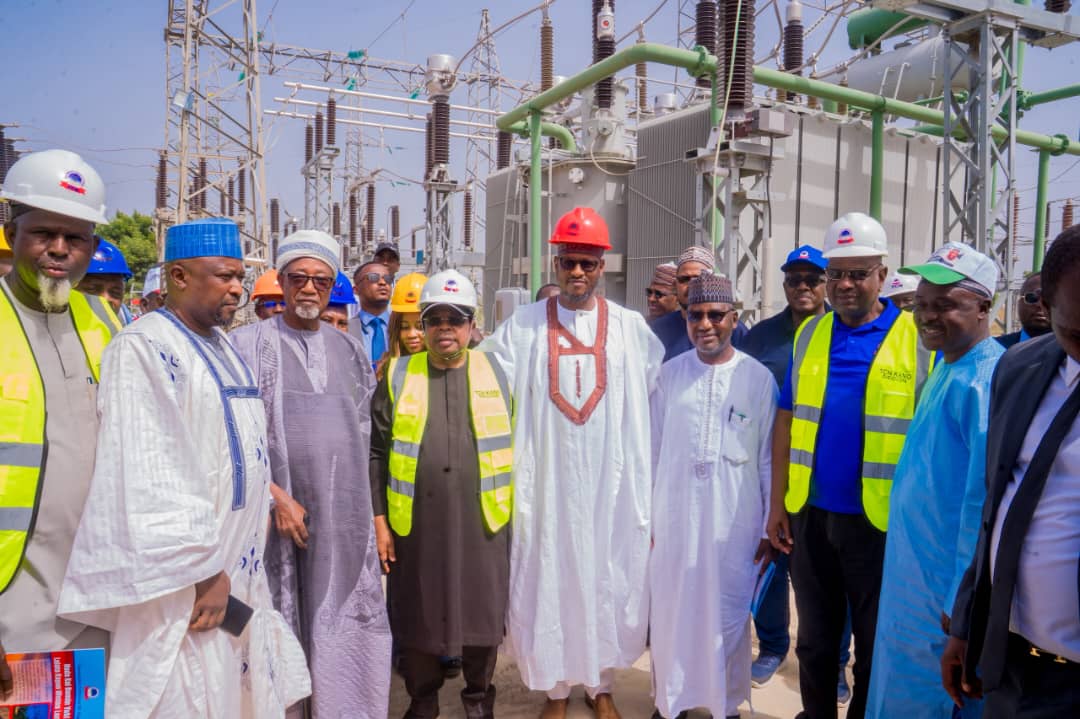
Tinubu also cited major foreign investment commitments and the development and commissioning of large-scale lithium processing capacity in Nasarawa State as evidence of the opportunities available in Nigeria’s mining sector.
He said Nigeria’s mining policy direction was designed to ensure that minerals extracted in the country support local industries, workers, skills development and host communities.
Earlier, Chairman of the AMSG and Minister of Solid Minerals Development, Dele Alake, said the group was proposing a Continental Integration and Economic Assurance Declaration (CIEAD) as a framework for developing unified critical and solid minerals value chains across Africa.
READ ALSO: NLC, civil servants demand N500,000 minimum wage, N500 petrol price
Alake said the proposed declaration would provide a continental architecture for cooperation in mineral development while strengthening financial and infrastructure partnerships.
He urged African countries that had yet to join the AMSG to become members, saying greater participation would improve coordination of efforts, ideas and resources.
According to him, Africa’s mineral ambitions cannot be achieved through policy implementation alone but require integrated partnerships covering financing, infrastructure and other critical areas.
Kenya’s Minister of Blue Economy and Maritime Affairs, Hassan Ali Joho, stressed the importance of domestic resource mobilisation in accelerating solid mineral development across Africa.
Joho also called for greater transparency and competitiveness among AMSG members, alongside increased alignment of licensing procedures while respecting the sovereignty of individual member states.
Representatives of the governments of Liberia, Chad and Tanzania, as well as other stakeholders, also contributed to discussions at the roundtable.
At the meeting, African countries adopted and signed the Continental Integration and Economic Assurance Declaration, with Tinubu calling for its implementation through a binding programme with clear timelines, financing arrangements and mechanisms for public accountability.
The President also urged African countries to speak with one voice in negotiations on critical minerals, stressing that partnerships with external investors should promote African industrial capacity rather than create new forms of dependency.