By Seun Ibiyemi
The Socio-Economic Rights and Accountability Project (SERAP) and the Nigerian Guild of Editors (NGE) have opposed the proposed Foreign Aids (Regulation, Transparency and Disclosure) Bill, 2026, warning that the legislation could undermine civic space, media freedom and democratic participation.
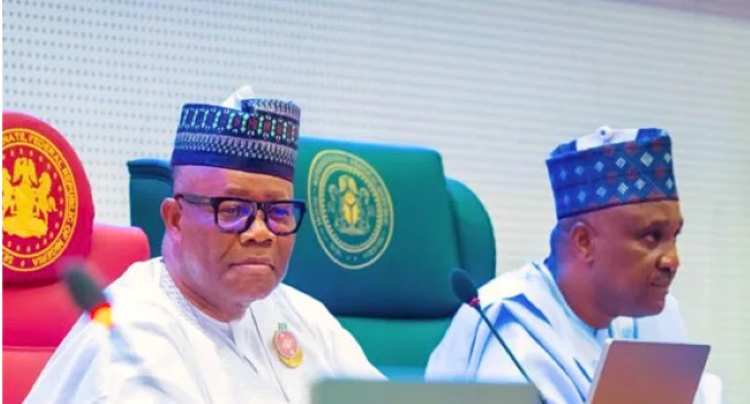
In a joint open letter dated August 29, the organisations urged Senate President Godswill Akpabio and Speaker of the House of Representatives, Tajudeen Abbas, to reject and withdraw the bill, describing it as unnecessary, unconstitutional and potentially intrusive.
The bill, sponsored by Senator Ibrahim Dankwambo (PDP, Gombe North), seeks to introduce compulsory registration and disclosure requirements for organisations and private entities receiving foreign assistance.
It also proposes the establishment of a Foreign Aid Regulatory Commission with powers to register beneficiaries, inspect records, compel disclosures, investigate activities and monitor the use of foreign funds.
SERAP and NGE argued that the proposed commission would create overlapping regulatory responsibilities, noting that institutions such as the Corporate Affairs Commission, Economic and Financial Crimes Commission, Special Control Unit against Money Laundering, Nigerian Financial Intelligence Unit and Federal Inland Revenue Service already oversee relevant areas.
The organisations questioned whether existing regulatory institutions had been shown to be incapable of performing their statutory duties.
They also expressed concern that the proposed commission’s powers to suspend approvals, revoke registrations and impose sanctions could expose civil society organisations, media outlets and private entities to excessive government supervision.
According to the groups, the legislation could particularly affect independent journalism, as several media and civic organisations rely on foreign grants to fund investigative reporting, fact-checking, journalist safety and other public-interest activities.
They further criticised provisions containing what they described as vague terms such as “foreign aid,” “national priorities” and “public interest,” arguing that the lack of clear definitions could create room for arbitrary enforcement.
The proposed penalties also came under criticism, with SERAP and NGE noting that affected organisations could face fines of at least N20 million, suspension or revocation of operating licences, while individuals could face fines and imprisonment for non-compliance.
The groups said the potential impact could extend beyond civil society and media organisations to religious, humanitarian and charitable bodies that receive financial assistance from abroad.
They also raised concerns about the timing of the bill ahead of the 2027 general elections, warning that additional restrictions on civic organisations and independent media could further narrow democratic space.
READ ALSO:Maritime agencies generate ₦1.83trn revenue as Oyetola unveils 3-year Blue Economy scorecard
SERAP and NGE argued that the bill conflicts with constitutional guarantees on freedom of expression and association under Sections 39 and 40 of the 1999 Constitution, as amended.
They also cited Nigeria’s obligations under the African Charter on Human and Peoples’ Rights and the International Covenant on Civil and Political Rights.
The organisations therefore called on the National Assembly to withdraw the bill and commit to protecting civic participation and press freedom.
They warned that if the legislation is passed despite their objections, they would consider legal action to challenge its constitutionality.
“Should the Bill be passed into law despite the serious constitutional and human rights concerns raised, SERAP and NGE will consider taking all appropriate legal action in the public interest,” the organisations said.