…Islamic finance can boost Nigeria’s financial inclusion, SME growth — Mughal
Open Space has unveiled its Ethical Finance proposition, combining Shariah-compliant financial structures with technology and artificial intelligence to expand access to capital, asset ownership and investment opportunities.
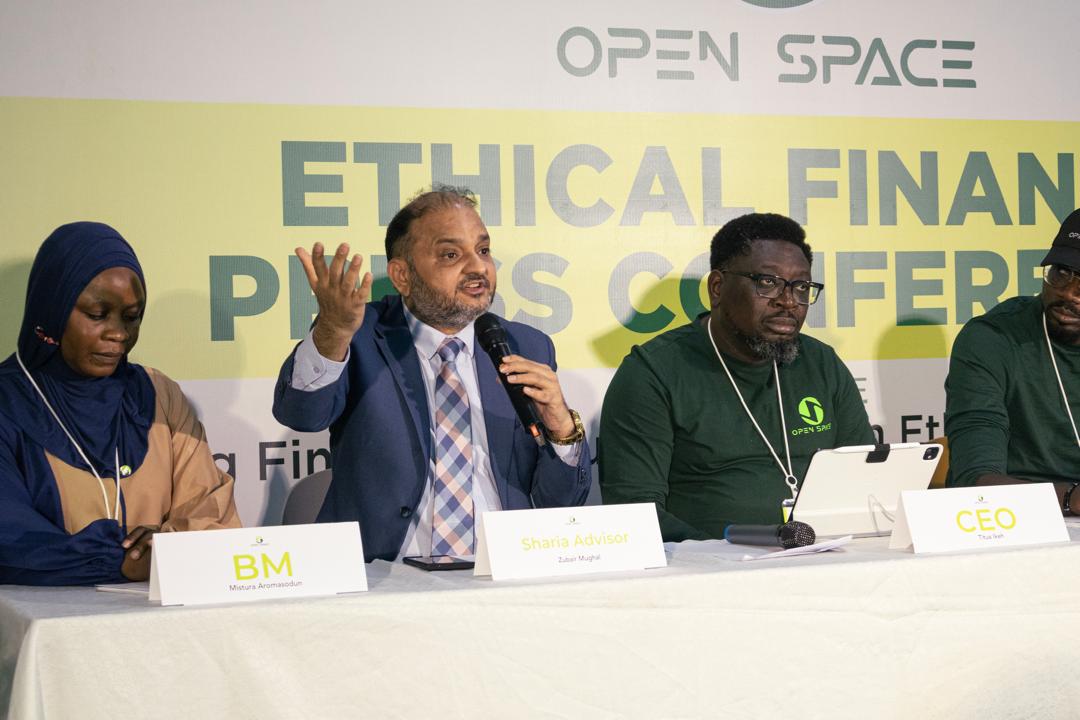
The Chief Executive Officer of Open Space, Titus Adakole Ike, disclosed this in his opening remarks at a press conference held in Abuja, on Tuesday, September 8, 2026.
Ike said the initiative was designed to make financial services more accessible, intelligent and relevant, particularly to individuals and businesses that have historically remained underserved by the formal financial system.
According to him, Open Space was established on the belief that financial innovation should go beyond transactions to help people make better decisions, create opportunities, build businesses, acquire assets and grow wealth.
He said the company’s vision was to empower humanity through disruptive innovation and trust capital to create shared prosperity.
“Financial innovation should ultimately serve a much bigger purpose than transactions. It should help people make better decisions, create opportunities, build businesses, acquire assets, grow wealth and improve the quality of their lives,” he said.
Ike explained that the Ethical Finance proposition would be built around principles of fairness, transparency, accountability and trust, rather than focusing solely on the amount of capital provided.
He said the initiative would connect financing and investment to identifiable economic activities, allowing customers to understand the underlying cost, transaction terms and how value was created.
The CEO said Open Space would offer a range of Shariah-compliant financial structures, including Murabaha, Ijarah, Diminishing Musharakah and Mudaraba.
He explained that under Murabaha, Open Space would acquire an asset requested by a customer and subsequently sell it at a disclosed cost plus an agreed profit, creating a trade-based transaction rather than an interest-bearing loan.
Under Ijarah, he said, the company would acquire an approved asset and lease it to the customer for an agreed rental over a specified period, enabling individuals and businesses to access productive assets without interest-based financing.
Ike added that Diminishing Musharakah would provide a partnership-based pathway to asset ownership, with the customer progressively purchasing Open Space’s ownership units until becoming the sole owner.
He said the structure would incorporate principles of partnership, risk sharing, transparency and sustainable wealth creation.
On Mudaraba, Ike explained that customers would provide capital while Open Space would act as the investment manager, deploying funds into Shariah-compliant investment opportunities and sharing realised profits according to a pre-agreed ratio.
He said the model was designed around actual economic activity rather than predetermined interest payments, with funds potentially deployed into areas such as SME financing, trade finance, leasing and other asset-backed activities.
He further emphasised the importance of transparent disclosure of profit-sharing arrangements, investment activities, reserve mechanisms and the performance of underlying asset pools.
Ike said technology would play a critical role in making Ethical Finance more accessible and seamlessly integrated into customers’ everyday financial lives.
He explained that Open Space was not introducing Ethical Finance as a standalone product but as part of an intelligent financial ecosystem that combines financial services and artificial intelligence tools.
“Our Mudaraba architecture, for example, is designed around a single customer financial core, with a unified customer information file, wallet engine, investment pool engine and multiple financial behaviours layered on top,” he said.
READ ALSO: NIMASA moves to revamp maritime training curriculum, boost global recognition for seafarers
According to him, the integration would make it easier for customers to navigate financial services while enabling Open Space to deliver its human-centred financial goals at scale.
He stressed that the role of technology was not to replace the human purpose of finance but to make that purpose easier to deliver.
The CEO said the company’s ambition was to make financial inclusion more meaningful by enabling people to participate more fully in economic life.
He said the Ijarah product, for instance, was designed to serve individuals, SMEs, professionals, transport operators, healthcare providers, educational institutions, agricultural enterprises and renewable energy users seeking access to productive assets.
Ike noted that Africa and other emerging markets had enormous human and economic potential, but millions of people continued to face barriers to capital, ownership, investment and wealth creation.
He said Open Space would therefore focus on designing financial solutions for entrepreneurs, families, businesses and individuals seeking to build assets, expand productive capacity and access services consistent with their values.
Ike said the launch marked the beginning of Open Space’s commitment to exploring financial models that were more inclusive, transparent and responsive to the realities of the people it served.
He said the company would continue to use technology to remove barriers, artificial intelligence to improve financial experiences and innovation to create products that respond to real human needs.
“Our ambition is to build an institution that people can trust not simply because of the products it offers, but because of the principles by which it operates,” he said.
The CEO added that the success of Open Space would not be measured solely by the number of products on its platform, but by the lives positively influenced, businesses supported, assets acquired and opportunities created.
He invited customers, partners, businesses, investors, communities and the wider financial ecosystem to participate in a new conversation about finance—one in which innovation, responsibility, technology, humanity and shared prosperity are connected.
Also speaking at the Shariah Advisor, Zubair Mughal said that Islamic and ethical finance has the potential to become a major driver of financial inclusion, small and medium-sized enterprise (SME) growth and sustainable economic development in Nigeria
Mughal made the submission in a presentation titled “Islamic/Ethical Finance: A Promising Pathway for Nigeria’s Inclusive Financial Future,” at an OpenSpace press conference held in Abuja.
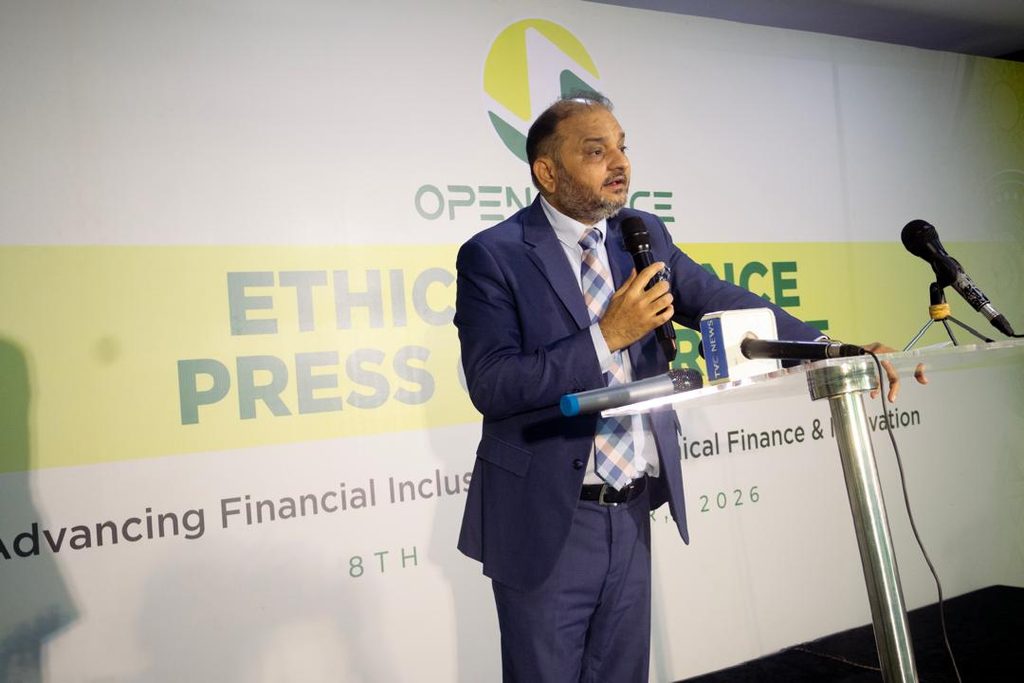
He said the global Islamic finance industry had evolved from a faith-based alternative into an important component of the international financial system, with growing appeal beyond Muslim communities.
According to him, the industry’s emphasis on asset backing, transparency, fairness, risk-sharing, ethical investment and avoidance of exploitative practices aligns with the increasing global demand for responsible and inclusive financial systems.
Citing the ICD-LSEG Islamic Finance Development Report 2025, Mughal said global Islamic finance assets rose to approximately $5.96 trillion in 2024, bringing the industry closer to the $6 trillion threshold.
He said the development of Islamic and ethical finance across Africa could provide alternative funding for infrastructure, agriculture, housing, trade and SMEs while addressing the continent’s large unbanked and underbanked population.
Mughal noted that many individuals and businesses remain outside the formal financial system because of the cost of financial services, limited access, trust issues or preference for ethical and non-interest-based financing.
He said products including Sukuk, Takaful, Murabaha, Ijarah, Musharakah, microfinance and fintech-enabled financing could help bridge the gap by linking financial services to real economic activities.
Mughal described Nigeria as one of Africa’s most important markets for Islamic and ethical finance, citing the country’s large population, entrepreneurial base, developing capital market and growing demand for non-interest financial products.
He said the sector had recorded gradual development through the activities of regulators, banks, Takaful operators, microfinance institutions, capital market participants, professional bodies and fintech companies.
He particularly highlighted the OpenSpace initiative, describing it as a promising development in Nigeria’s financial ecosystem.
According to him, OpenSpace Financial Services is developing a technology-driven platform offering ethical and non-interest financial products based on fairness, transparency, risk-sharing and asset-backed transactions.
He said its Murabaha product could enable customers to acquire goods, equipment, inventory, vehicles and other business assets through transparent, interest-free financing arrangements.
He added that Ijarah could provide individuals and SMEs with access to productive assets through leasing, while diminishing Musharakah could support gradual ownership of homes, properties and business assets.
“These structures are important because they move financing away from pure cash lending and toward asset-backed economic activity,” Mughal said.
Mughal also disclosed that OpenSpace planned to obtain the necessary regulatory licences to operate in the non-interest financial services space, with a potential Sukuk issuance being considered as a subsequent step.
He said such a development could create new investment opportunities for institutional and individual investors while supporting business expansion and deepening Nigeria’s non-interest capital market.
According to him, a fintech-driven Sukuk issuance could broaden asset-backed investment opportunities and encourage more Nigerians to participate in transparent and ethically structured investments.
Mughal also stressed the importance of international experience, noting OpenSpace’s exposure to financial markets in Türkiye, Canada, the United Kingdom, Pakistan and the United Arab Emirates.
He said lessons from these markets could help strengthen Nigeria’s Islamic and ethical finance ecosystem while allowing local operators to adapt international best practices to domestic realities.
He further highlighted the contribution of Altitude CIBE, led by its Chief Executive Officer, Muhammad Zubair, to the sector through advisory services, training, research, consultancy and professional capacity building.
Mughal said Nigeria had established a foundation for Islamic and ethical finance, but stressed that the next phase should focus on scaling the industry through credible Shariah governance, appropriate regulation, technology, investor education and practical financial products.
He expressed optimism that Islamic and ethical finance could play a greater role in expanding financial inclusion, supporting SMEs, attracting investment and promoting long-term economic development in Nigeria.