By Seun Ibiyemi
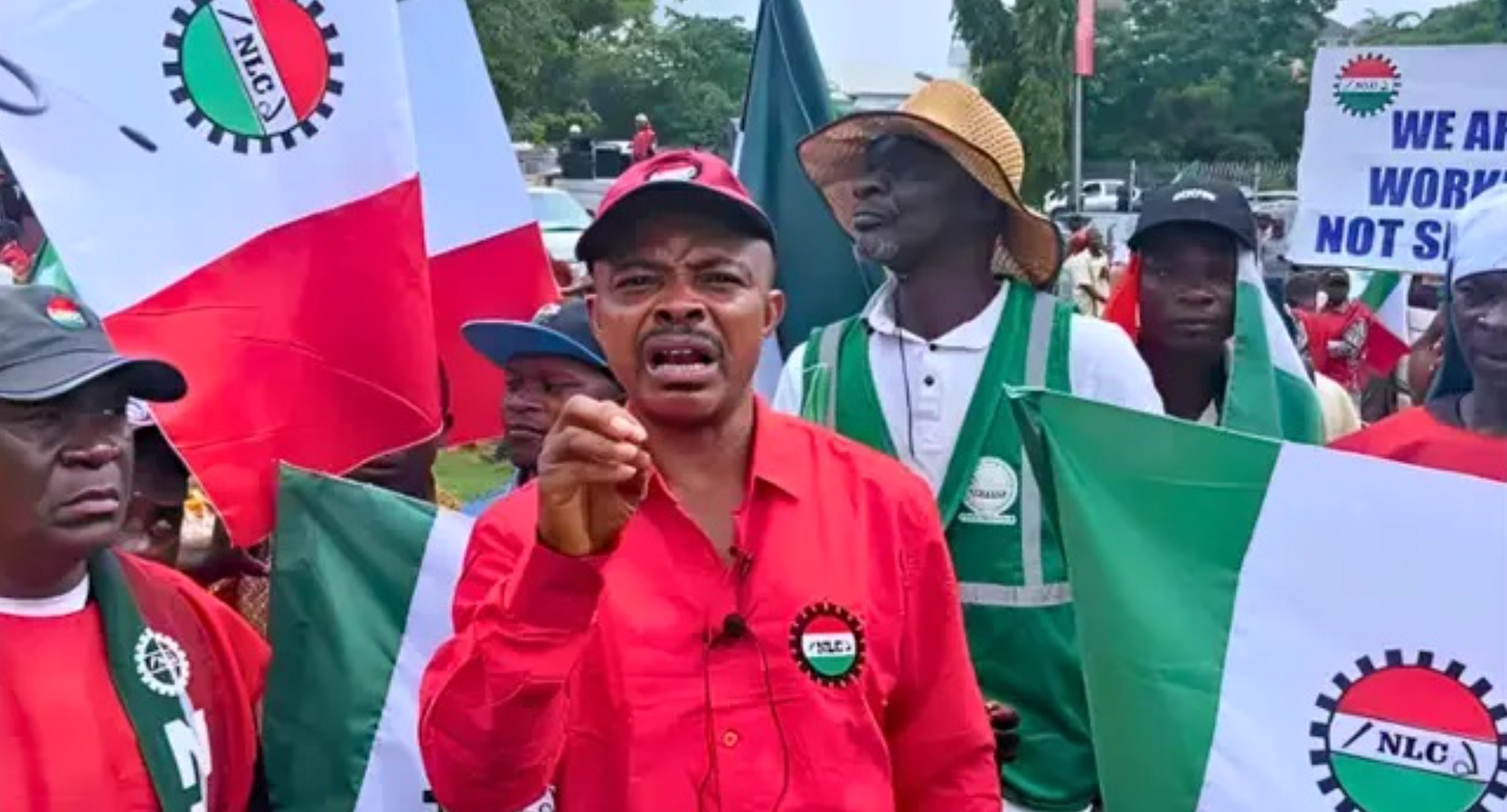
The Nigeria Labour Congress (NLC) has given the Federal Government a two-week ultimatum to reduce petrol prices, commence renegotiation of the national minimum wage and implement outstanding agreements with organised labour, warning that failure to meet its demands could trigger further action.
The ultimatum, which commenced on Friday, October 9, 2026, was issued at the end of a joint meeting of the National Executive Council (NEC) and Central Working Committee (CWC) of the Congress in Abuja.
The labour centre, in a communique signed by its President, Joe Ajaero, said the government must take urgent steps to address the worsening economic hardship confronting Nigerian workers and the wider population.
The Congress argued that the current national minimum wage had been eroded by the depreciation of the naira and rising living costs, leaving many workers struggling to afford essential needs, including food, housing, healthcare, transportation and education.
It therefore demanded that the Federal Government commence negotiations for a new national minimum wage before the end of October, insisting that the revised wage must reflect prevailing economic realities and guarantee workers a decent standard of living.
A major component of the ultimatum is the demand for an immediate reduction in the pump price of petrol to the level prevailing when the current national minimum wage was signed into law in 2024.
According to the Congress, persistently high petrol prices have driven up transportation costs, food prices and the cost of other essential commodities, worsening the financial pressure on households.
The NLC said reducing petrol prices would help cushion the impact of the energy crisis on workers and other Nigerians, pointing to measures adopted by other countries to mitigate similar economic pressures.
The demand places fuel pricing and wage negotiations at the centre of the latest confrontation between organised labour and the Federal Government over the cost of living.
The Congress also called for the implementation of tax relief for workers previously agreed with the government, alongside the immediate payment of outstanding wage awards intended to cushion the effects of rising living costs.
Beyond petrol pricing and minimum wage negotiations, the NLC directed the Federal Government to implement the Terms of Settlement reached with the Joint Health Sector Unions and Assembly of Healthcare Professionals (JOHESU) on February 5, 2026.
It also demanded that the government address additional demands that have emerged since the agreement was reached.
The Congress further called for the implementation of outstanding demands of the Joint Public Sector Negotiating Council (JPSNC), warning that failure to meet the requirements within the two-week period would compel it to take further steps as directed by its relevant organs.
The demands broaden the scope of the dispute beyond wage adjustments to include unresolved labour agreements and conditions affecting public sector employees.
READ ALSO:Marwa hails security agencies over rescue of 20 corps members
Explaining its position, the NLC expressed concern that the combination of rising prices, currency depreciation and inadequate wages had weakened workers’ purchasing power.
It said the current wage structure could no longer adequately meet the basic needs of many Nigerian workers, urging the government to adopt urgent measures to ease the burden on households.
The Congress maintained that wage negotiations must reflect the realities of the economy rather than leave workers with earnings that have lost value amid rising living costs.
The demand for a new minimum wage also raises questions about the balance between workers’ welfare, government finances and the capacity of employers to absorb higher labour costs.
The labour centre called on its affiliate unions and progressive allies to remain on high alert and prepare for further action should the Federal Government fail to meet its demands within the stipulated period.
It reaffirmed its commitment to resisting policies it considers detrimental to workers and the wider population, insisting that organised labour would continue to push for improved living and working conditions.
The two-week deadline sets the stage for renewed engagement between the government and organised labour over petrol prices, wage adjustments, tax relief and the implementation of outstanding agreements.
With the ultimatum beginning on October 9, the Federal Government has until approximately October 23 to respond to the demands, although the NLC has yet to specify the precise form of action it would take if the deadline expires without a satisfactory resolution.