By Seun Ibiyemi
The National Agency for Food and Drug Administration and Control (NAFDAC) has destroyed seized fake, substandard and unwholesome products valued at ₦2.6 billion in Rivers State and uncovered a suspected counterfeit alcoholic drinks production facility worth over ₦500 million in Aba, Abia State.
The twin operations form part of the agency’s intensified enforcement efforts to rid the Nigerian market of counterfeit medicines, unsafe food products, illicit alcoholic beverages and other potentially harmful substances.
The destruction exercise took place at the Eneka Dump Site in Port Harcourt, where NAFDAC officials disposed of products intercepted and seized by the Nigeria Customs Service (NCS) at the Onne Seaport between 2025 and 2026.
The destroyed items included medicines, expired tomato products, cookies, chemicals and other goods considered unsuitable for human consumption or use.
Speaking at the exercise on behalf of NAFDAC Director-General, Prof. Mojisola Adeyeye, the Chairman of the Federal Task Force on Counterfeit, Fake Drugs and Unwholesome Processed Foods in Nigeria, Dr Martins Iluyomade, said the operation demonstrated the agency’s determination to protect public health and eliminate dangerous products from circulation.
Iluyomade, who is also NAFDAC’s Director of Investigation and Enforcement, disclosed that the destruction marked the first phase of a broader exercise, with additional confiscated products scheduled for destruction in the coming days.
“The destruction marks the first phase of the exercise; more seized products would be destroyed in the coming days,” he said.
Adeyeye commended the Nigeria Customs Service for its collaboration with NAFDAC, describing the partnership as instrumental to the successful handover and destruction of the seized consignments.
According to her, the process leading to the destruction began in 2025, following efforts by both agencies to strengthen cooperation against the importation of prohibited, counterfeit and substandard products.
She said the agencies had signed memoranda of understanding to enhance their joint enforcement activities and improve their capacity to tackle the movement of unsafe goods into the country.
Although the process encountered some challenges, Adeyeye noted that the commitment of personnel from both organisations helped overcome the obstacles and made the destruction exercise possible.
She also commended the Comptroller-General of Customs for facilitating the collaboration that resulted in the transfer and disposal of the seized products.
The exercise underscores the role of inter-agency cooperation in intercepting illicit imports and preventing potentially dangerous products from entering the domestic supply chain.
While the destruction of the ₦2.6 billion worth of seized products represents a significant enforcement milestone, the development also raises questions about the channels through which prohibited and substandard goods enter the country.
Beyond the disposal of confiscated consignments, sustained surveillance at seaports and other entry points, stricter screening of imported goods, improved intelligence-sharing and the prosecution of offenders remain essential to curbing the trade.
The planned destruction of additional seized products is expected to extend the agencies’ enforcement drive. However, the long-term impact will depend on their ability to identify supply networks, deter repeat offenders and prevent unsafe goods from reaching markets, pharmacies and households.
The partnership between NAFDAC and Customs will therefore be critical not only in intercepting illicit consignments but also in strengthening preventive controls against the importation of products that threaten public health.
In a separate operation in Aba, Abia State, NAFDAC officials uncovered a suspected counterfeit alcoholic drinks production facility at No. 25 Omenazu Street, following what the agency described as credible intelligence.
The facility was reportedly operating under unhygienic conditions, raising concerns about the safety and quality of the alcoholic beverages allegedly being produced there.
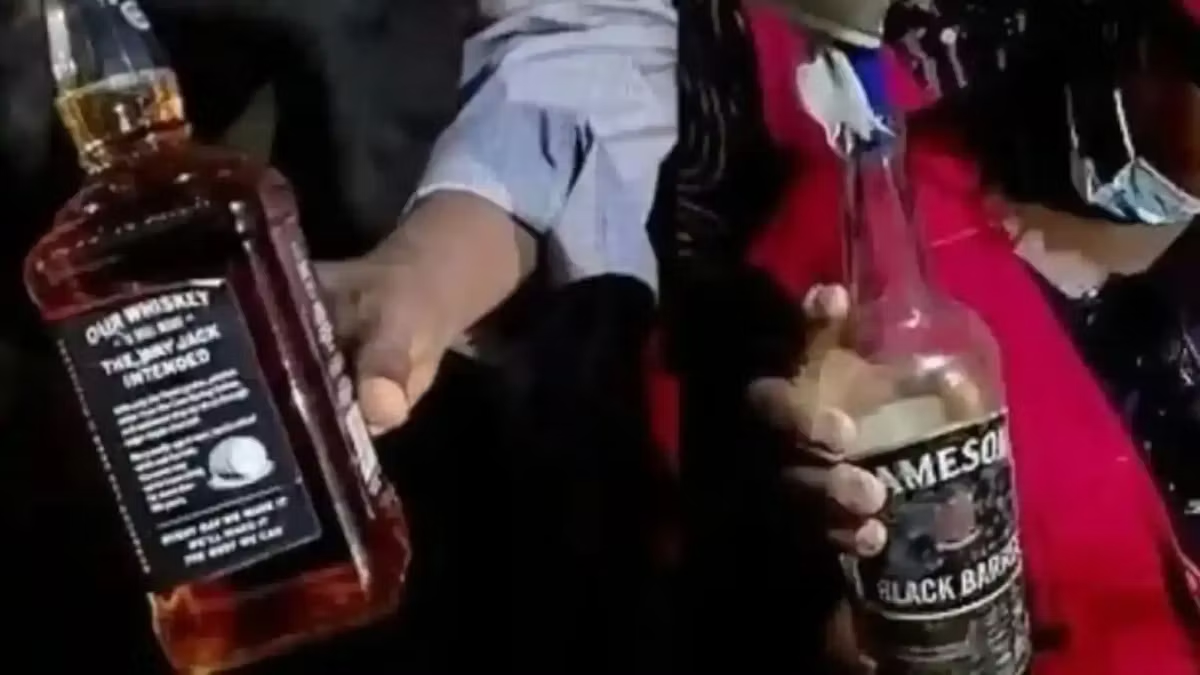
The suspected operator reportedly fled when the enforcement team arrived, abandoning a vehicle containing counterfeit packaging materials bearing the names of Sir Edwards Scotch Whisky and Scottish Hills Whisky.
Officials also discovered empty bottles and a drum containing approximately 200 litres of liquid.
A search of the premises reportedly revealed counterfeit packaging materials, bottle caps, sealing machines, empty bottles, cartons, tanks containing various liquid concoctions and dirty sieves suspected to have been used in the production process.
Plastic buckets and 200-litre drums containing ethanol, as well as tree bark immersed in ethanol, were also found at the facility.
The discoveries raised concerns about the possible production and packaging of alcoholic beverages under conditions that could compromise product quality and consumer safety.
NAFDAC estimated the value of the equipment, materials and components found at the facility at more than ₦500 million.
The suspected operator’s reported escape and the discovery of materials bearing established whisky brand names underscore the need for further investigation to establish the source of the materials, the nature of the liquids and whether the products had already entered the market.
READ ALSO:FG approves ₦4.04bn for 600 former Nigeria Airways workers
Counterfeit alcoholic beverages and substandard medicines pose significant public health risks, particularly when consumers cannot distinguish genuine products from imitations.
The discovery in Aba highlights the importance of intelligence-led enforcement, verification of product registration, traceability of packaging materials and effective monitoring of facilities suspected of manufacturing illicit products.
For consumers, the operations reinforce the need to purchase medicines, food products and alcoholic beverages from reputable outlets and to remain alert to suspicious packaging, labelling and product quality.
NAFDAC’s latest actions demonstrate a continued push to remove unsafe products from circulation. The broader test, however, will be whether the agency and its enforcement partners can translate seizures and destruction exercises into stronger border controls, effective prosecution and a sustained reduction in counterfeit products across the country.