By Seun Ibiyemi
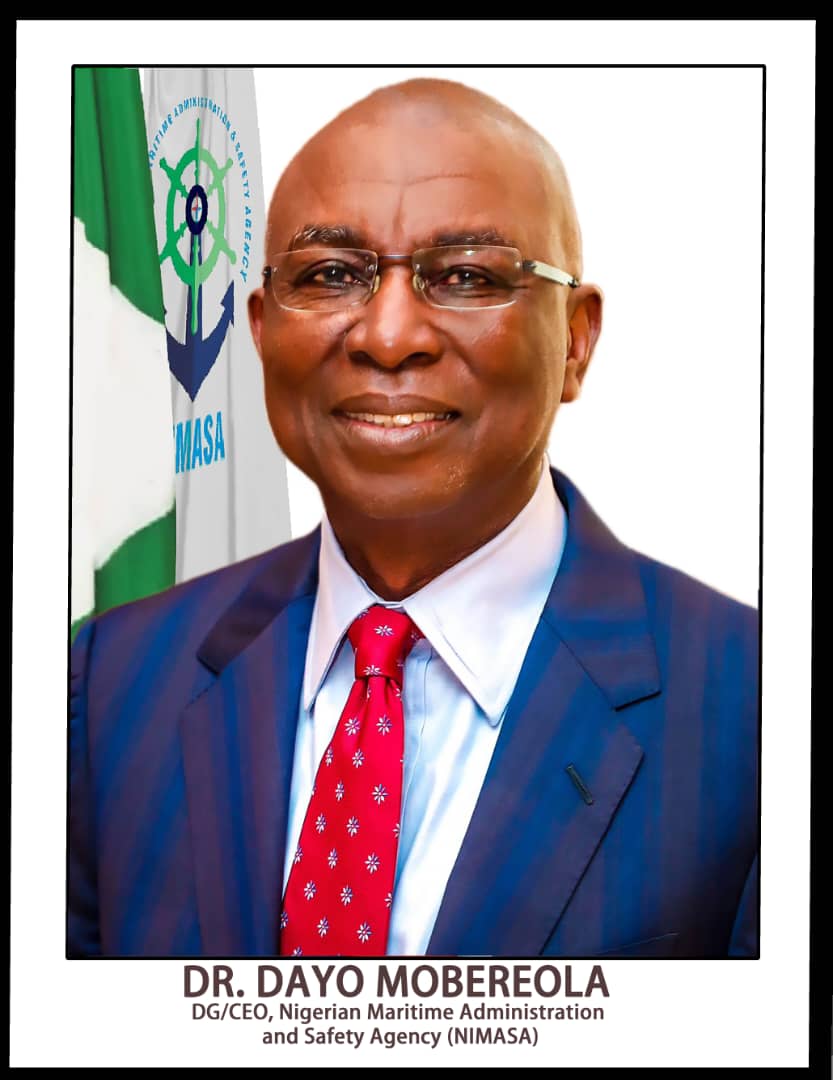
In the often turbulent waters of Nigeria’s maritime sector, few names have commanded as much attention and respect as Dr. Dayo Mobereola, Director-General of the Nigerian Maritime Administration and Safety Agency (NIMASA), who assumed office on June 15, 2023.
Since his appointment, Mobereola has consistently demonstrated a unique blend of vision, diligence, and strategic foresight qualities that have begun to redefine the agency’s role in national and regional maritime affairs.NIMASA, Nigerian Air Force commit to improved partnership
His leadership style is characterized by pragmatism and results-driven initiatives. Under his stewardship, NIMASA has intensified efforts to curb illegal maritime activities, streamline regulatory processes, and promote sustainable shipping practices.
His policies have not only improved compliance among shipping operators but have also strengthened Nigeria’s reputation in international maritime circles.
One of his most notable achievements has been advancing the agency’s digital transformation agenda. By integrating modern technology into vessel tracking, licensing, and compliance monitoring, Mobereola has made significant progress in reducing the bureaucratic bottlenecks that historically plagued the sector.
Within his first year in office, he implemented decisive reforms that have reshaped NIMASA’s trajectory, aligning its priorities with President Bola Tinubu’s Renewed Hope Agenda. As a technocrat rather than a career politician, he has actively promoted Public-Private Partnerships (PPP) to drive maritime infrastructural development.
Mobereola has consistently emphasized leveraging private sector investment to build a more resilient and competitive maritime industry. Under his administration, NIMASA has strengthened cabotage enforcement, ensuring that Nigerian-owned vessels benefit from coastal trade opportunities.NIMASA gets new maritime guard commander
The agency has also intensified monitoring to ensure compliance with local content laws, reinforcing its role as a key driver of Nigeria’s maritime economy.
In maritime security, NIMASA has strengthened collaboration with security agencies to curb illicit activities in Nigerian waters.
A landmark initiative is the agency’s partnership with the National Drug Law Enforcement Agency (NDLEA) to combat drug trafficking.
This collaboration has enhanced surveillance and intelligence-sharing mechanisms, improving maritime security and ensuring safer waterways for legitimate trade and investment.
Mobereola has also elevated NIMASA’s international profile. Through the Minister of Marine and Blue Economy, he facilitated President Tinubu’s signing of six instruments of accession to the International Maritime Organization (IMO).
This milestone updated Nigeria’s record with the global maritime body, aligning the country’s governance framework with international standards.
Industry stakeholders report that these reforms have increased operational efficiency, enhanced transparency, and boosted investor confidence in Nigeria’s maritime sector.
Maritime security has long been a concern, particularly in the Gulf of Guinea. Under Mobereola’s leadership, NIMASA has intensified collaborations with international partners to combat piracy, illegal bunkering, and other criminal activities.
Notably, the agency has recorded a significant reduction in piracy incidents within Nigerian waters, a milestone that had eluded previous administrations despite substantial investments.
This achievement has strengthened Nigeria’s standing in global maritime security forums.
Beyond enforcement and policy reforms, Mobereola has demonstrated a strong commitment to human capital development.
Under his guidance, NIMASA has initiated training programmes, workshops, and scholarship opportunities aimed at equipping the next generation of maritime professionals with globally competitive skills.
Observers describe this approach as forward-thinking, emphasizing sustainability through knowledge and capacity building.
Public Perception and Challenges
While Mobereola’s tenure has earned widespread commendation, challenges persist.
The maritime sector continues to grapple with infrastructural deficits, regulatory complexities, and external pressures from global shipping dynamics.
Nevertheless, his proactive stakeholder engagement and solution-oriented leadership style suggest resilience in navigating these obstacles.
Recently, the Federal Government commended him for his strategic role in securing Nigeria’s election into Category C of the Council of the International Maritime Organization for the 2026–2027 biennium.
In a commendation letter, the Minister of Marine and Blue Economy, Adegboyega Oyetola, highlighted Mobereola’s pivotal role in Nigeria’s victory at the IMO Council elections held in London.
The minister noted that his strategic engagement with IMO Member States and effective campaign coordination were instrumental to Nigeria’s success.
“Your strategic engagement with IMO Member States and effective campaign management were pivotal to Nigeria’s resounding success at the election, showcasing your steadfast dedication and unrelenting commitment to advancing Nigeria’s maritime interests,” the minister stated.
Oyetola further praised the NIMASA Director-General for effectively projecting Nigeria’s maritime reforms to the international community, thereby strengthening the country’s standing in global maritime governance.NIMASA mulls expansion of deep blue project
A Blueprint for Maritime Transformation
As Nigeria navigates the complexities of maritime trade, security, and technological innovation, Mobereola’s leadership offers a blueprint for transformative progress.
His strides, both literal and figurative reflect a commitment to elevating NIMASA from a regulatory body into a catalyst for national economic growth and maritime excellence.
In a sector often criticized for inertia, Mobereola’s tenure stands as a testament to what visionary leadership, strategic planning, and unwavering commitment can achieve. He is, without doubt, a man making excellent strides.