By Seun Ibiyemi
Nigeria’s Minister of Marine and Blue Economy, Dr Adegboyega Oyetola, has been appointed by the Gulf of Guinea Commission (GGC) to lead the development of a comprehensive regional policy on marine and blue economy, in a move aimed at strengthening maritime security, sustainable ocean governance and economic cooperation among member states.
The appointment follows Nigeria’s development and approval of its first National Policy on Marine and Blue Economy, which the Commission said had provided a model for its proposed regional framework.
The Deputy Executive Secretary of the GGC, Ambassador Obinna Agbugba, disclosed this during a meeting with Oyetola in his office on Tuesday, speaking on behalf of the Commission’s Executive Secretary, José Mba Abeso.
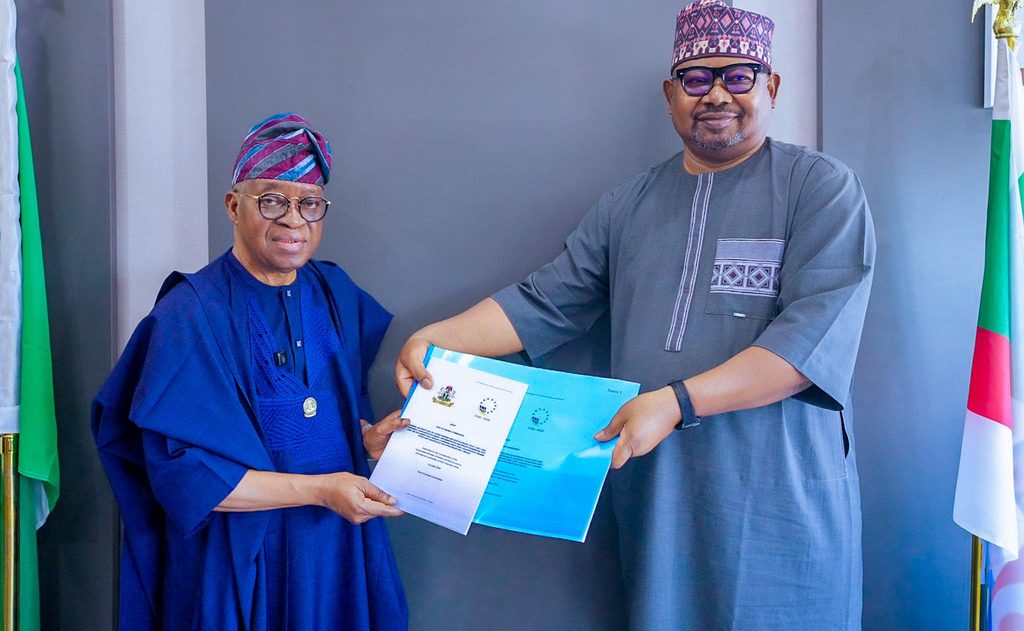
Minister of Marine and Blue Economy, Dr. Adegboyega Oyetola (left), presenting the draft Strategic Plan for the Development and Operationalisation of the Gulf of Guinea Commission Policy on Marine and Blue Economy (2026–2030), and a draft Policy Framework and Strategy Template, both developed by the Federal Ministry of Marine and Blue Economy, to the Deputy Executive Secretary of the Gulf of Guinea Commission, Ambassador Obinna Agbugba (right), during a meeting in the Minister’s office in Abuja, on Tuesday.
Agbugba commended the minister for spearheading Nigeria’s marine and blue economy policy and his achievements in advancing the sector, describing the initiative as an important foundation for the Commission’s regional ambition.
He also expressed appreciation to Oyetola for accepting the assignment, expressing confidence that his experience would help drive the development of a framework capable of addressing shared maritime challenges and unlocking the region’s ocean-based economic potential.
In his response, Oyetola thanked the Commission for the confidence reposed in him, describing the assignment as an opportunity to deepen regional cooperation and promote the sustainable management of shared marine resources.
The minister disclosed that the Commission had formally requested his leadership in developing the policy through a letter dated May 7, 2026.
“Nigeria remains fully committed to the ideals of regional cooperation, sustainable ocean governance and the shared prosperity of the Gulf of Guinea,” Oyetola said.
Following the Commission’s request, Oyetola established a multi-stakeholder committee comprising technical departments of the Federal Ministry of Marine and Blue Economy and its Department of Planning, Research and Statistics to coordinate the policy development process.
The committee has produced two foundational documents: a draft Strategic Plan for the Development and Operationalisation of a Gulf of Guinea Commission Policy on Marine and Blue Economy covering 2026 to 2030, and a draft Policy Framework and Strategy Template.
According to the minister, the documents outline the proposed strategic priorities, objectives, actions, key performance indicators, implementation timelines, lead agencies and funding considerations required to guide the regional initiative.
He said the drafts were developed with consideration for the 2025 Yaoundé Declaration and the work of the United Nations Task Force supporting the GGC’s 2026 Work Plan.
Oyetola added that the documents were aligned with the Commission’s objectives and specific requests.
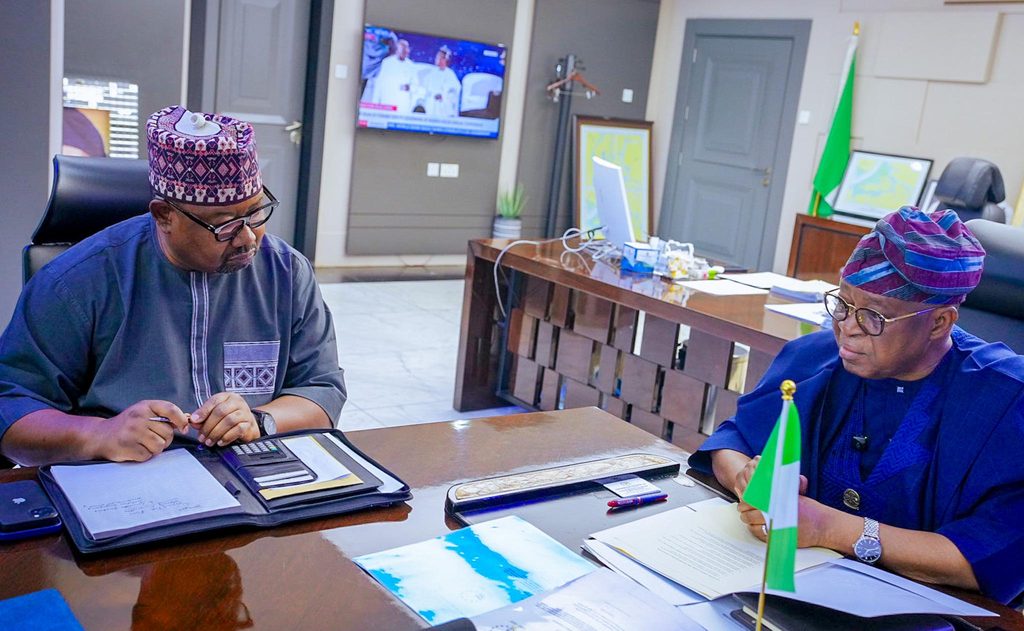
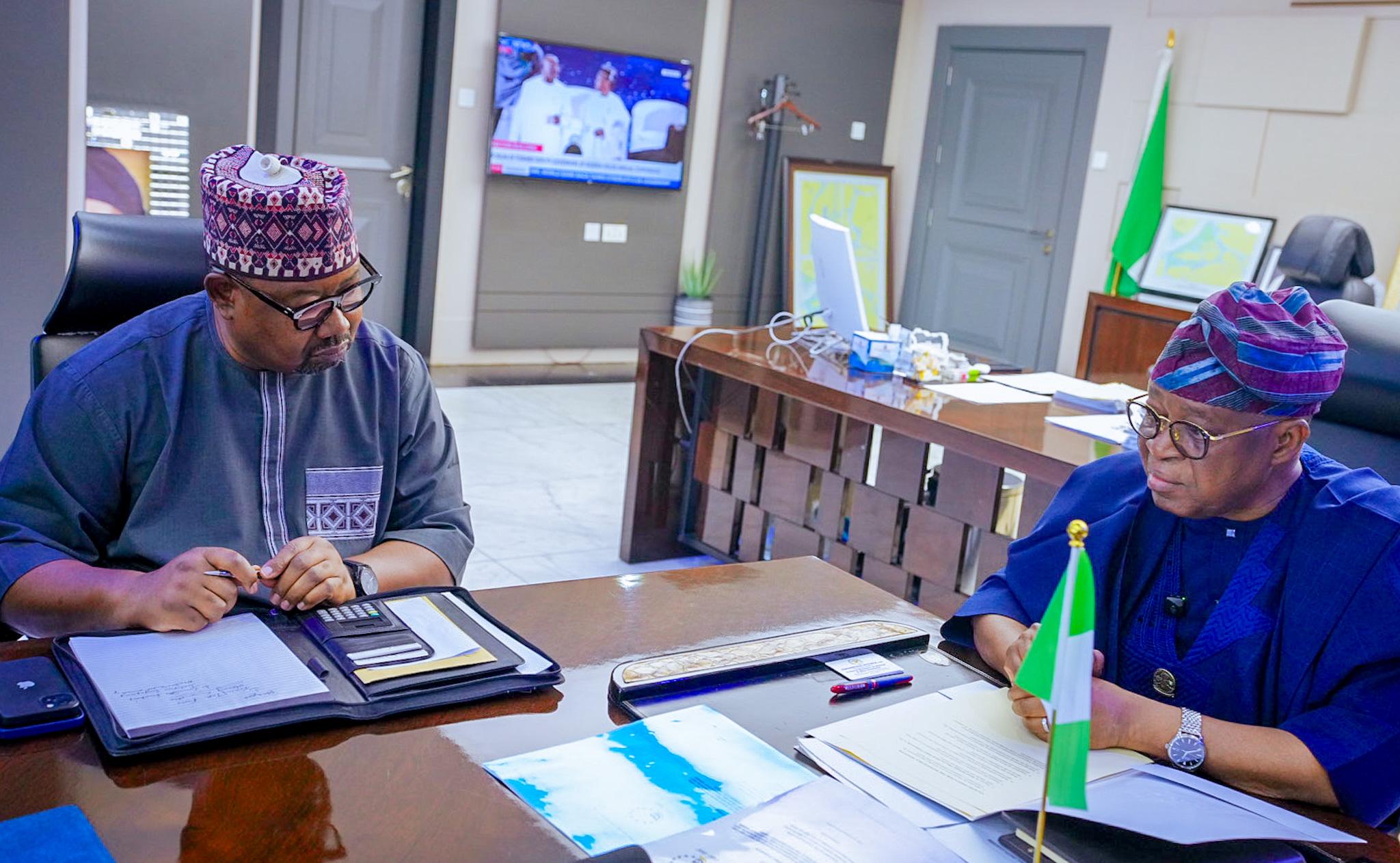
Minister of Marine and Blue Economy, Dr. Adegboyega Oyetola (right), and Deputy Executive Secretary of the Gulf of Guinea Commission, Ambassador Obinna Agbugba (left), during a meeting on the development of the proposed Gulf of Guinea Commission Policy on Marine and Blue Economy, in the Minister’s office in Abuja, on Tuesday.
He subsequently presented both drafts to Agbugba for consideration by the Commission.
To ensure effective coordination and broad participation in the policy development process, Oyetola proposed the establishment of a Steering Committee to guide the initiative and coordinate stakeholder engagement.
He also recommended that the Federal Ministry of Marine and Blue Economy serve as the committee’s secretariat.
The minister stressed the importance of consultations involving member states, relevant institutions and other stakeholders to ensure regional ownership of the proposed policy.
He further called for clear timelines and defined responsibilities for reviewing the draft documents and establishing the committee.
According to Oyetola, an inclusive approach would help ensure that the final policy reflects the priorities and circumstances of member states while providing a coordinated framework for addressing common maritime and economic challenges.
Oyetola said a comprehensive regional marine and blue economy policy would strengthen collaboration among member states, address shared maritime challenges, promote investment and support efforts to combat illegal, unreported and unregulated (IUU) fishing.
The proposed framework is also expected to provide strategic direction for sustainable ocean governance, marine-resource protection and the development of economic opportunities across the Gulf of Guinea.
READ ALSO:Tinubu extends tenures of Correctional, Immigration Service chiefs
The region’s maritime resources support activities including shipping, fisheries, offshore energy, tourism and coastal commerce. However, coordinated management and effective security arrangements remain important to maximising these opportunities and protecting marine ecosystems.
A common regional policy could help member states align their priorities, coordinate interventions and establish clearer mechanisms for cooperation in managing shared maritime resources.
The extent of its impact will depend on the final policy adopted, the commitments made by member states and the resources allocated to implementation.
Established on July 3, 2001, with its headquarters in Luanda, Angola, the Gulf of Guinea Commission is an intergovernmental organisation committed to promoting peace, security, economic integration, sustainable resource development and protection of the marine environment.
Its nine member states are Angola, Cameroon, the Republic of the Congo, the Democratic Republic of the Congo, Equatorial Guinea, Gabon, Ghana, Nigeria, and São Tomé and Príncipe.
The proposed regional policy is expected to provide a common strategic direction for these countries, translating existing commitments to cooperation into coordinated action on maritime security, sustainable resource management and blue economy development.
Nigeria’s role in leading the initiative also places the country at the centre of efforts to develop a regional framework for harnessing the Gulf of Guinea’s marine resources while strengthening cooperation among coastal and maritime states.
The initiative marks a new phase in the Commission’s efforts to advance regional ocean governance and develop the Gulf of Guinea’s blue economy potential through a coordinated policy framework