..Senate Public Accounts Committee not out to witch-hunt officialls – Bamidele
By Seun Ibiyemi
The Senate Committee on Public Accounts has issued a one-week ultimatum to the Bank of Agriculture (BOA), the Nigerian Security Printing and Minting Company (NSPMC), and the Rural Electrification Agency (REA) to appear before it and respond to outstanding audit queries.
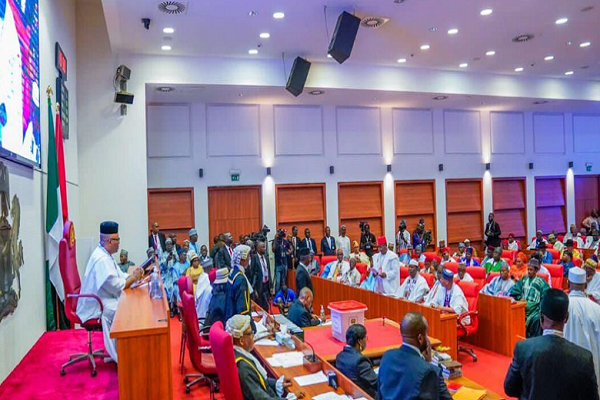
The directive was issued on Tuesday following the failure of the three agencies to honour invitations to appear before the committee during an oversight hearing in Abuja.
Chairman of the committee, Senator Ibrahim Dankwambo, expressed displeasure over the absence of the agencies, describing their conduct as unacceptable and a breach of legislative accountability requirements.
During the session, the committee secretary informed lawmakers that the Bank of Agriculture had sent a letter explaining that it had previously appeared before the committee between February 2023 and November 2024 and that issues raised during those engagements had been resolved with the committee and relevant government authorities.
The correspondence, signed by the bank’s legal adviser, also requested details of any unresolved matters and sought a two-week extension to enable management compile necessary documents.
However, Senator Dankwambo rejected the request, faulting the communication on the grounds that it was not signed by the bank’s Managing Director and Chief Executive Officer.
The committee chairman maintained that all official correspondence relating to invitations from the National Assembly must be personally signed and transmitted by the chief executive of the concerned agency.
He also criticised the failure of the bank’s Managing Director to appear before the committee despite being invited to address unresolved audit issues.
Lawmakers unanimously resolved that the Managing Director of the Bank of Agriculture must personally appear before the committee within one week to provide explanations on the outstanding matters.
The committee further dismissed claims that all audit concerns involving the bank had been resolved, insisting that several issues remained outstanding and required clarification.
In addition, the panel warned that future correspondence signed by subordinate officers rather than agency chief executives would no longer be entertained.
The committee also condemned the absence of the Nigerian Security Printing and Minting Company and the Rural Electrification Agency, directing that both organisations be given a final one-week opportunity to appear before the panel.
Several committee members raised concerns over what they described as a growing trend of government agencies disregarding legislative summons and oversight invitations.
According to the lawmakers, audit queries are critical accountability issues that demand prompt responses and should not be treated with indifference by public institutions.
The committee stressed that its actions were based on audit reports submitted through constitutionally recognised processes and were fully within its oversight mandate.
It warned that agencies that fail to honour the final invitation would face sanctions in line with the powers vested in the National Assembly.
Dankwambo disclosed that fresh letters outlining unresolved audit concerns would be immediately issued to the affected agencies, adding that failure to appear within the stipulated period could attract legislative sanctions.
He reiterated the committee’s commitment to ensuring transparency, accountability, and compliance with public sector financial regulations across government institutions.
Meanwhile, Senator Opeyemi Bamidele, has defended the activities of the Senate Public Accounts Committee, stating that its mandate is to promote accountability and transparency in governance rather than witch-hunt public officials.
Bamidele, who represents Ekiti Central Senatorial District in the Senate, made the clarification while speaking with journalists in Abuja on Tuesday amid growing public interest in the committee’s ongoing investigations of government agencies and institutions.
According to the lawmaker, the oversight functions of the National Assembly are designed to strengthen public institutions, improve governance, and ensure prudent management of public resources.
He explained that investigations conducted by the Senate Public Accounts Committee should not be misconstrued as attempts to expose or punish individuals but should be seen as part of the legislature’s constitutional responsibility to ensure accountability in government.
“The work of the Public Accounts Committee should not necessarily be viewed as a probe designed to expose and punish individuals. Its primary responsibility is oversight and accountability,” Bamidele said.
The Senate Leader noted that the Public Accounts Committee and the Appropriations Committee are among the constitutionally recognised committees that must exist within the National Assembly.
He explained that parliamentary convention requires the Appropriations Committee to be chaired by a member of the ruling party, while the Public Accounts Committee is traditionally headed by a member of the opposition to strengthen transparency and public confidence in the oversight process.
Bamidele said that most of the matters being examined by the committee originate from reports submitted by the Auditor-General for the Federation, which contain observations, findings, and recommendations concerning the operations of government ministries, departments, and agencies.
He stressed that the National Assembly remains committed to openness and public accountability, adding that even executive sessions are often followed by media briefings to keep Nigerians informed about key decisions and developments.
The lawmaker further explained that some issues that generate public debate are often more complex than they appear, requiring lawmakers to consider broader implications such as investor confidence, economic stability, and whether identified deficiencies have already been addressed through reforms.
READ ALSO:APC dismisses Iyabo Obasanjo’s allegations, says she enjoyed equal opportunities in party
According to him, many legislative oversight interventions result in policy adjustments, institutional reforms, administrative improvements, and corrective actions that may not always be immediately visible to the public.
Bamidele also highlighted the importance of collaboration between the legislature and the executive arm of government, noting that such cooperation has contributed to stronger institutions and improved governance outcomes in the country.
He assured Nigerians that the Senate would continue to prioritise transparency, accountability, and effective oversight in line with its constitutional mandate and commitment to deepening democracy.
The Senate Leader reaffirmed the upper chamber’s determination to ensure that public institutions remain accountable to citizens while supporting reforms that enhance efficiency, good governance, and public trust in government processes.