
…as capital market reforms boost investor confidence
By Seun Ibiyemi
Nigeria’s Assets Under Management (AUM) have surged from N3.2 trillion to N10 trillion within two years, underscoring growing investor confidence and the positive impact of reforms in the country’s capital market, the Securities and Exchange Commission (SEC) has said.
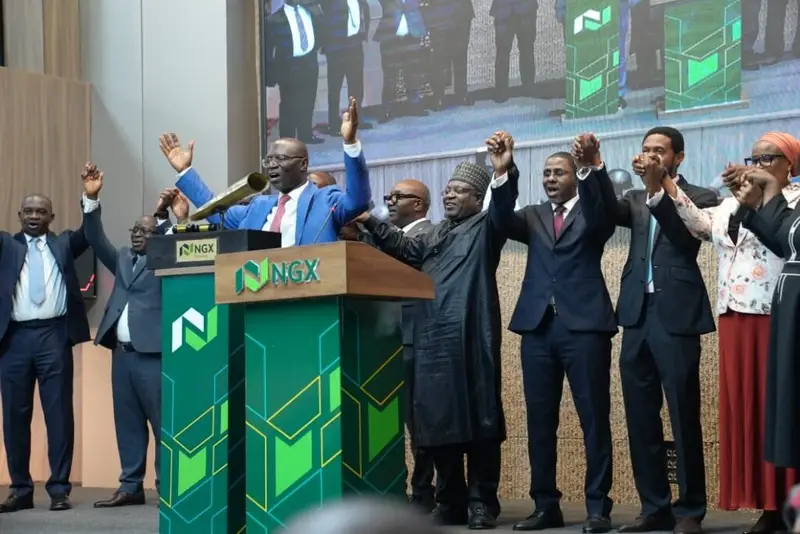
The Director-General of SEC, Dr. Emomotimi Agama, disclosed this on Monday in Lagos during an event commemorating Nigeria’s transition to the T+1 settlement cycle.
Agama described the growth as a significant milestone for the Nigerian capital market, noting that the industry has witnessed unprecedented expansion in investment activity, market capitalization and investor participation over the past two years.
According to him, the increase in assets under management reflects the strengthening of the market and growing confidence among both domestic and foreign investors.
“The Nigerian capital market has recorded historic milestones. Within two years, the nation’s AUM grew from N3.2 trillion to N10 trillion,” Agama said.
He added that the market also achieved a record-breaking performance in February 2026, when market capitalization expanded by N17.6 trillion in a single month—the highest monthly gain ever recorded in the history of the Nigerian capital market.
The SEC boss further revealed that domestic and foreign portfolio investments on the Nigerian Exchange Limited (NGX) rose to N1.803 trillion in April 2026.
He said the figure represented a 3.35 per cent increase compared to the previous month and a remarkable 274.05 per cent rise from the N482 billion recorded in April 2025.
According to Agama, total market transactions during the first four months of 2026 reached N5.952 trillion, more than double the N2.714 trillion recorded during the corresponding period of 2025.
He described the performance as evidence of increasing market depth, improved investor participation and the effectiveness of ongoing regulatory reforms.
Agama noted that the capital market’s contribution to Nigeria’s Gross Domestic Product (GDP) also rose significantly, reaching 33 per cent in 2025.
He added that market capitalization had grown by 125 per cent from approximately N55 trillion recorded in April 2024, highlighting the rapid expansion of the market.
The SEC Director-General also disclosed that foreign participation in the Nigerian equities market increased from 9.9 per cent in 2023 to 22.2 per cent in 2025, describing the development as a strong recovery in foreign investor confidence.
Despite the gains, he stressed that there remains considerable room for further growth and increased participation.
According to him, the newly adopted T+1 settlement cycle represents one of the key reforms aimed at improving market efficiency, enhancing liquidity and positioning Nigeria as a more competitive destination for global investment.
Agama explained that the shorter settlement cycle would accelerate the completion of securities transactions and align Nigeria more closely with global best practices.
He, however, noted that the transition would require market operators to strengthen their operational systems and improve efficiency.
“Stockbrokers, custodians and registrars relying on legacy systems and manual workflows can no longer afford delays tolerated under the T+2 regime,” he said.
He added that trade confirmations, reconciliations and funding decisions would now have to be completed within a shorter timeframe to meet the demands of the new settlement structure.
READ ALSO:Lagos Police debunk bandit invasion rumours, confirm arrest of 15 over mob killing
The SEC chief emphasized that all stakeholders across the capital market value chain must adapt quickly to the faster settlement environment to maximize its benefits.
Agama also announced that the Commission would unveil the Nigerian Capital Market Master Plan 2.0 between June and July 2026.
He said the new roadmap would provide strategic direction for the continued growth, modernization and international competitiveness of Nigeria’s capital market.
