By Seun Ibiyemi
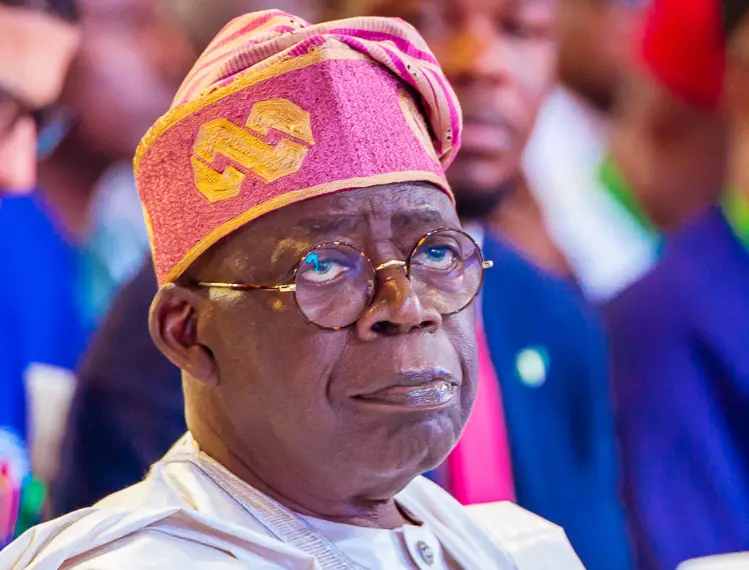
President Bola Tinubu has defended Nigeria’s new borrowing from international financial institutions and banks, arguing that loans should be assessed based on the infrastructure they deliver and the economic value they create.
The President, in an essay titled “From Reforms to Delivery: Our Infrastructure Investment and Growth Strategy,” said the focus should not be on the volume of borrowing but on how the funds are deployed to strengthen the economy.
“The real question is not how much we borrow, but what we build, what value we create and what future we leave behind,” Tinubu said in the article, which was announced for publication on Nigerian news platforms.
Responding to criticism, particularly from opposition leaders, over the country’s external borrowing, the President said infrastructure investment was necessary to support his administration’s ambition of growing Nigeria into a $1 trillion economy by 2030.
He identified the Lagos-Calabar Coastal Highway, Sokoto-Badagry Superhighway, Trans-Sahara Superhighway, electricity grid upgrades and the modernisation of key commercial ports in Lagos as major projects expected to expand the country’s productive capacity.
According to him, the projects, alongside investments in healthcare, education and vocational training, would connect economic regions, reduce logistics costs, unlock agricultural and industrial potential and attract private investment.
Tinubu said the Lagos-Calabar Coastal Highway was projected to reduce logistics costs along its corridor by between 15 and 20 per cent and could contribute up to two per cent to Nigeria’s Gross Domestic Product through increased trade, tourism and industrial activity
READ ALSO:NMDPRA share industry insights on refinery, gas and energy investment at OTL Week
The project is also expected to generate about 100,000 direct jobs in construction and engineering, as well as more than 150,000 indirect jobs in logistics, materials supply and related services.
“We are not simply building highways. We are opening economic corridors, connecting markets, unlocking industries and reshaping Nigeria’s economic geography,” he said.
The President argued that Nigeria could not achieve its $1 trillion economic target with infrastructure designed for an economy significantly smaller than its projected size.
“We cannot build a USD 1 trillion economy with infrastructure designed for an economy a fraction of that size,” he stated.
He added that the country must translate improving economic indicators and renewed international investor confidence into long-term investment in critical infrastructure.
The President attributed improvements in key economic indicators to reforms introduced by his administration since May 2023, including the removal of petrol subsidy, exchange rate unification, tax reforms and coordinated measures to tackle inflation.
He said the reforms had helped restore macroeconomic stability, strengthen public finances and improve Nigeria’s position in international financial markets.
Tinubu disclosed that real GDP growth reached 4.43 per cent in the second quarter of 2026, while headline inflation declined to 14.63 per cent in September from 20.98 per cent in the corresponding period of 2025.
He also said gross external reserves rose to $55.1 billion as of October 9, 2026, including about $46 billion in net reserves, while the tax-to-GDP ratio increased to 12.5 per cent from seven per cent.
“The decisions taken since 2023 were difficult but necessary,” he said.
According to him, the improvements have strengthened Nigeria’s capacity to attract investment and finance projects capable of supporting long-term economic growth.
Tinubu said Nigeria’s improved standing with international credit rating agencies and other financial institutions had helped reduce the country’s risk premium and borrowing costs.
“Confidence has a price; our cost of borrowing is going down, and the country risk premium has drastically decreased,” he said.
He described the assessments by international credit rating agencies, index providers, regulators and investors as evidence of stronger external reserves, improved macroeconomic management and greater financial credibility.
The President said the improved investment climate could enable Nigeria to attract more institutional investors, secure longer-term financing and obtain more competitive funding for infrastructure projects.
He also said the government was changing its borrowing strategy by moving away from loans used to address short-term fiscal pressures towards financing investments expected to generate economic returns, create jobs and expand opportunities for future generations.
Tinubu added that the administration was pursuing longer-term financing arrangements that would match the lifespan of infrastructure assets, reduce refinancing pressures and secure more favourable funding conditions.
The President outlined five priorities for the next phase of the Federal Executive Council’s economic strategy.
They include improving food affordability and energy price stability; harmonising budgets and strengthening fiscal discipline; completing high-impact projects and investing in critical infrastructure; improving the economic policy framework and regulatory efficiency; and providing targeted household support alongside investment in human development.
He said Nigeria must convert renewed international confidence into capital expenditure, completed infrastructure and lasting economic benefits for citizens.
Tinubu stressed that the success of the administration’s economic programmes would be measured by completed projects, increased investment, job creation and improved living standards.
“Securing financing is not the achievement. Completing the project, delivering value and improving the lives of Nigerians is the achievement,” he said.
He added that the country’s economic ambition must be supported by responsible borrowing and investments capable of creating lasting opportunities for future generations.