By Seun Ibiyemi
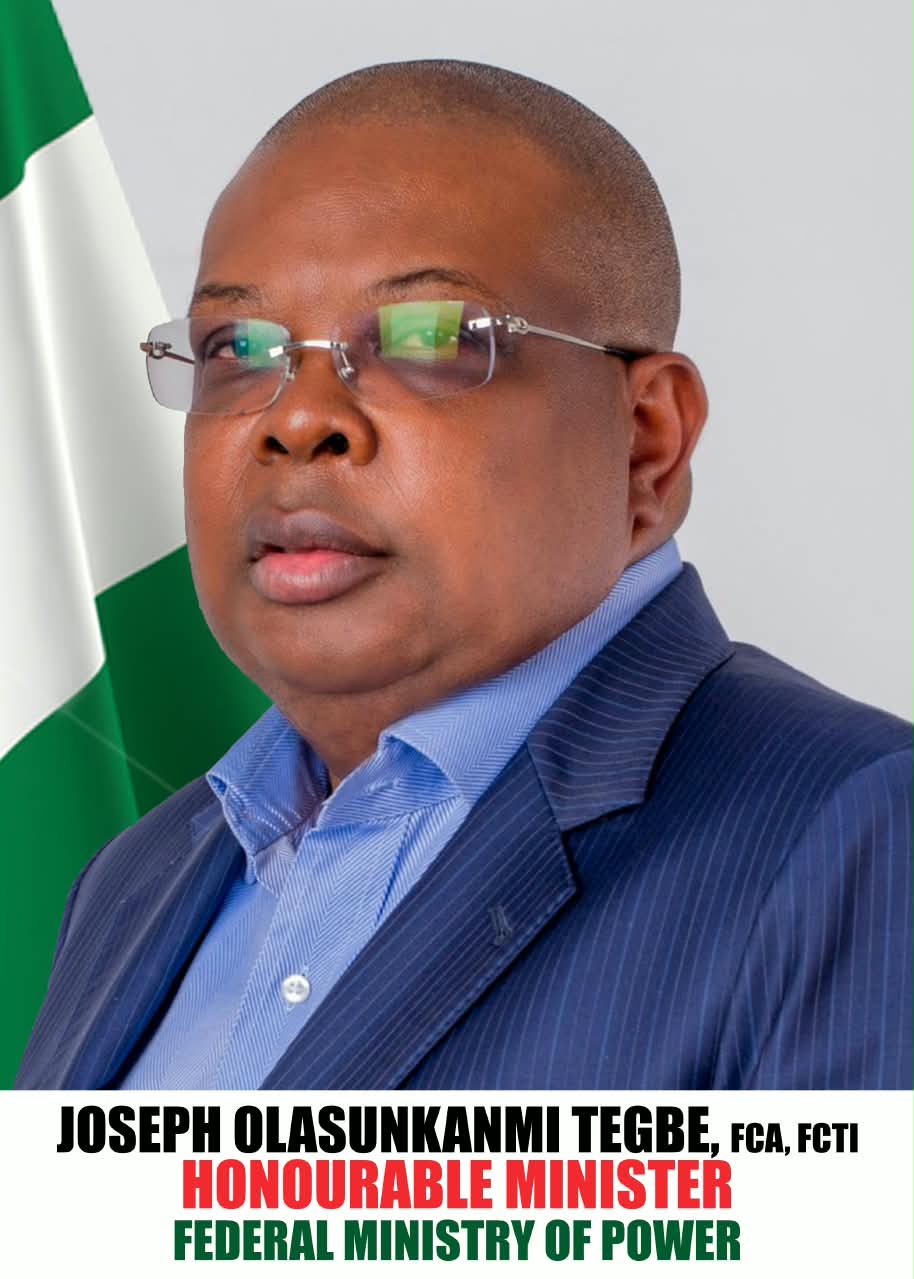
Nigeria’s Minister of Power, Joseph Tegbe, has urged global investors to deepen their participation in Africa’s energy sector by supporting local processing, manufacturing, skills development and long-term financing rather than focusing solely on the extraction of raw resources.
Tegbe made the call on Tuesday at the opening plenary of the Middle East Energy 2026 Leadership Summit in Dubai, United Arab Emirates.
Speaking on the theme, “Energy Security and the Effect of Geopolitics,” the minister said Africa’s vast natural resources, renewable energy potential, youthful population and rapidly growing electricity demand would make the continent increasingly important to global energy security.
He noted that about 600 million people across Africa still lack access to electricity, describing the situation as both a major development challenge and an opportunity for investment.
Tegbe said the continent’s energy challenges could not be addressed through resource extraction alone, urging international partners to support the development of domestic value chains.
He called for partnerships that would facilitate local processing of critical minerals, manufacturing of energy equipment, skills transfer and the provision of patient capital to African businesses and governments.
“Nigeria has chosen to build. Africa has chosen to build. And we invite you, in the spirit of this remarkable city and this landmark fiftieth summit, to build with us,” Tegbe told delegates.
Nigeria highlights power-sector reforms
The minister also presented Nigeria’s electricity-sector reforms as an example of how developing economies can create stronger foundations for energy investment and security.
He said the Electricity Act 2023 represented one of the most significant reforms of Nigeria’s power sector in decades, ending the longstanding federal monopoly and creating a framework for 37 emerging electricity markets across the federation.
According to him, the reforms are aimed at improving regulatory certainty, strengthening investor confidence and creating bankable opportunities across the electricity value chain.
“Capital does not flee risk; it flees uncertainty. Investors will price risk all day long; what they cannot price is a rule that changes after the contract is signed,” he said.
Tegbe said Nigeria’s reform agenda was therefore centred on regulatory certainty, contract sanctity and bankable offtake arrangements.
The minister said growing geopolitical fragmentation had fundamentally changed the way countries should approach energy security.
He argued that energy security could no longer be defined simply by access to oil and gas reserves, but must encompass the resilience of critical mineral supply chains, electricity grids, investment capital and institutions that sustain energy supply during periods of disruption.
He identified diversification as a key form of strategic insurance and called for electricity grids to receive the same strategic attention historically accorded to fuel supplies.
READ ALSO:Tinubu announces rescue of 21 Kogi kidnap victims, vows to hunt perpetrators
Tegbe also argued that affordability should be regarded as an important component of energy security, particularly in developing economies where high energy costs can undermine industrialisation and economic growth.
He called for an orderly and just global energy transition that recognises the different circumstances and development needs of individual countries.
Nigeria, he said, is seeking to position its power-sector reforms as part of a broader effort to attract investment, expand electricity access and strengthen the country’s contribution to global energy security.
The minister is expected to continue his engagements at the summit throughout the week, including participation in a ministerial fireside session on financing Africa’s power future under the Africa Spotlight programme.