By Seun Ibiyemi
The Rural Electrification Agency (REA) and its partners have launched a $188 million Green Finance Investment Facility (GFiF) aimed at financing 191 megawatts of distributed solar energy projects across Nigeria as part of efforts to expand electricity access and accelerate the country’s clean energy transition.
The blended finance platform, unveiled in Lagos on May 7, 2026, is being led by Barton Heyman Limited in partnership with the REA, UK PACT, First City Monument Bank and ARM Harith Infrastructure Investment Limited.
The initiative is designed to mobilise large-scale private and institutional investment into distributed renewable energy infrastructure for households, communities and businesses nationwide.
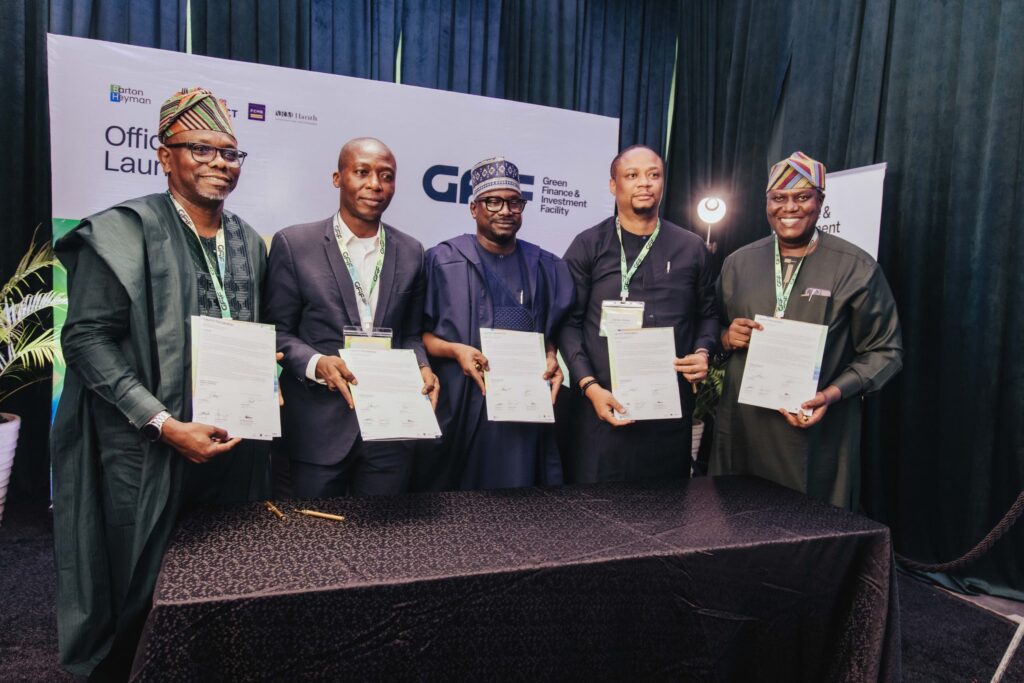
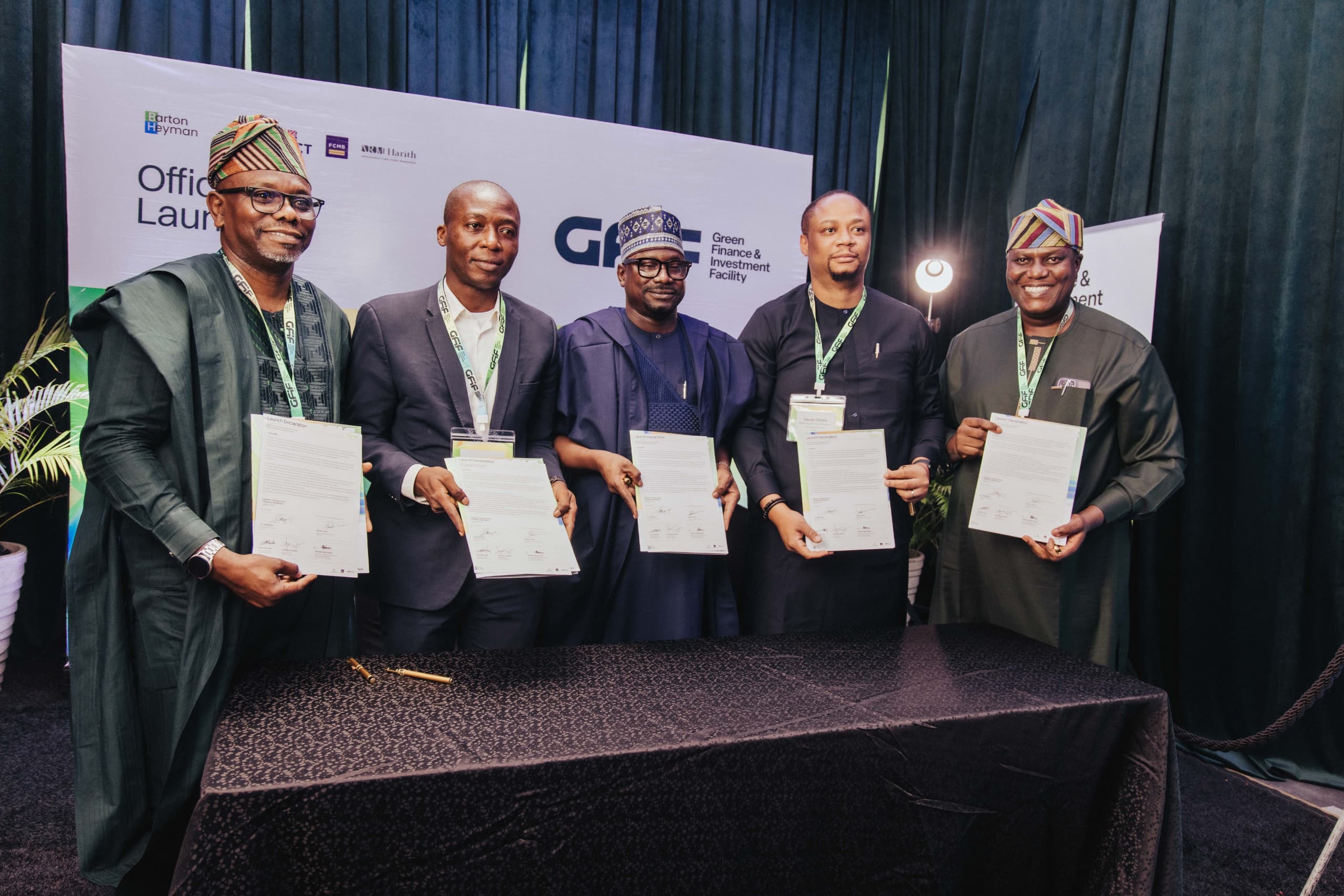
From 2nd left to right: Managing Partner of Barton Heyman Limited, Olumide Lala, Managing Director of the REA, Abba Aliyu, Chief Investment Officer at ARM Harith Infrastructure Investment Limited (ARMHIIL), Derek Chime, Senior Vice President and Divisional Head, Business Banking Group, FCMB, George Ogbonnaya at the launch of the $188m Green Finance Investment Facility (GFiF) recently
It also supports the Distributed Access through Renewable Energy Scale-Up programme, a national initiative focused on expanding electricity access through decentralised renewable energy systems.
Speaking at the launch, Managing Partner of Barton Heyman Limited, Olumide Lala, described the facility as a market-driven financing model capable of unlocking private capital for Nigeria’s energy transition.
According to him, the platform represents direct support for more than one million Nigerians and serves as the first step toward raising $40 billion to finance 20 gigawatts of distributed renewable energy projects across the country.
Senior Partner at Barton Heyman, Anthony Feyitimi, said the initiative goes beyond clean energy provision, noting that reliable distributed power would strengthen businesses, supply chains and economic competitiveness.
“The GFIF Pilot is our first $188 million step. The platform’s ambition is $40 billion and 20 gigawatts. We are building it from Nigeria, for Nigeria,” he said.
Managing Director of the REA, Abba Aliyu, said the initiative addresses one of the renewable energy sector’s biggest challenges — access to finance.
He explained that the Green Finance Investment Facility was conceived as a long-term institutional framework to replace fragmented project-by-project financing with a more scalable and sustainable funding ecosystem.
According to Aliyu, the new structure will provide renewable energy developers with improved access to capital and accelerate Nigeria’s drive toward universal electricity access.
Representing FCMB, Senior Vice President and Divisional Head of Business Banking Group, George Ogbonnaya, disclosed that the bank has committed ₦100 billion in debt financing for the DARES programme.
He said FCMB is currently funding more than eight developers under the isolated mini-grid Performance-Based Grant programme while finalising financing for another seven developers.
Ogbonnaya added that the bank has financed over 42 mini-grid projects and is supporting efforts to connect more than two million households in line with Nigeria’s electrification goals.
Chief Investment Officer at ARMHIIL, Derek Chime, called for stronger collaboration across the renewable energy ecosystem to unlock additional investments into clean energy infrastructure.
READ ALSO:Tinubu hails $4.7bn France-Nigeria trade ties
Also speaking, Deputy Head of Mission at the British High Commission in Lagos, Simon Field, reaffirmed the commitment of UK PACT to strengthening green finance frameworks and promoting renewable energy adoption in Nigeria.
Special Adviser on Climate Change and Circular Economy to the Lagos State Governor, Titilayo Oshodi, stressed the importance of coordinated investments, innovation and policy support in accelerating sustainable energy access nationwide.
Stakeholders at the event noted that initiatives such as the GFiF would play a critical role in mobilising long-term capital, reducing investment risks and expanding clean energy deployment across underserved communities in Nigeria.