By Seun Ibiyemi
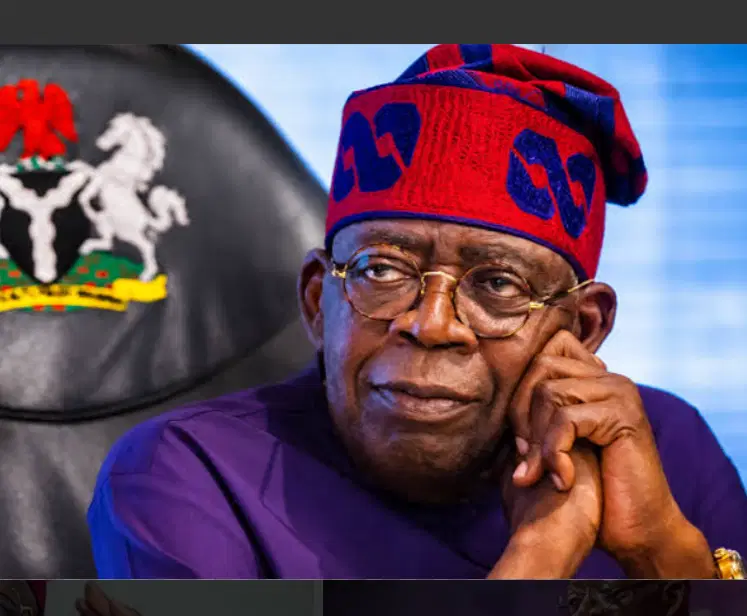
The National Secretary of the All Progressives Congress (APC), Senator Ajibola Basiru, has dismissed claims by some Islamic clerics to speak on behalf of Muslims and the entire northern region, insisting that President Bola Tinubu enjoys support across religious communities ahead of the 2027 general elections.
Basiru, who is also the Deputy Secretary of the APC Presidential Campaign Council (PCC), said the North was not a politically uniform bloc, stressing that the region comprises the North-Central, North-East and North-West, with diverse interests and political affiliations.
Speaking on TVC’s Beyond the Headlines on Tuesday, he said the ruling party had been engaging with both Muslim and Christian communities across the region as part of efforts to mobilise support for Tinubu’s re-election.
He added that feedback from the party’s consultations indicated support for the president among the groups reached.
“If some individuals gather and claim to be Islamic clerics, even if there are 1,000 of them, the question is: who accredited them to speak on behalf of Muslims and the entire North?” Basiru asked.
He said he had accompanied the Director-General of the APC Presidential Campaign Council on visits to Plateau, Kaduna, Bauchi and Kano states about three weeks earlier, where they met prominent Islamic leaders who, according to him, endorsed Tinubu for another term.
Basiru maintained that the clerics consulted by the party had established standing within their communities and could not be ignored in assessing political support in the region.
The APC national secretary said the party was working towards securing a nationwide mandate for Tinubu rather than relying on religious or ethnic divisions to mobilise voters.
“We are working seriously to secure a pan-Nigerian mandate for President Bola Ahmed Tinubu. We do not want to sectionalise our campaign or weaponise ethnic identity or religion,” he said.
Basiru identified the Federal Government’s student loan scheme, road construction, livestock development and agricultural mechanisation as policies he believed would appeal to voters in northern Nigeria.
According to him, students from vulnerable backgrounds were receiving monthly stipends of ₦20,000, while more than 3,000 kilometres of roads were under construction across the region.
He presented the initiatives as evidence of the administration’s efforts to address infrastructure and socioeconomic challenges in the North.
The APC chieftain also defended the administration’s economic policies, contrasting current conditions with the hardship associated with the 2023 naira redesign exercise and the resulting cash scarcity.
He criticised opposition figures who, he claimed, had failed to sympathise with Nigerians during that period.
Basiru further argued that the removal of fuel subsidies should be considered alongside the previous difficulties some state governments faced in paying workers’ salaries and pensioners’ entitlements.
READ ALSO:INEC clarifies exclusion of Governorship candidates, gives parties October 24 deadline
“There is a difference between returning to the era of fuel subsidies when many states struggled to pay workers’ salaries and pensioners were left unpaid and the present situation, in which workers’ salaries and pensions are being disbursed regularly,” he said.
He also criticised aspects of the privatisation policy implemented under former President Olusegun Obasanjo, when Atiku Abubakar served as vice-president, alleging that some aviation-sector workers were denied their gratuities and pensions.
Basiru credited Tinubu’s administration with addressing the issue, adding that military pensioners had also received attention.
He further argued that state governments should be able to fund infrastructure and recurrent expenditure without excessive reliance on borrowing.
“Today, no state government in Nigeria should need to approach the capital market to raise funds for infrastructure development or the settlement of recurrent expenditure,” he said.
“We cannot return to the era when our economy depended heavily on borrowing simply to meet recurrent obligations,” he added.
Basiru’s comments come as political parties and interest groups begin positioning themselves ahead of the 2027 elections, with religious representation, regional support and the impact of economic reforms likely to remain central issues in political debates.