
By David Oluwatosin
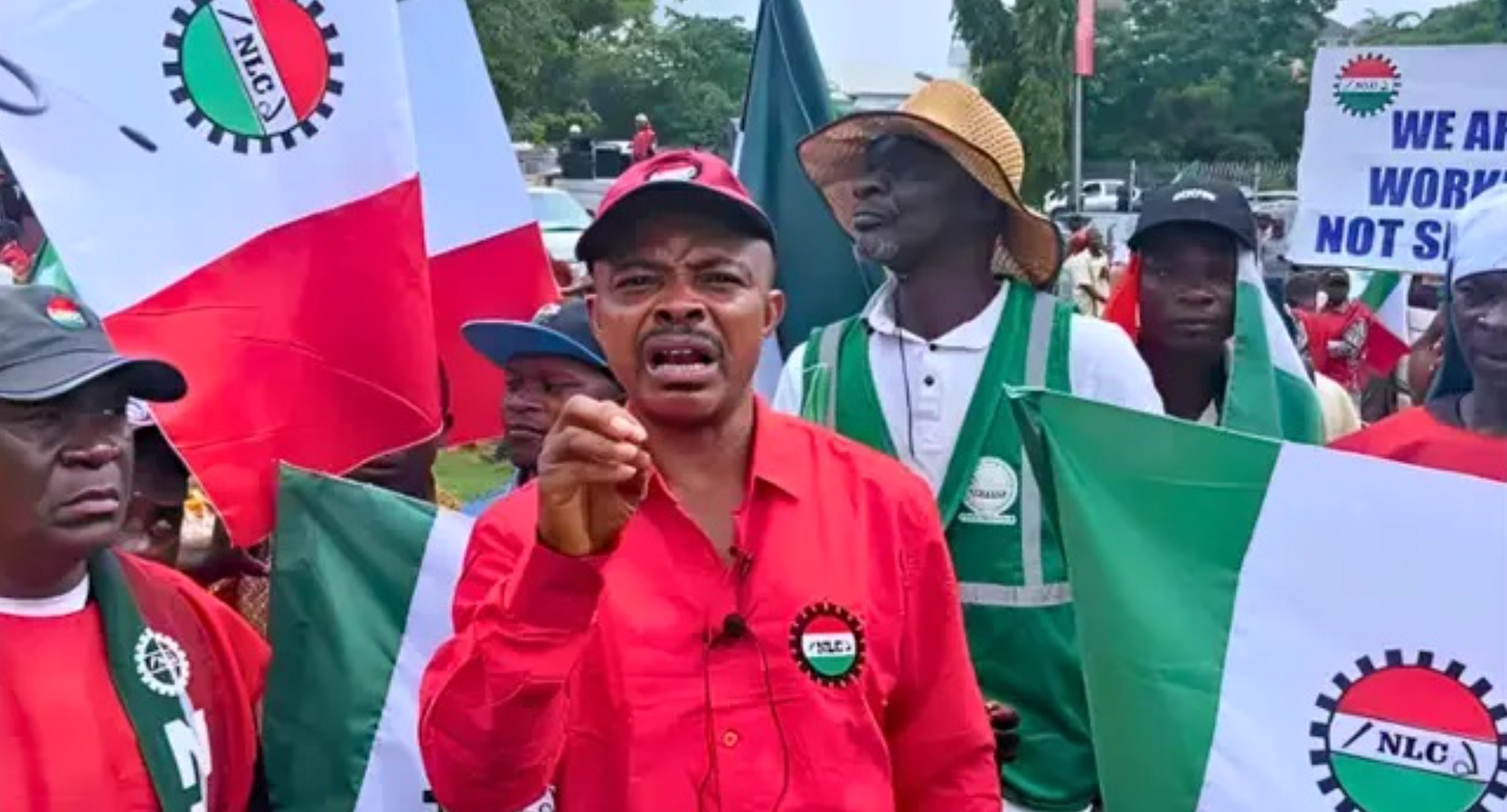
The Nigeria Labour Congress (NLC) has rejected the Federal Government’s position on the timing of a new national minimum wage review, insisting that negotiations should begin immediately as its 14-day ultimatum over workers’ economic demands continues.
The Congress also renewed its demands for a reduction in petrol prices, implementation of previously agreed tax relief measures, immediate wage awards to cushion rising living costs, and the implementation of outstanding agreements with the Joint Health Sector Unions (JOHESU) and the Joint Public Sector Negotiating Council (JPSNC).
In a letter dated October 13, 2026, and addressed to the Minister of Labour and Employment, Dr Muhammad Maigari Dingyadi, NLC President Joe Ajaero faulted the government’s position that negotiations for a fresh minimum wage review would be premature before June 2027.
Although the Congress did not expressly declare an imminent strike in the letter, the disagreement has raised concerns over a possible escalation of industrial tension if the parties fail to resolve the dispute before the ultimatum expires.
The Federal Government, in its response to the NLC’s communiqué, maintained that the current national minimum wage of ₦70,000, signed into law on July 29, 2024, would become due for review on June 1, 2027.
According to the minister, the National Minimum Wage Act provides for a review every three years, making an earlier exercise premature.
“Commencing a fresh review exercise barely two years into the implementation of the current wage, which represented an increase of over 133 per cent from the previous minimum wage of ₦30,000, would be premature, inconsistent with the law, and disruptive to the orderly industrial relations system envisaged by the Act,” the minister stated.
The government also cited its interventions to ease economic hardship, including the Presidential Compressed Natural Gas (CNG) Initiative, food security programmes and other social support measures.
It said the Ministry of Labour and Employment was engaging relevant ministries, departments and agencies to address the other demands within the Federal Government’s jurisdiction.
The minister further assured the Congress that the National Minimum Wage Tripartite Committee would be convened at the appropriate time to begin negotiations for the next review.
The government reiterated its commitment to dialogue, decent work and workers’ welfare, while urging organised labour to sustain cooperation in the interest of industrial peace.
In its response, the NLC acknowledged the ministry’s prompt reply but argued that the government had failed to address the substance of workers’ grievances.
“The Congress notes that, for the first time in recent history, the Ministry has responded with relative speed to our resolutions. We acknowledge this departure from the usual culture of bureaucratic silence,” the letter stated.
“However, while we appreciate this prompt acknowledgement, we are constrained to observe that speed without substance may amount to an empty gesture.”
READ ALSO:British Airways pledges support for NANTA training institute
The labour centre described the government’s position as “fundamentally incorrect in law, economics, and social justice.”
At the centre of the disagreement is the interpretation of the National Minimum Wage Act, 2019, as amended in 2024, and the appropriate timeline for commencing negotiations on a new wage agreement.
The NLC argued that the statutory review timeline should be calculated from the commencement of the original 2019 Act, rather than the date the amended minimum wage was signed into law in 2024.
“The National Minimum Wage Act, 2019, which the 2024 Amendment Act amended, was signed into law on 18 April 2019. Under the clear provisions of that Act, a review was statutorily due by 18 April 2024,” the Congress argued.
It maintained that the 2024 amendment did not cancel the original legislation or extinguish the timeline for wage negotiations.
“The 2024 Amendment Act did not abrogate the 2019 Act,” the letter stated.
The Congress further said organised labour had made concessions during negotiations for the 2024 minimum wage, including agreeing to a reduction in retrospective arrears following appeals by the Federal Government to ease the financial burden on government and employers.
The NLC’s position is that preparations for a new wage agreement should begin now, rather than waiting until June 2027, while the government insists that the current statutory cycle must be respected.
The disagreement comes amid broader labour demands for measures to reduce the cost of living and improve workers’ purchasing power. With the Congress maintaining its demands and the government defending its position, further engagement between both sides will be crucial to resolving the dispute before the ultimatum expires.

