
…Says Nigeria’s tax system suffered from structural weaknesses
By Seun Ibiyemi
Nigeria’s Minister of Finance and Coordinating Minister of the Economy, Taiwo Oyedele, has warned that the country can no longer rely heavily on borrowing to finance development, stressing the need for a sustainable fiscal system capable of supporting key sectors of the economy.
Oyedele spoke on Tuesday at the 28th Annual Tax Conference of the Chartered Institute of Taxation of Nigeria in Abuja.
His comments came barely 24 hours after the Federal Government intensified discussions with the World Bank over a proposed $1.25 billion loan aimed at supporting economic reforms, job creation and competitiveness.
“Nigeria cannot continue to finance development primarily through borrowing. We must build a fiscal system capable of sustainably supporting critical infrastructure, quality education, affordable healthcare, security, and social protection,” Oyedele said.
The minister explained that fiscal sustainability goes beyond revenue generation and must also promote economic growth, reduce inequality, protect vulnerable citizens and encourage productivity.
According to him, the Federal Government’s ongoing tax reforms are designed to make the Nigerian economy more investment-friendly while improving fiscal sustainability.
Oyedele noted that Nigeria’s tax system had suffered for years from structural weaknesses such as multiple taxation, fragmented administration, weak compliance and overdependence on a narrow revenue base.
“Businesses faced overlapping debts, unpredictable enforcements, and rising compliance costs. Citizens often perceived the tax system as unfair because the burden was unevenly distributed,” he said.
He said the reforms were intended to create a stronger fiscal foundation for long-term national development.
“Our approach is guided by a simple principle: a good tax system should raise revenue efficiently, support economic growth, protect the vulnerable, and strengthen trust between governments and citizens,” Oyedele added.
The minister disclosed that minimum wage earners had been exempted from personal income tax under the reforms, while tax burdens on low- and middle-income earners had also been reduced.
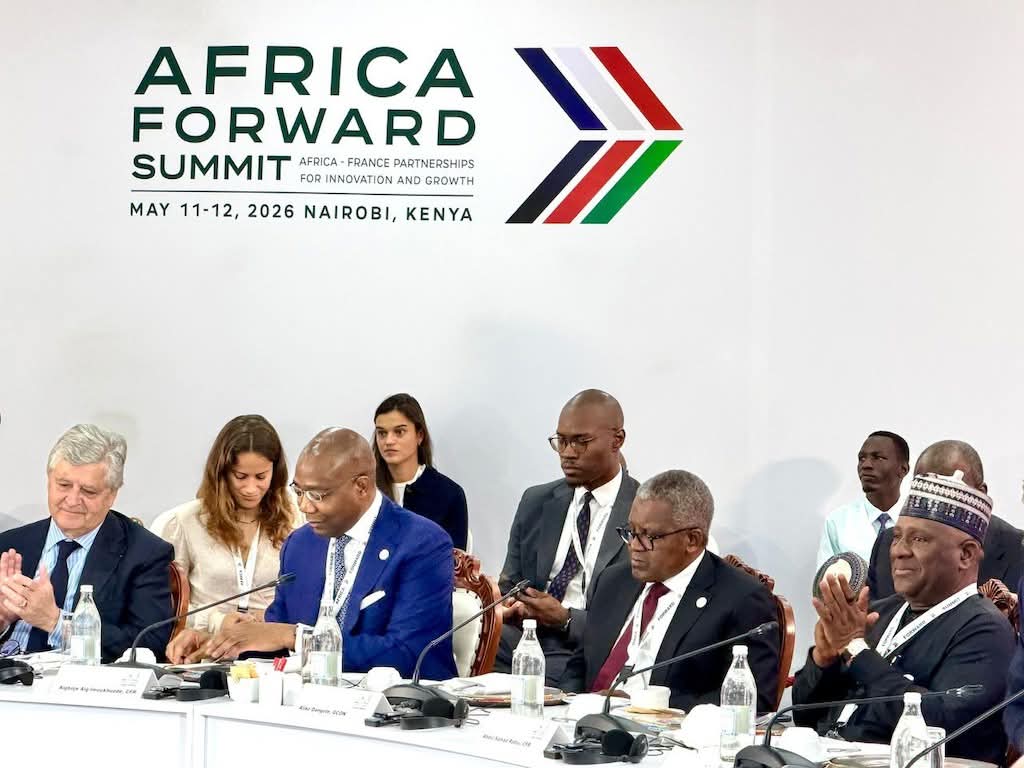
READ ALSO:Oyetola promotes Nigeria’s Blue Economy drive at Africa forward summit
On corporate taxation, he said government was proposing reductions in companies’ income tax rates to improve Nigeria’s attractiveness to investors.
Oyedele further stated that the government was modernising the Value Added Tax framework by expanding input VAT credits and clarifying exemptions for essential goods and services.
“This reduces cost buildup within the economy and improves efficiency across the value chain. This also helps to moderate inflation,” he said.
He also decried the burden of multiple taxes and levies on businesses, disclosing that the Federal Government was collaborating with state governments to harmonise taxes and lower compliance costs.
According to him, 15 states have already enacted tax harmonisation laws.
The minister added that technology would be central to future tax administration reforms through data integration, automation, digital filing systems and technology-driven compliance processes.
Despite the reforms, Oyedele acknowledged lingering challenges including weak institutional capacity, integration of the informal sector and public trust concerns.
Also speaking at the event, Nigeria’s Vice-President, Kashim Shettima, defended the Federal Government’s tax reforms, describing them as pro-people and pro-business policies aimed at reducing poverty and repositioning the economy for sustainable growth.
Represented by the Special Adviser to the President on Economic Affairs, Tope Fasua, Shettima said the administration of Bola Tinubu was working towards creating an economy where ordinary Nigerians could prosper regardless of their background.
He added that the government aimed to make Nigerian-made products globally competitive while transforming the country’s tax administration into a benchmark for Africa.
The Vice-President acknowledged that public scepticism and misinformation remained major obstacles to the reforms.
“Many Nigerians simply cannot believe it because it has never happened before,” he said.
Earlier, the 17th President and Chairman of Council of CITN, Innocent Ohagwa, described the ongoing tax reforms as the most comprehensive overhaul of Nigeria’s fiscal structure in more than 30 years.
Ohagwa said the reforms aligned with the administration’s ambition of growing Nigeria into a $1 trillion economy by the end of the decade.
He noted that Nigeria’s revenue-to-debt servicing ratio, which stood at 120 per cent in December 2022, declined to 68 per cent by the end of 2025.
According to him, broadening the tax base and simplifying the tax code would help Nigeria transition “from a nation that borrows to survive to one that invests to thrive.”
The conference, themed “Tax Reforms and Global Relevance: Positioning Nigeria’s Tax System for Sustainable Future,” focused on transparency, inclusiveness and stronger public trust in fiscal governance.