
By Seun Ibiyemi
The Federal Government has established an Off-Grid Sector Coordination Secretariat to track commitments, manage risks and eliminate duplication of projects across Nigeria’s electricity sector.
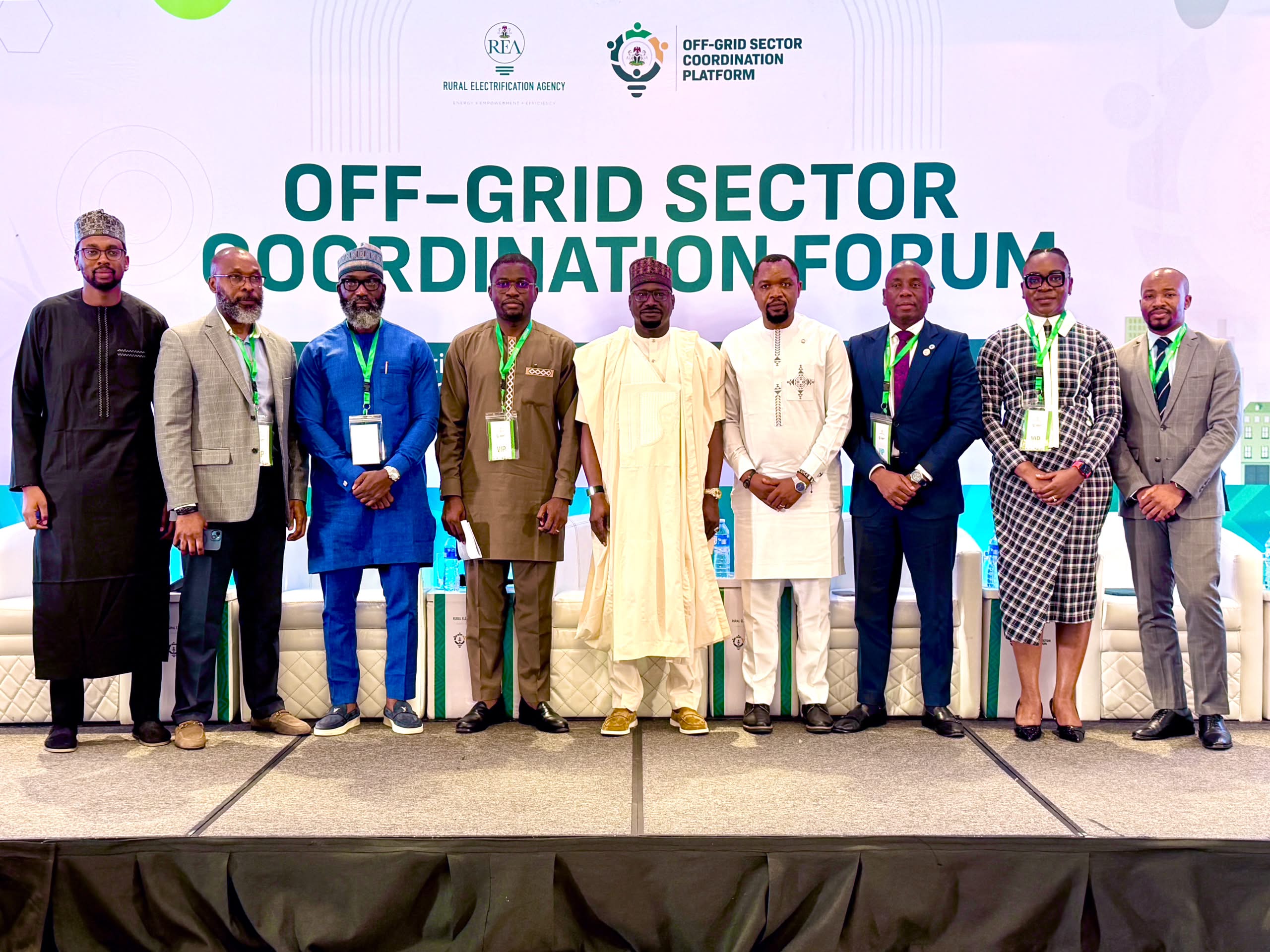
The initiative was unveiled on Monday in Abuja at the official relaunch of the Off-Grid Stakeholder Coordination and Partnership Forum, organised by the Rural Electrification Agency (REA).
The forum brought together key development and industry partners, including the Deutsche Gesellschaft für Internationale Zusammenarbeit (GIZ) through the Nigerian Energy Support Programme, UK Partnering for Accelerated Climate Transitions (UK PACT), SNV Netherlands Development Organisation, Global Off-Grid Lighting Association (GOGLA) and Murty International Ltd.
Delivering the keynote address on behalf of the Minister of Power, Joseph Tegbe, his Chief of Staff, Doyin Adelabu, identified fragmentation among stakeholders as a major obstacle to accelerating electricity access in the country.
He said the lack of coordination was resulting in duplicated efforts, missed investment opportunities and slower delivery of electricity to underserved communities.
“Fragmentation is the quiet tax every under-coordinated sector pays: in duplicated effort, missed investment opportunities, and slower delivery of power to the Nigerians who need it most.”
According to him, the newly established Secretariat will convene issue-based working groups and generate shared market intelligence to improve coordination within the off-grid sector.
The minister urged development partners, financiers, private operators, state governments and civil society organisations to nominate focal points, share data and participate actively in the coordination framework.
He also reaffirmed the ministry’s commitment to providing policy direction through the National Electrification Strategy and Implementation Plan, while supporting state electricity markets under the Electricity Act.
Also speaking, REA Managing Director, Abba Aliyu, said the growing scale of Nigeria’s off-grid energy sector made a centralised coordination platform necessary to identify existing projects and ensure efficient allocation of resources.
Aliyu said the Secretariat would strengthen coordination across the entire project lifecycle, from planning and project development to financing and implementation.
He said the platform would promote information sharing, harmonise interventions and align investments with national and subnational electrification priorities.
According to him, the initiative would help eliminate duplication, reduce institutional and operational inefficiencies, improve allocation of scarce resources and prevent multiple programmes from targeting the same communities while other underserved areas remain unattended.
He added that the Secretariat would provide a common framework for strategically sequencing projects, financing, technical assistance and policy interventions.
“This will improve delivery efficiency, strengthen accountability and maximise the collective impact of public, private and development-partner investments in Nigeria’s off-grid electricity sector,” Aliyu said.
READ ALSO: Shettima returns from UNGA, reaffirms Nigeria’s Push for Permanent African seat
The representative of Heinrich Böll Stiftung Nigeria, Ikenna-Donald Ofoegbu, urged stakeholders to look beyond the number of connections delivered when assessing the success of off-grid electricity interventions.
He said while the installation of mini-grids and deployment of solar home systems remained important indicators, stakeholders must increasingly focus on what happens after communities gain access to electricity.
Ofoegbu called for a shift from measuring interventions by connections to assessing productive use and long-term economic impact.
He advocated a transition “from successful interventions to scale; from connections to productive use; from donor-supported projects to investable markets; and from individual programmes to a coordinated national ecosystem.”
The Off-Grid Stakeholder Coordination and Partnership Forum was originally established as a donor roundtable in April 2017.
Government data indicates that more than 7.5 million Nigerians have gained access to electricity through over 200 solar hybrid mini-grids and approximately 1.8 million solar home system connections.
The Federal Government is also targeting an additional 17 million Nigerians under the Distributed Access through Renewable Energy Scale-Up (DARES) programme.
The new coordination mechanism is expected to provide a common platform for government institutions, development partners, private-sector operators and other stakeholders to align investments and interventions as Nigeria expands renewable and off-grid electricity access.

Doing great