
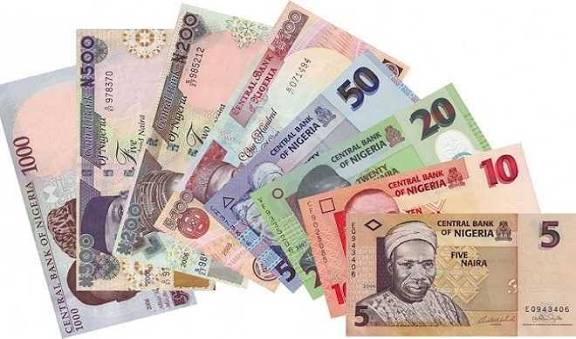
Nigeria’s currency in circulation (CIC) rose to ₦5.73 trillion in 2025 as the Central Bank of Nigeria (CBN) injected 3.43 billion newly printed naira notes into the economy to meet rising demand for cash, according to the apex bank’s latest Annual Report.
The report showed that currency in circulation increased by ₦290 billion, or 5.3 per cent, from ₦5.44 trillion recorded in 2024, reflecting sustained growth in cash usage across the economy.
According to the CBN, the new banknotes were produced by the Nigerian Security Printing and Minting (NSPM) Plc and foreign security printing companies.
Of the 3.43 billion notes printed during the year, the NSPM supplied 1.23 billion, while foreign printers produced 2.20 billion notes, accounting for the bulk of the currency produced.
To meet increasing demand, the apex bank approved the printing of 5.70 billion notes across different denominations in 2025, representing a 20.5 per cent increase from the 4.73 billion notes approved in 2024.
Under the allocation, the NSPM was assigned responsibility for producing 2.0 billion notes, equivalent to 35 per cent of the approved volume, while foreign security printing firms were allocated the remaining 65 per cent.
READ ALSO:ADC accuses APC of dodging economic crisis, says Tinubu’s record can’t defend itself
However, the report revealed that a significant portion of the approved printing programme remained undelivered by the end of the year.
It disclosed that a supplementary order of 1.50 billion notes, awarded to foreign printers in November 2025, was still being processed as of December 31, 2025.
Similarly, the Nigerian Security Printing and Minting Company had yet to deliver 760.76 million notes, representing about 38 per cent of its approved allocation.
The CBN attributed the increase in currency circulation to stronger economic activities and growing demand for cash transactions nationwide.
According to the report, the expansion in currency production was necessary to ensure an adequate supply of banknotes and support the smooth functioning of Nigeria’s payment system amid rising cash demand.
