
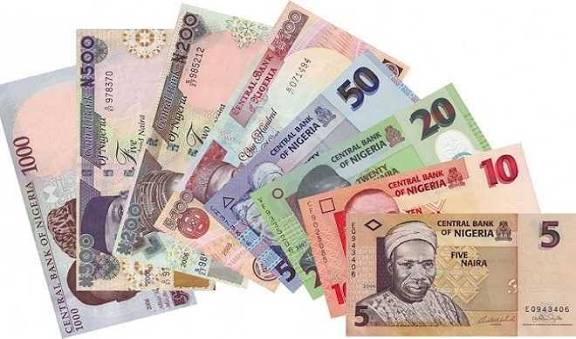
Currency in circulation in Nigeria has risen by 81 per cent to N5.44 trillion in August 2026 from N3.01 trillion in August 2023, highlighting the persistent demand for physical cash despite the rapid expansion of electronic payment channels.
Data from the Central Bank of Nigeria’s (CBN) Money and Credit Statistics show that currency in circulation increased by N2.43 trillion over the three-year period, although the pace of growth moderated significantly after a sharp surge in 2024.
The figures indicate that the strongest expansion occurred between August 2023 and August 2024, when currency in circulation climbed from N3.010 trillion to N4.55 trillion, representing an increase of N1.54 trillion or 51.1 per cent.
However, the growth rate slowed in subsequent years, reflecting a moderation in the pace at which physical cash expanded within the economy.
In August 2025, currency in circulation rose to N5.057 trillion, an increase of N508 billion or 11.2 per cent compared with the corresponding period of the previous year.
The upward trend continued in August 2026, when the figure reached N5.436 trillion, representing a year-on-year increase of N379 billion or 7.5 per cent.
The data show that annual growth in currency in circulation declined from 51.1 per cent in 2024 to 11.2 per cent in 2025 and 7.5 per cent in 2026.
This suggests that while the stock of physical cash continues to increase, its rate of expansion has slowed considerably over the period.
The increase in currency in circulation has occurred alongside a substantial expansion in banks’ reserves held within the financial system.
According to the CBN data, banks’ reserves rose from N18.528 trillion in August 2023 to N25.456 trillion in August 2024, representing an increase of N6.928 trillion or 37.4 per cent.
The reserves subsequently climbed to N31.583 trillion in August 2025 before reaching N36.067 trillion in August 2026.
Overall, banks’ reserves increased by N17.539 trillion, or 94.7 per cent, between August 2023 and August 2026.
The CBN classifies currency in circulation and banks’ reserves as components of reserve money, also known as base money, which forms part of the monetary foundation of the economy.
The simultaneous rise in physical currency and banks’ reserves highlights the expansion in these components of the monetary base over the three-year period.
Commenting on the development, David Adonri, Managing Director of High Cap Securities Limited, said an increase in physical cash holdings could affect the amount of liquidity immediately available within the deposit base of commercial banks.
“When more money is held as physical cash, a portion of liquidity is outside the immediate deposit base of commercial banks and is therefore less available for banks to intermediate through loans and other financial assets,” Adonri said.
READ ALSO:Ebola hits Abuja: FG confirms case, tracks 44 contacts
His observation highlights the relationship between cash holdings, bank deposits and the financial system’s capacity to channel funds towards lending and other productive activities.
However, the increase in currency in circulation should not automatically be interpreted as evidence of excessive liquidity or rising inflationary pressure.
Higher demand for cash may also reflect increases in nominal prices, larger transaction values and the expansion of economic activity.
Consequently, assessing the implications for inflation and credit conditions requires consideration of other monetary indicators, including broad money supply, bank lending, credit growth and the velocity of money.
The sustained increase in currency in circulation is particularly notable given Nigeria’s rapid adoption of electronic payment channels, including mobile banking, fintech services, instant transfers and digital payment platforms.
These services have transformed the way individuals and businesses conduct transactions, reducing the need for physical cash in many areas of the economy.
Nevertheless, the continued growth in currency in circulation indicates that the expansion of digital payments has not eliminated demand for cash.
Physical currency remains relevant for transactions in parts of the informal economy, small businesses and locations where access to digital payment infrastructure may be limited.
The trend also suggests that electronic payments and physical cash continue to coexist within Nigeria’s financial system rather than one completely replacing the other.
For policymakers, the challenge is to sustain the gains of digital financial inclusion while ensuring that monetary management, banking liquidity and payment infrastructure respond to the changing needs of households and businesses.
Although the annual growth rate of currency in circulation has slowed, its increase to N5.44 trillion underscores the continuing importance of cash in Nigeria’s economy despite the expansion of electronic payment alternatives.
