By Seun Ibiyemi
Nigeria’s Minister of Marine and Blue Economy, Dr Adegboyega Oyetola, has held talks with Ghana’s Minister for Fisheries and Aquaculture Development, Emelia Arthur, on strengthening bilateral cooperation to combat illegal fishing and promote sustainable management of fisheries resources across the West Central Gulf of Guinea.
The meeting took place in Accra on Wednesday, October 14, 2026, during Oyetola’s visit to Ghana, which also included engagements with the Fisheries Committee for the West Central Gulf of Guinea (FCWC) Secretariat and its Regional Monitoring, Control and Surveillance Centre in Tema.
Oyetola, who is president of the FCWC, said stronger coordination between Nigeria and Ghana was necessary to address Illegal, Unreported and Unregulated (IUU) fishing, which he described as a shared challenge with serious consequences for food security, government revenue and the livelihoods of fishing communities.
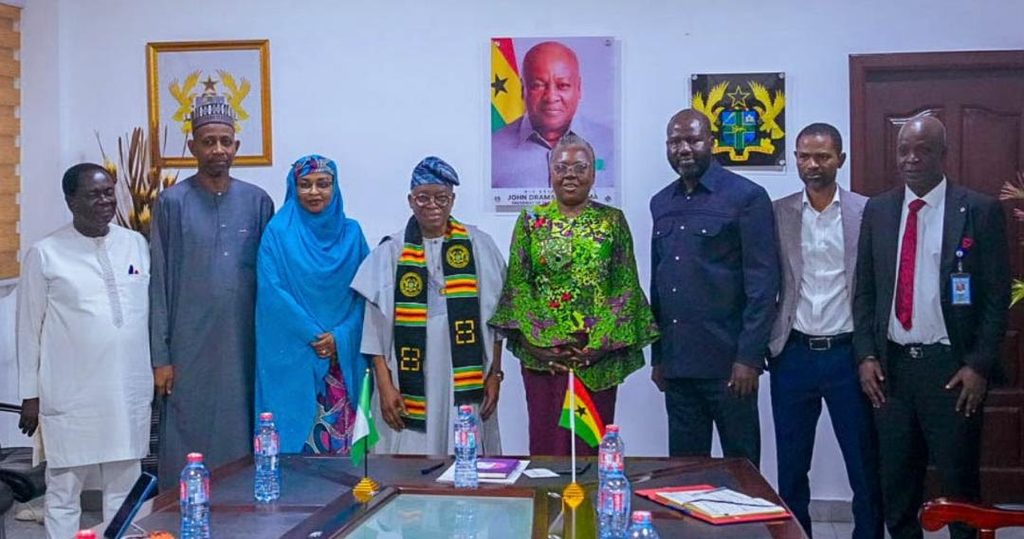
Secretary-General, Fisheries Committee for the West Central Gulf of Guinea (FCWC), Dr. Antoine Djihinto; Nigeria’s High Commissioner to Ghana, Ambassador Shehu Ilu Barde; Permanent Secretary, Federal Ministry of Marine and Blue Economy, Mrs Fatima Mahmood; Nigeria’s Minister of Marine and Blue Economy, Dr. Adegboyega Oyetola; Ghana’s Minister for Fisheries and Aquaculture Development, Hon. Emelia Arthur, and others during a bilateral meeting in Accra, Ghana, on Wednesday, 14 October 2026.
He said cooperation between the two countries would strengthen regional efforts to tackle illegal fishing and ensure the sustainable management of shared fisheries resources.
As part of efforts to improve fisheries monitoring and enforcement, Oyetola highlighted Nigeria’s pilot implementation of the Regional Record of Authorised Fishing Vessels as a platform for closer cooperation with Ghana.
He explained that the initiative could help both countries verify fishing vessel authorisations, exchange relevant information and identify discrepancies in vessel records through the FCWC framework.
According to the minister, technical teams from both countries could collaborate to identify inconsistencies in authorisation records and establish agreed procedures for resolving them.
He said such cooperation would improve transparency, regulatory compliance and fisheries monitoring across the subregion.
“Our shared interest is to protect fisheries resources, expand sustainable production and strengthen the livelihoods of our people. Nigeria remains committed to working with Ghana towards these objectives,” Oyetola said.
In her remarks, Arthur commended Nigeria for its efforts in combating piracy and the progress recorded in the Marine and Blue Economy sector.
She reaffirmed Ghana’s commitment to tackling IUU fishing and pledged her country’s full cooperation with Nigeria in addressing the challenge.
The Ghanaian minister also disclosed that her country had developed its own Marine and Blue Economy policy and sought Nigeria’s support in sharing knowledge and experience.
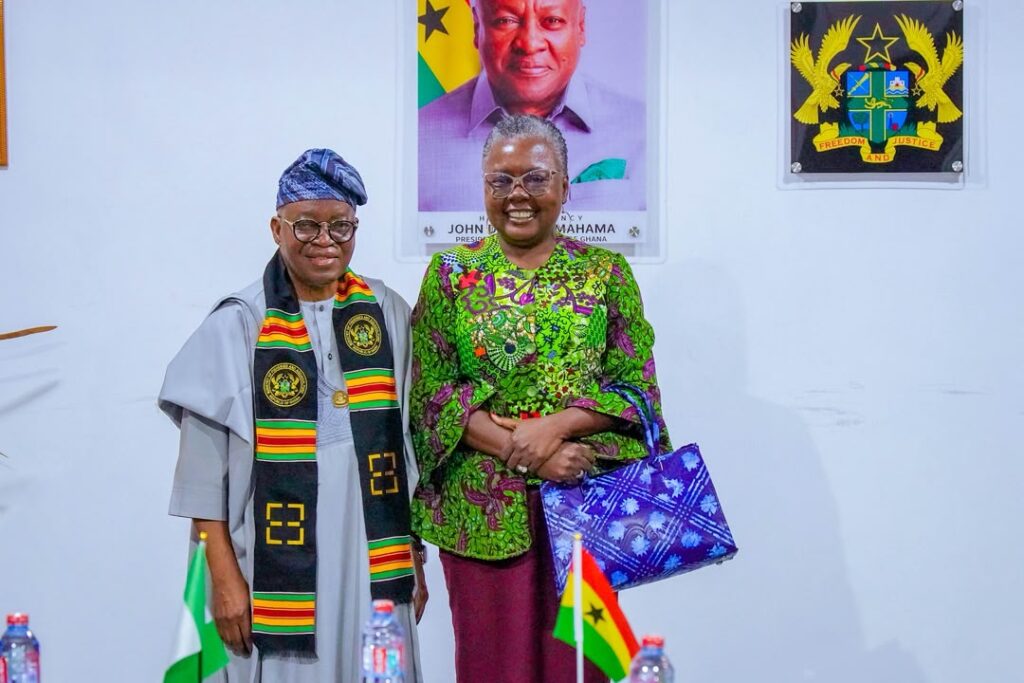
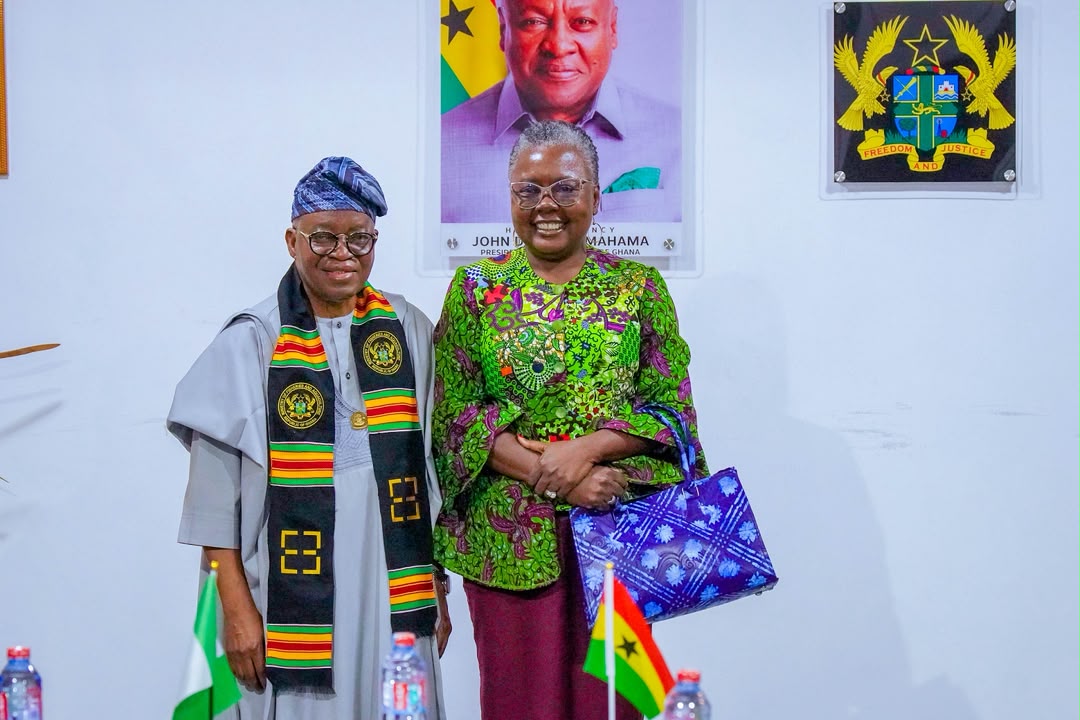
Nigeria’s Minister of Marine and Blue Economy, Dr. Adegboyega Oyetola (left) and Ghana’s Minister for Fisheries and Aquaculture Development, Hon. Emelia Arthur, during a bilateral meeting in Accra, Ghana, on Wednesday, 14 October 2026.
She noted Nigeria’s pioneering role in developing a policy framework for the sector, highlighting opportunities for both countries to exchange expertise and strengthen ocean governance.
The proposed collaboration is expected to support improved fisheries management, sustainable use of marine resources and the development of their respective blue economy sectors.
READ ALSO:NSW processes 156,026 trade permits, targets export services in phase 2
During the visit, Oyetola also met with the FCWC Secretary-General, Dr Antoine Djihinto, and other officials at the committee’s secretariat in Tema.
The minister commended the secretariat for its achievements over the past year and reaffirmed Nigeria’s commitment to working with other member states to strengthen regional fisheries governance and eliminate IUU fishing in the West Central Gulf of Guinea.
He emphasised the need for sustained collaboration among member countries, particularly through coordinated monitoring, control and surveillance, improved information-sharing and effective implementation of regional initiatives.
According to him, these measures are essential to protecting fisheries resources and ensuring their long-term sustainability.
The FCWC comprises six member countries: Benin, Côte d’Ivoire, Ghana, Liberia, Nigeria and Togo. It provides a framework for regional cooperation in fisheries management, maritime security and the promotion of sustainable fishing practices across the West Central Gulf of Guinea.
Oyetola’s engagements in Ghana underscore Nigeria’s push to deepen regional partnerships, strengthen fisheries monitoring and enforcement, and promote a sustainable Marine and Blue Economy that supports food security, economic growth and the livelihoods of coastal communities.