By David Oluwatosin
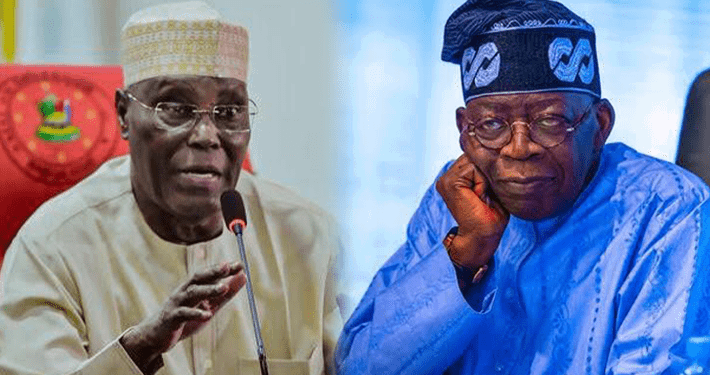
The Federal High Court in Abuja has fixed November 20 to deliver its ruling on an application by former Vice-President Atiku Abubakar and the African Democratic Congress (ADC) to amend their suit seeking to disqualify President Bola Ahmed Tinubu and the All Progressives Congress (APC) from the 2027 presidential election.
Justice Inyang Ekwo fixed the date on Tuesday after hearing arguments from lawyers representing Atiku and the ADC, Tinubu, the APC and the Independent National Electoral Commission (INEC) on whether the proposed amendments should be allowed.
The substantive suit, marked FHC/ABJ/CS/1888/2026, challenges Tinubu’s eligibility over an allegation that the APC submitted a forged National Youth Service Corps (NYSC) discharge certificate to INEC.
Atiku and the ADC are asking the court to compel the electoral commission to remove Tinubu and the APC from the list of candidates and political parties for the 2027 presidential election.
However, after the defendants filed counter-affidavits and raised preliminary objections, the plaintiffs applied to amend their originating summons, citing errors in the court documents and the need to provide additional particulars supporting their allegations.
Moving the application, counsel to Atiku and the ADC, Joseph Silas, said the motion was dated September 4 and filed on September 10. He urged the court to grant the request.
Silas explained that the proposed amendments included correcting the nomenclature of an INEC form, providing particulars of the alleged fraud, adding Atiku’s written deposition and attaching clearer copies of documents referenced in the supporting affidavit.
The plaintiffs maintained that the amendments were intended to correct errors and strengthen the presentation of their case without introducing new issues or seeking additional reliefs.
President Tinubu’s counsel, Chief Wole Olanipekun, SAN, opposed the application, arguing that the court lacked jurisdiction to grant the requested amendments.
Olanipekun contended that the suit was statute-barred and that the proposed changes went beyond correcting errors, effectively amounting to an attempt to introduce a fresh action.
He urged Justice Ekwo to dismiss the application.
Counsel to the APC, Chief Akin Olujinmi, SAN, and INEC’s lawyer, Alex Izinyon, SAN, also asked the court to reject the request, adopting arguments similar to those advanced by Tinubu’s legal team.
INEC argued that the proposed amendment sought to introduce a new cause of action, attach a deposition that was not filed within the prescribed period and address defects relating to the identification of the relevant electoral form.
The commission also maintained that its preliminary objection challenging the competence of the substantive suit remained pending.
Tinubu and the APC have denied the allegation that a forged NYSC discharge certificate was submitted to INEC.
In their joint counter-affidavit, they argued that the NYSC had never denied issuing the discharge certificate to the president after his service year.
They further maintained that an allegation of forgery should be supported by a disclaimer from the institution said to have issued the document.
READ ALSO:Tinubu sends NDLEA, transport safety bills to Senate for consideration
INEC, in its separate challenge to the suit, raised several grounds, including alleged non-compliance with pre-election procedures, lack of locus standi, absence of a reasonable cause of action and abuse of court process.
The commission also argued that the plaintiffs failed to comply with a mandatory written-deposition requirement under the applicable Federal High Court pre-election practice directions.
Atiku and the ADC reportedly filed the substantive suit on August 14.
Tinubu’s legal team argued that the action was filed outside the constitutionally prescribed period, contending that the relevant cause of action arose when the president’s name was submitted to INEC on July 11.
The plaintiffs, however, maintained that their proposed amendments were necessary to correct errors in the originating summons and provide further supporting materials for their case.
The court’s November 20 ruling will determine whether the plaintiffs can proceed with the proposed amendments, while the substantive dispute and the defendants’ objections remain subject to further judicial consideration.