…Targets 350,000 new meters
By Seun Ibiyemi
The Federal Government has stepped up efforts to attract private investment into Nigeria’s electricity sector, identifying accelerated metering, improved gas supply and rehabilitation of existing power infrastructure as priorities for boosting electricity delivery and strengthening market liquidity.
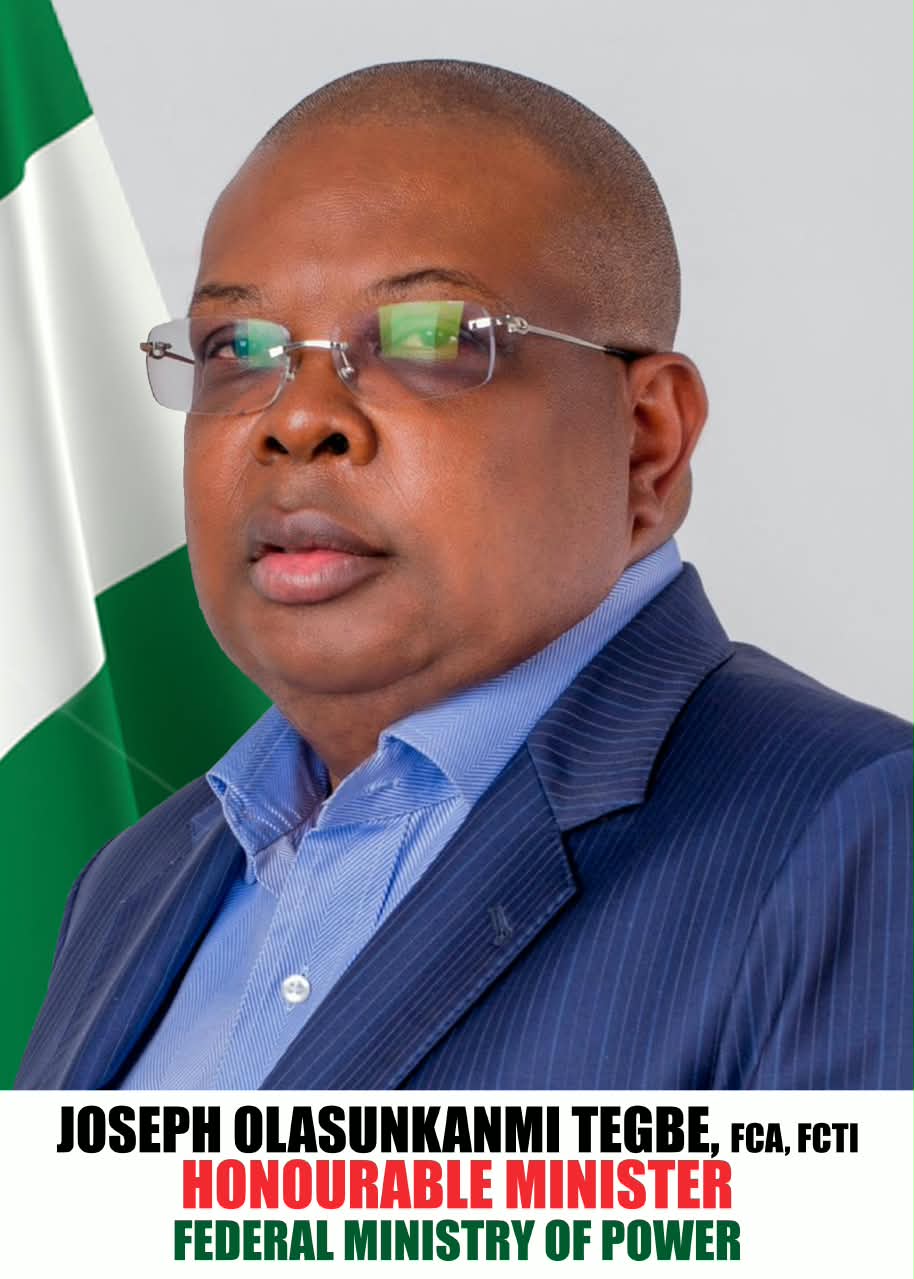
The Minister of Power, Joseph Tegbe, disclosed this at the NAEC Energy Conference 2026 in Lagos, organised by the Association of Energy Correspondents of Nigeria under the theme, “Access to Assets: Empowering Players and Driving Growth.”
In remarks delivered on his behalf by the Ministry’s Acting Director of Press, Clement Ezeorah, Tegbe said the government was seeking to ensure that investments in power infrastructure translated into reliable electricity supply and payments from consumers.
He maintained that the value of an energy asset should be measured not merely by its installed capacity or physical existence but by its ability to deliver useful electricity to paying customers.
According to him, investments must address the specific constraints affecting each part of the electricity value chain, including gas availability, power plant conditions, transmission infrastructure, distribution networks and payment collection.
Adding capacity without resolving the underlying bottleneck, he warned, could tie up capital without improving consumers’ experience.
The Minister identified four major investment opportunities in the electricity sector, including the rehabilitation of existing power plants, expansion of dedicated electricity supply to industrial clusters, modernisation of distribution infrastructure and deployment of decentralised energy solutions.
He said restoring dependable output from existing generating plants through equipment rehabilitation and reliable gas supply could improve electricity availability without relying solely on new generation capacity.
Investors were also encouraged to develop power solutions for industrial estates, ports and agro-processing clusters where reliable electricity could support production and provide more predictable demand.
Other opportunities include upgrading distribution feeders, transformers, substations and meters to improve the delivery of electricity to consumers.
The government also highlighted the potential of distributed energy projects serving productive activities such as irrigation, refrigeration and small-scale manufacturing.
Tegbe further invited gas producers to partner with project developers and industrial consumers to establish integrated gas-to-power projects.
He said prospective investors should consider not only the direct financial returns from acquiring or developing energy assets but also the wider economic activity that reliable electricity could unlock across manufacturing, logistics and services.
The Ministry, he added, would pursue partnerships built around clearly defined responsibilities, realistic implementation milestones and measurable service delivery outcomes.
Addressing a panel session at the conference, the Minister’s representative disclosed that approximately 350,000 electricity meters had been rolled out within the preceding three months as part of efforts to improve billing transparency and strengthen accountability across the electricity market.
The initiative is expected to enable more consumers to pay for their actual electricity consumption rather than rely on estimated billing.
The government also plans to improve monitoring across the electricity value chain by tracking gas supplied to power plants, electricity transmitted through the grid and payments made within the market.
According to Ezeorah, the approach is intended to reduce Aggregate Technical, Commercial and Collection (ATC&C) losses, which continue to affect the financial sustainability of distribution companies.
He acknowledged that poor collection efficiency and liquidity constraints remain significant challenges, with some legacy debts dating back to the 2013 electricity privatisation.
The government, he said, is working to address these financial obligations while introducing a performance dashboard to help stakeholders assess service delivery and monitor progress across the sector.
The Minister also highlighted changes in Nigeria’s electricity market following the Electricity Act 2023, which provides a framework for state-regulated electricity markets alongside the federally regulated market.
He explained that the structure allows different models of electricity supply to coexist, including large grid-connected power plants, embedded generation, dedicated supply to eligible customers, captive power and mini-grids.
For investors, the evolving framework creates opportunities to participate in different segments of the market, depending on demand, infrastructure requirements and the availability of credible customers.
However, Tegbe’s representative stressed that decentralised and embedded generation should complement rather than replace the national grid.
READ ALSO: FG moves to cap petrol landing cost at N1,350
He said Nigeria would continue to require a functional interconnected transmission network as electricity demand increases, even as more states and private developers establish alternative supply arrangements.
The government also identified vandalism of electricity infrastructure as a major obstacle to expanding transmission capacity.
According to the Minister’s representative, resources that could otherwise be used to extend transmission lines and improve network coverage are sometimes diverted to replace damaged equipment.
He said the government was undertaking public advocacy to encourage host communities to protect electricity infrastructure, noting that damage to power facilities ultimately disrupts supply to the same communities.
The administration’s approach, he added, is to improve accountability, strengthen infrastructure protection and ensure that investments produce measurable improvements in electricity delivery.
The discussions at the conference underscored the government’s efforts to reposition the power sector around commercially viable investments, improved metering, stronger gas supply and more reliable electricity services.
For prospective investors, the central challenge remains ensuring that capital deployed across generation, transmission and distribution translates into dependable power, stronger revenue collection and sustainable returns.