
By Seun Ibiyemi
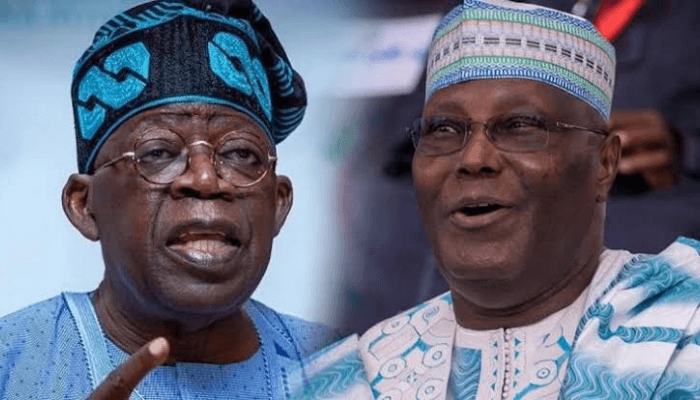
African Democratic Congress presidential candidate, Atiku Abubakar, has urged the Federal Government to account for Nigeria’s existing public debt before proceeding with proposed $1.5 billion World Bank financing.
Atiku made the demand in a statement issued on Monday by his Director of Strategic Communications, Phrank Shaibu, following reports that the Federal Government was discussing three World Bank financing facilities worth $500 million each.
The proposed facilities are targeted at climate resilience, social protection and early childhood development.
Atiku’s call comes amid rising public debt, which stood at ₦166.79 trillion as of June 30, 2026, according to figures from the Debt Management Office.
The DMO figure represents an increase of ₦14.39 trillion, or 9.44 per cent, from the ₦152.40 trillion recorded at the end of June 2025.
Atiku said the government should disclose how previous loans had been utilised and demonstrate the benefits delivered to Nigerians before taking on additional debt.
“Before these loans are concluded, the government must publish the projects to be funded, the communities and citizens expected to benefit, the targets for each programme, the terms of borrowing and disbursement, and a timetable Nigerians can use to track delivery,” he said.
He also questioned what he described as a gap between rising government revenue and continued growth in public debt.
“If more money is coming in, why does the debt keep climbing? If Nigerians have sacrificed so much, where are the results?” Atiku asked.
The proposed $1.5 billion World Bank financing comprises three separate $500 million facilities at different stages of preparation.
The most advanced is an additional $500 million for the Agro-Climatic Resilience in Semi-Arid Landscapes (ACReSAL) project, which the World Bank is scheduled to consider on October 29, 2026.
If approved, ACReSAL’s total financing would increase from $700 million to $1.2 billion.
The other proposed facilities are the $500 million Nigeria Early Childhood Development programme and the $500 million Household Prosperity and Empowerment–Social Protection Project, both currently projected for consideration in March 2027.
READ ALSO: FG establishes secretariat to end duplication in Off-Grid power projects
The proposed programmes are aimed at addressing climate vulnerability, strengthening social protection and improving human capital development.
While acknowledging the development objectives of the proposed financing, Atiku called for clear accountability mechanisms and measurable targets.
He said climate resilience should be reflected in identifiable land restoration, irrigation projects and protection of communities from flooding.
“Social protection must identify who receives support and when. Early childhood development must produce measurable gains in nutrition, healthcare and learning,” he said.
The ADC candidate also demanded details of previous loans and the projects financed with them.
“Show us the money already received. Show us what it built. Show us who benefited. Account for the debt already on Nigeria’s books before borrowing another dollar,” he said.
The World Bank’s Nigeria programme has placed emphasis on areas including early childhood development, social protection and resilience among vulnerable households.
Its April 2026 Nigeria Development Update said household incomes had not fully recovered and poverty remained high, while highlighting the need for targeted support and increased investment in human capital.
The proposed additional ACReSAL financing is focused on challenges including land degradation, water insecurity, climate vulnerability, erosion and flooding across 19 northern states and the Federal Capital Territory.
Nigeria had also secured substantial World Bank financing during the Tinubu administration. In June 2024, the World Bank approved a $1.5 billion Development Policy Financing programme for Nigeria, alongside a separate $750 million programme designed to support resource mobilisation reforms.
The World Bank said the 2024 financing was intended to support economic stabilisation, protect vulnerable Nigerians and strengthen domestic revenue mobilisation.

Doing great
Doing great