By Seun Ibiyemi
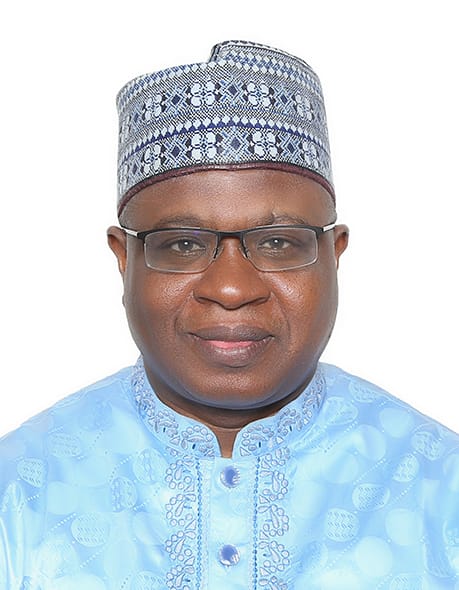
The Chairman of Nigerian Exchange Group, Dr Umaru Kwairanga, has warned that weak governance of Artificial Intelligence (AI) systems could trigger capital flight, distort markets and erode investor confidence in Nigeria.
Kwairanga gave the warning ober the weekend while delivering the opening address at the InnovateAI Conference Lagos 2026, stressing that the risks associated with poorly governed AI were no longer theoretical.
“Across the world, capital flows toward markets that demonstrate predictability, governance and trust,” he said. “If AI systems are opaque, discriminatory or vulnerable to breaches, that risk is priced into companies, sectors and ultimately into the country itself.”NGX gains N5.1trn as investor demand fuels major market rally
According to him, as AI becomes deeply integrated into financial systems including credit scoring, trading strategies and compliance monitoring failure to embed accountability could destabilise institutions.
“Imagine AI-driven credit models systematically excluding certain demographics due to biased data, or automated trading systems amplifying volatility due to weak controls. These are structural risks that can erode public confidence,” he said.
Kwairanga noted that AI adoption in Nigeria was already being driven by market forces, shifting the debate from whether to adopt the technology to how responsibly it is deployed.
He referenced recent enforcement actions by the Nigeria Data Protection Commission as evidence that data governance now carries real financial and reputational consequences.
“Data governance is no longer optional, it is enforceable,” he said, adding that trust remains fundamental to capital market stability and growth.
“In the markets, trust is the oxygen of the system. Every trade and every investment decision rests on confidence in the integrity of the market,” he added.
The NGX Chairman emphasised that AI must strengthen transparency, fairness and oversight rather than weaken them, noting that governance frameworks must be anticipatory rather than reactive.
He outlined key priorities for responsible AI adoption, including regulatory clarity, stronger board oversight, capacity building and the development of localised AI systems aligned with Nigeria’s socio-economic realities.GTCO, Zeneth bank, others dominate NGX as trillion-naira club
Kwairanga also called for deliberate investment in AI literacy across both public and private sectors, warning against overreliance on foreign-trained AI models that may not reflect local contexts.
According to him, responsible AI must address Nigeria’s specific challenges in areas such as financial inclusion, healthcare delivery, agriculture and energy optimisation.
“Responsible AI in Nigeria must be context-aware. It must solve Nigerian problems,” he said.
He urged stakeholders to anchor the country’s AI strategy on trust, talent and transparency to position Nigeria as a leader in Africa’s digital economy.
“Nations that get AI governance right will attract investment, talent and partnerships. Those that do not will face digital fragmentation and capital flight,” Kwairanga said.
He reaffirmed the commitment of the NGX Group to balancing innovation with strong oversight.
“Responsible AI is not anti-innovation. It is pro-sustainability. The future will belong to institutions that combine innovation with integrity and technology with trust,” he added.