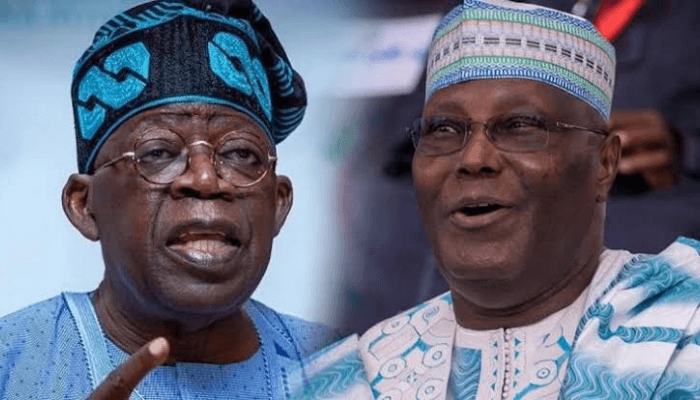
Former Vice President Atiku Abubakar has dismissed the rising monthly allocations shared by the Federation Account Allocation Committee (FAAC) as a “money illusion”, arguing that higher naira figures have not translated into stronger economic value or improved living standards.
Atiku, in a statement issued by his Senior Special Assistant on Public Communication, Phrank Shaibu, said inflation and naira depreciation had eroded the purchasing power of government revenues and citizens’ incomes.
He urged the Federal Government to stop presenting increased naira-denominated FAAC allocations as evidence of economic progress, insisting that the real value of the revenue should be measured by what it can buy and its impact on Nigerians.
According to Atiku, FAAC distributed about N7.85 trillion in 2019, equivalent to roughly $25.6 billion at the prevailing exchange rate. By 2025, he said, allocations had risen to about N21.9 trillion, but their dollar value had fallen to approximately $14.6 billion.
“That is not an economic miracle. That is money illusion,” Atiku said.
He argued that while the nominal naira value of allocations had nearly tripled, the underlying dollar value declined by more than 40 per cent, reflecting the impact of currency depreciation and inflation.
The former vice president said the same trend was evident in workers’ incomes, citing the minimum wage as an example.
He said the N30,000 minimum wage introduced in 2019 was worth about $83 at the time, but had fallen to approximately $65 in dollar terms by May 2023. Although the minimum wage has since increased to N70,000, Atiku said its value was only about $53 at an exchange rate of around N1,320 to the dollar.
“The figure in your hand is bigger, but the value in your pocket is smaller,” he said.
Atiku questioned why Nigerians were yet to experience significant improvements in food prices, transportation, electricity, healthcare, housing and employment despite the increase in government revenue.
“If FAAC is truly booming, then where is the boom?” he asked.
The former vice president also questioned the continued indebtedness of state governments despite higher FAAC distributions.
He cited a September 2026 report based on Debt Management Office data, which put the combined debt of 12 states at about N5.3 trillion.
The figure, according to the statement, comprises N2.16 trillion in domestic debt and about $2.33 billion in foreign obligations.
Atiku said the situation raised questions about how states were deploying the increased revenues accruing to them.
READ ALSO:SIFAX shipping commissions new office complex at Lagos bonded terminal
“You cannot boast endlessly about unprecedented FAAC allocations while states remain heavily indebted,” he said.
He also cited outstanding pension and gratuity obligations, unpaid contractors and other government liabilities as evidence that higher revenue figures alone should not be equated with economic success.
According to him, increased revenue becomes meaningful only when it translates into infrastructure development, debt repayment, job creation and improved living conditions.
Atiku further called for greater scrutiny of government spending, including expenditure, tax concessions, import waivers, revenue exemptions and duplicated or abandoned projects.
He argued that these areas should receive the same level of scrutiny expected of Nigerians when they are asked to make economic sacrifices.