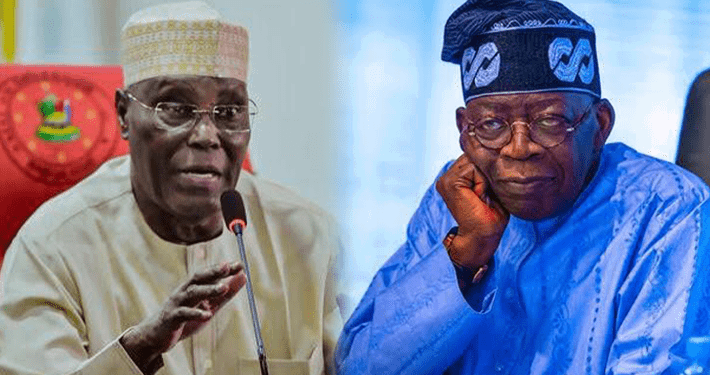
Former Vice President and presidential candidate of the African Democratic Congress (ADC), Atiku Abubakar, has described President Bola Tinubu’s removal of the petrol subsidy in 2023 as “economic apartheid,” escalating the ongoing political debate over the policy ahead of the 2027 presidential election.
Atiku made the accusation in a statement issued by his media team on Sunday in response to the Federal Government’s defence of the subsidy removal and its reported N15.8 trillion savings from the policy over the past three years.
The former vice president had recently proposed the restoration of what he described as a targeted fuel subsidy regime if elected president in 2027.
The proposal has drawn criticism from the Presidency, which accused Atiku of lacking a viable economic alternative and questioned the implications of returning to fuel subsidies.
Reacting to the criticism, Atiku accused the Tinubu administration of shifting the burden of the subsidy removal to ordinary Nigerians while allegedly providing economic advantages to wealthy interests.
He argued that the government’s approach did not amount to genuine economic reform, accusing the administration of using propaganda to justify policies that had increased hardship among citizens.
“Tinubu stood at Eagle Square and declared that subsidy was gone. This is the fraud at the heart of Tinubunomics. That is not reform; it is an upside-down economy,” Atiku said.
He added that the government could not provide economic protection to capital while withdrawing relief from citizens and still describe the resulting hardship as reform.
“You cannot subsidise capital and criminalise relief for citizens. You cannot offer cushions upstairs and call suffering downstairs reform. That is not economic reform. It is classic economic apartheid,” he stated.
READ ALSO:NDLEA arrests 101-year-old woman, seizes N4.4bn Thai Loud in drug crackdown
The renewed dispute comes as the Tinubu administration continues to defend the removal of the petrol subsidy as a major component of its economic reform programme.
The Federal Government has said the policy has generated substantial fiscal savings, with the administration recently putting the savings from subsidy removal at N15.8 trillion over three years.
Atiku, however, has maintained that the benefits of the reform have not translated into adequate relief for ordinary Nigerians, arguing that the government should adopt policies that protect households while improving economic efficiency.
The subsidy debate is expected to remain a major issue in the build-up to the 2027 presidential election, with political parties and candidates likely to present competing approaches to fuel pricing, fiscal policy and social protection.