The Managing Director of TotalEnergies Exploration and Production Nigeria Limited, Matthieu Bouyer, has identified policy stability, faster project approvals, improved security, industrial harmony and investment in human capital as critical conditions for unlocking greater investment in Nigeria’s oil and gas industry.
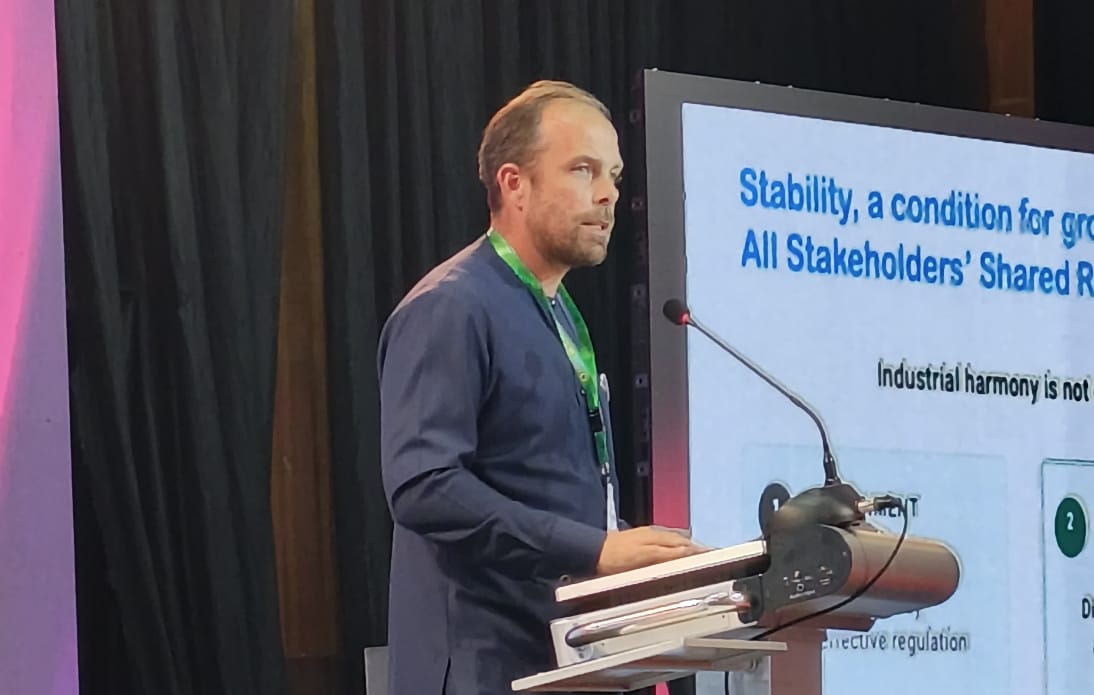
Bouyer spoke on Wednesday at the 5th PENGASSAN Energy and Labour Summit in Abuja, themed “Removing Barriers to Business Growth in Nigeria’s Oil and Gas Industry.”
He said Nigeria had sufficient natural resources, skilled manpower, industrial capacity and growing energy demand to support a strong oil and gas industry, but the country needed to convert those advantages into actual investments, projects, jobs and government revenue.
“Nigeria does not lack potential. There are resources, talents, industrial history, strong materials, energy demands, and Nigeria has a key role to play in meeting Africa’s future energy needs. The real challenge is about conversion,” Bouyer said.
According to him, prolonged delays and policy uncertainty affect oil companies and also have wider consequences for government revenue, employment, host communities and investor confidence.
He called for greater policy consistency, urging the government to provide clear regulations while regulators ensure predictable implementation.
Bouyer also urged operators to maintain disciplined investment and safety standards, while labour unions and host communities should promote constructive engagement and industrial harmony.
The TotalEnergies executive said Nigeria
must improve its competitiveness as international investors increasingly compare investment destinations based on fiscal terms, project timelines, operating costs, emissions requirements and policy stability.
He described recent reforms, including the Petroleum Industry Act, gas fiscal incentives and efforts to reduce project development timelines, as positive steps.
However, he said faster implementation was necessary to ensure that Nigeria did not lose potential investments to competing jurisdictions.
“Speed must also become an integral part of Nigeria’s business environment. A project delayed by one year is not simply postponed. It loses value, becomes harder to justify and competes less effectively in the global portfolio,” he said.
Bouyer also welcomed the recent increase in exploration activities, stressing that sustained exploration was required to replace reserves and protect future employment and investment in the industry.
He identified seven areas requiring stronger attention, including policy stability and consistency, faster project and contracting processes, gas development, security in producing areas, national competitiveness and local content, workforce development and stronger host community engagement.
According to him, gas development should serve as a major driver of electricity generation and industrialisation.
He said improved security in oil-producing areas would reduce operating costs and restore investor confidence, while local content policies should focus on quality and performance.
Bouyer also called for greater investment in workers through skills development, safety and constructive dialogue.
On host communities, he stressed the need for stronger engagement through the community development framework established under the Petroleum Industry Act.
READ ALSO:Vote buying: Fayose Alleges Accord spent N40bn on Osun election, challenges Davido
He further said industrial harmony should extend beyond traditional labour-management relations.
“Industry harmony is not only about the labour matter. It is about business and labour working together for safety, production, investment and people development,” he said.
TotalEnergies Reaffirms Commitment
Bouyer reaffirmed TotalEnergies’ commitment to Nigeria through continued safe operations, investments in gas and efforts to reduce emissions.
“Our collective ambition is high, and we shall work together to place Nigeria as one of the most attractive oil and gas investment destinations,” he said.
He said the success of Nigeria’s oil and gas reforms should ultimately be measured by the number of projects successfully developed and the lasting value created for the country, workers, host communities and investors.