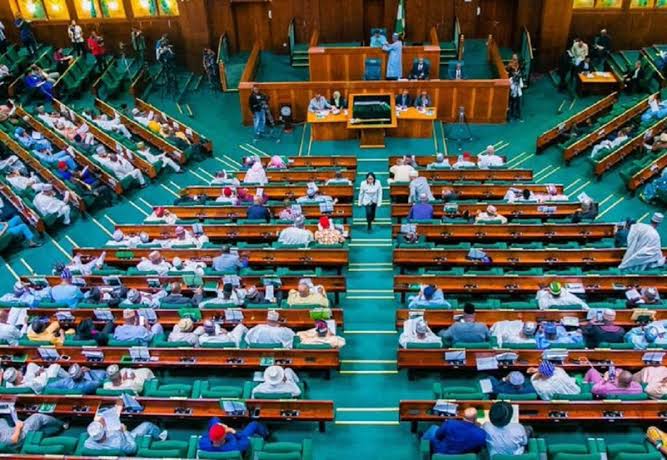
The House of Representatives on Tuesday escalated its investigation into the controversial Presidential Foreign Investment Promotion Council (PFIPC), issuing a 48-hour ultimatum to ministries, departments and agencies accused of frustrating the probe into the organisation’s legal status and operations.
The lawmakers warned that defaulting agencies risk sanctions if they fail to appear before the ad hoc committee investigating the alleged establishment, funding and activities of the council.
Chairman of the committee, Yusuf Gagdi, said the refusal of some government institutions to honour invitations amounted to a direct challenge to the constitutional oversight powers of the National Assembly.
“The committee views this conduct as a serious affront to the constitutional oversight powers of the House of Representatives and an unacceptable disregard for the authority of the parliament, which represents the sovereign will of the Nigerian people,” Gagdi said.
The investigation centres on allegations that the PFIPC operated as a federal agency despite lingering questions over its legal foundation and the circumstances under which it allegedly appeared in official government records.
Gagdi reminded the affected agencies that invitations issued by committees of the House are legally binding under Sections 88 and 89 of the 1999 Constitution.
“It must be clearly understood that invitations issued by a duly constituted committee of the House of Representatives are not matters of discretion. Compliance is therefore a legal obligation, not an act of courtesy,” he said.
The committee directed all defaulting ministries, departments and agencies to appear before lawmakers on Thursday with the relevant officials and documents requested in previous correspondence, describing the hearing as their final opportunity to comply voluntarily.
“Any ministry, department or agency that fails to appear without lawful justification will leave the committee with no alternative but to invoke every constitutional and statutory power available to the House of Representatives to compel compliance and ensure accountability,” Gagdi warned.
The latest development comes amid fresh twists in the controversy, including the committee’s insistence that the Minister of Foreign Affairs, Bianca Odumegwu-Ojukwu, personally appear before the panel despite the ministry sending a representative to Tuesday’s hearing.
The probe was further complicated by the withdrawal of Senior Advocate of Nigeria, Femi Falana, SAN, from the legal team representing the alleged Director-General of the council, Prince Adeniyi Adeyemi.
Lawmakers maintained that the inquiry is aimed at establishing the facts surrounding the operations of the PFIPC and safeguarding the integrity of public administration.
“This investigation is in the national interest. It is not targeted at any individual or institution but is aimed at establishing the facts, protecting the integrity of public administration and ensuring that no public office or institution operates outside the framework of the Constitution,” Gagdi added.
READ ALSO:PFIPC scandal: Reps uncover fresh irregularities
At earlier hearings, the Federal Ministry of Foreign Affairs told the committee that it neither recognised the council nor had any official dealings with Adeyemi.
The ministry also disclosed that the Office of the National Security Adviser had informed it that both the PFIPC and its alleged director-general were unknown to the Federal Government.
As part of the inquiry, officials of the Central Bank of Nigeria informed lawmakers that accounts reportedly linked to the agency were opened on the instruction of the Office of the Accountant-General of the Federation but had zero balances and recorded no financial transactions.
The committee has also received submissions from the Office of the Head of the Civil Service of the Federation, the Office of the Accountant-General and other government institutions as it seeks to determine how the controversial body allegedly gained recognition in official records.
The House said its investigation would also examine the processes that led to the opening of bank accounts in the council’s name and whether public officials or institutions facilitated its operations.
The committee is expected to recommend appropriate legislative and legal measures after concluding its investigation.