By Seun Ibiyemi
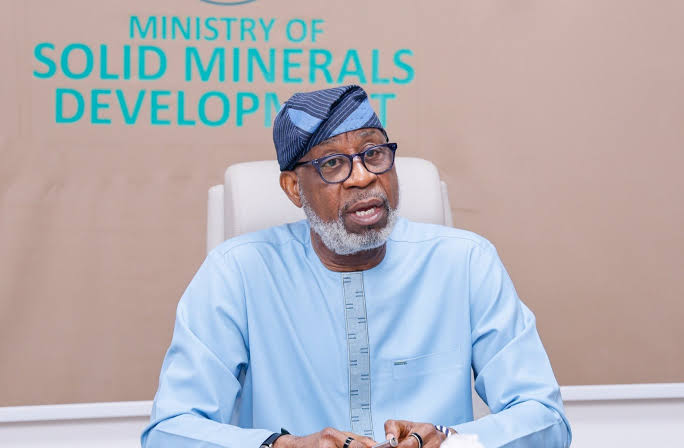
The Minister of Solid Minerals Development, Dele Alake, has said the removal of fuel subsidy by the administration of President Bola Ahmed Tinubu in 2023 prevented Nigeria’s economy from collapsing.
Alake stated this during the 2026 Nigeria Revenue Service-Ministry of Solid Minerals Development Joint Stakeholder Sensitisation Programme for the North Central zone.
According to a statement issued by Kania Maliki on Thursday in Abuja, the minister said the country would have faced severe economic consequences if the subsidy regime had continued.
He explained that the ongoing reforms introduced by the Tinubu administration were aimed at repositioning the nation’s economy and restoring fiscal stability.
“Because by the time this government came into power, or even long before it came into power, this country was borrowing money to pay salaries,” Alake said.
“Not to capitalise the economy, but to pay salaries with current expenditure, not capital. When a nation borrows to pay salaries, there can be no development,” he added.
The minister disclosed that Nigeria’s financial situation had worsened to the point where international lenders became reluctant to extend credit due to the country’s poor credit ratings.
According to him, the government at the time resorted to printing over N20 trillion locally to sustain recurrent expenditure.
Alake said the Tinubu administration took decisive steps to halt further economic decline by blocking leakages and implementing wide-ranging reforms designed to create a resilient and sustainable economy.
He blamed Nigeria’s economic decline on the gradual abandonment of local production in favour of import dependency from the 1980s onward.
The minister noted that the country’s increasing consumption culture led to the collapse of local industries, factory closures and widespread job losses.
He also criticised previous administrations for failing to take bold economic decisions, citing huge foreign exchange expenditures on imported goods that could be produced locally.
“The previous leaderships lacked the courage to reset the Nigerian economy, mindset, values and orientation,” he stated.
Also speaking at the event, the Permanent Secretary of the Ministry, Faruk Yabo, stressed the importance of repositioning the solid minerals sector to support economic diversification, job creation and sustainable national development.
Yabo emphasised the need for compliance, transparency and collaboration with the Nigeria Revenue Service to optimise revenue generation from the mining sector.
He added that aligning mining operations with the 2025 Tax Reform Act was critical to eliminating revenue leakages and ensuring Nigeria derived greater value from its mineral resources.
READ ALSO:DisCos metered 241,590 customers in two months — NERC
The permanent secretary urged operators, regulators and stakeholders in the industry to collaborate in implementing the new royalty administration framework to improve government revenue and promote industry growth.
The event was themed, “From Resource to Revenue: Aligning Solid Minerals Operations with the 2025 Tax Reform Act.”
Under the new tax laws, the Nigeria Revenue Service has assumed responsibility for collecting mineral royalties from mining operators nationwide, while the Ministry of Solid Minerals Development will continue its technical and regulatory oversight functions.
Both agencies are expected to embark on joint nationwide sensitisation programmes to guide operators on royalty filing and payment procedures under the new tax regime.