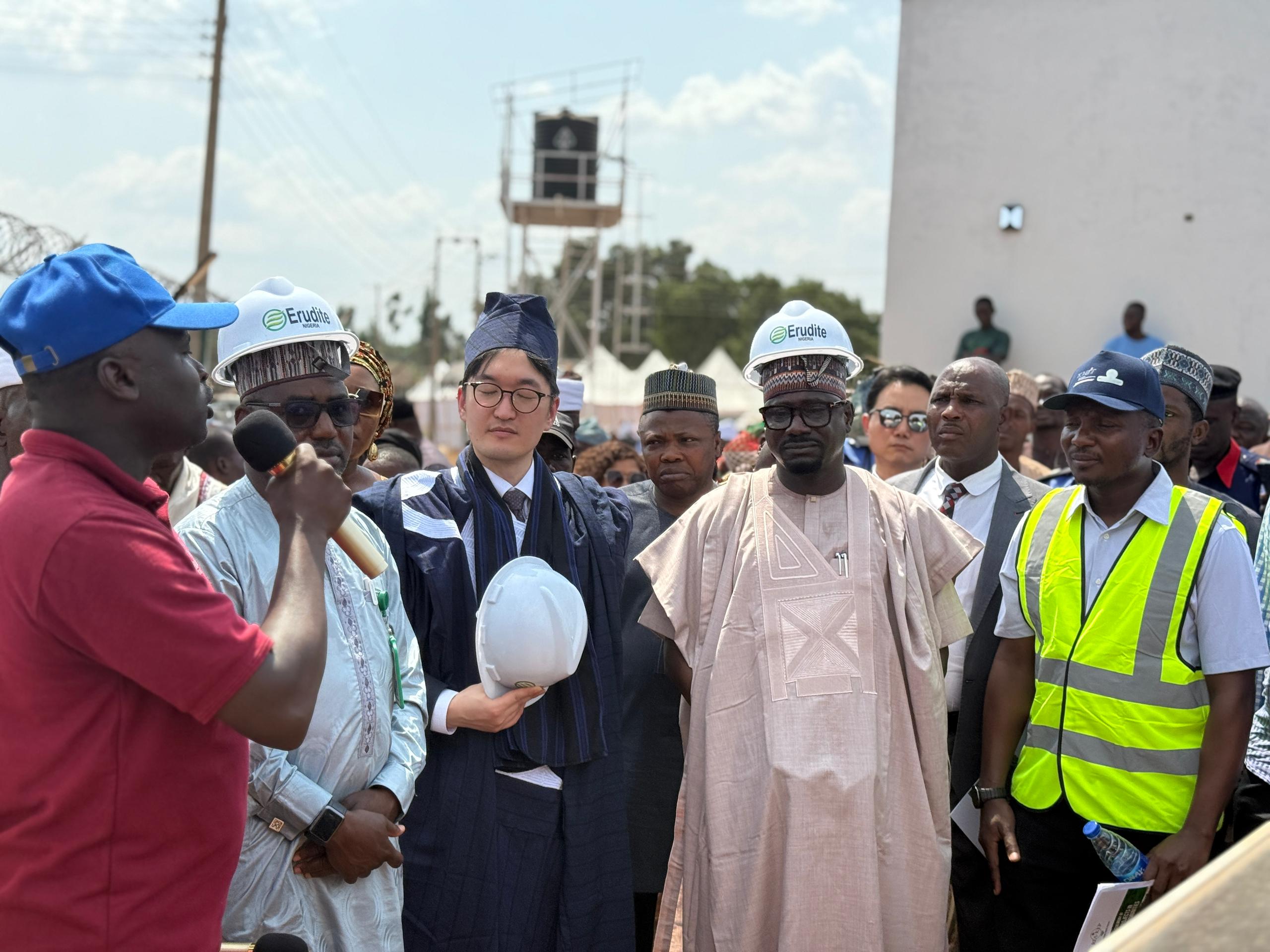
The Rural Electrification Agency (REA), in partnership with the Embassy of the Republic of Korea in Nigeria, has commissioned a combined 1-megawatt clean energy infrastructure serving Rubochi and Ikwa communities in the Federal Capital Territory (FCT), marking a significant step toward expanding sustainable electricity access in Nigeria.
The project, delivered under the Korean Energy Project (KEP), includes a 900 kWp solar hybrid facility in Rubochi and a 100 kWp installation in Ikwa.
Together, the three mini-grids are now fully operational, providing round-the-clock electricity to households, small businesses, schools, healthcare centres, and commercial clusters.
Described as one of the most impactful Official Development Assistance interventions received by Nigeria, the initiative reflects the country’s commitment to accelerating universal energy access through community-driven renewable solutions.
In Rubochi alone, about 2,500 households and institutions are now connected to reliable power, while Ikwa has recorded roughly 300 connections.
Residents are already experiencing tangible benefits, with businesses extending operating hours, students learning in safer and better-lit environments, and healthcare delivery becoming more dependable.
The project integrates solar generation with a modern distribution network, advanced metering infrastructure, and household appliances such as lighting points and sockets, enabling immediate productive use of electricity.
An advanced energy management system has also been deployed at REA headquarters to provide real-time monitoring and technical support to Renewable Energy Service Companies responsible for operations and maintenance.
Through its Rural Electricity Users Cooperative Societies framework, REA collaborated closely with operators and community stakeholders to encourage responsible energy use, foster local ownership, and tackle challenges such as vandalism and inefficient consumption.
The agency credited strong community support led by the traditional ruler of Rubochi for the project’s smooth implementation.
Minister of the Federal Capital Territory, Nyesom Wike, represented by Chief of Staff Chidi Amadi, praised the agency for aligning the initiative with the administration’s development agenda.
Similarly, Minister of Power Adebayo Adelabu, represented by Permanent Secretary Mahmuda Mamman, reaffirmed the Federal Government’s commitment to reducing energy poverty.
“Distributed renewable energy remains a critical pillar in closing the access gap efficiently and sustainably. By leveraging innovation, public-private collaboration, and institutional coordination, we are driving systemic reforms that strengthen grid resilience while expanding off-grid solutions,” he said.
Managing Director and Chief Executive Officer of REA, Abba Abubakar Aliyu, noted that the intervention goes beyond installed capacity to support livelihoods, reduce emissions, and strengthen local economies.
“For years, our people struggled with unreliable power,” said the Sa’Rubochiyi of Rubochi, Muhammed Ibrahim. “This solar project has brought light, but more importantly, it has brought hope.”
Representing the Korean government, Charge d’Affaires Namgoong Tak expressed satisfaction with the collaboration, commending REA’s dedication to delivering sustainable energy interventions.
Stakeholders say the Korean Energy Project demonstrates how strategic international partnerships can accelerate Nigeria’s electrification agenda while embedding sustainability, local content, and community ownership at its core.
REA has urged residents of Rubochi and Ikwa to safeguard the facilities, utilise them productively, and support systems designed to ensure their long-term success.