By Seun Ibiyemi
The House of Representatives has approved a $516.33 million external borrowing request by President Bola Tinubu for the construction of a section of the Sokoto–Badagry Superhighway project.
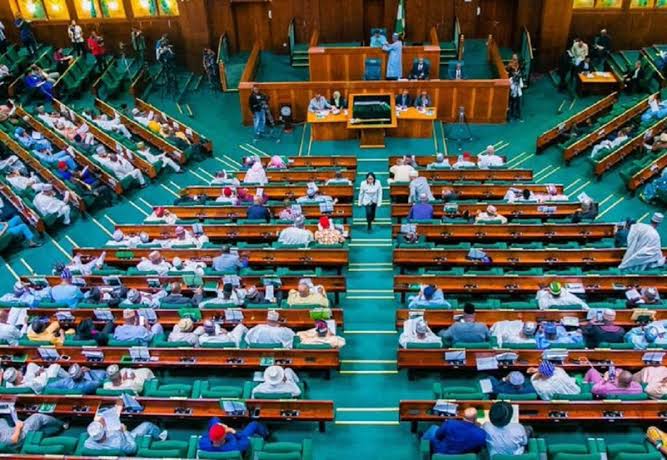
The approval followed the consideration of a report presented by the House Committee on Aids, Loans and Debt Management, chaired by Abubakar Nalaraba.
President Tinubu had earlier written to the National Assembly seeking expeditious approval of the loan request to support ongoing infrastructure development.
At Tuesday’s plenary sitting, the House, while operating in the Committee of Supply, approved the syndicated financing facility from Deutsche Bank AG for the construction of Section 1, Phase 1A and 1B of the highway, covering about 120 kilometres.
Lawmakers approved a total sum of $516,333,007 for the project and also backed its inclusion in the federal government’s rolling borrowing plan, thereby integrating it into Nigeria’s broader debt framework.
The financing arrangement shows the loan will have a nine-year tenor, including a grace period of up to three years, with an interest rate benchmarked at CME SOFR plus 5.35 per cent per annum.
The facility will also be partially guaranteed by the Islamic Corporation for the Insurance of Investment and Export Credit, a development expected to reduce risk exposure for lenders and improve financing conditions.
However, the House attached strict conditions to the approval. It mandated quarterly reports from the Federal Ministry of Finance, the Debt Management Office, and the Ministry of Works on project implementation and fund utilisation.
It also directed that all financing agreements be submitted to the National Assembly within 30 days of financial closure, alongside continuous legislative oversight.
To ensure transparency and value for money, lawmakers further insisted on competitive procurement processes, independent technical and financial audits, and regular evaluation of project milestones.
The Sokoto–Badagry Superhighway is one of the federal government’s major infrastructure projects designed to link Nigeria’s north-west and south-west regions, enhance transportation efficiency, and boost trade and economic activities across several states.