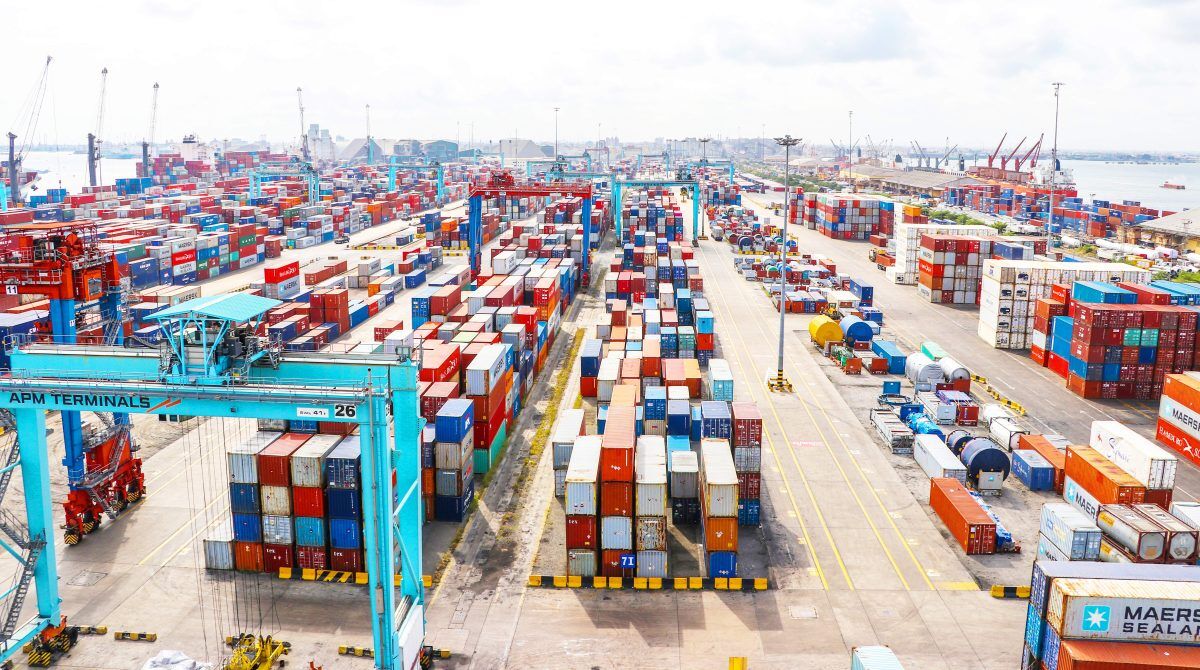
Thousands of jobs are at risk in Lagos following the shutdown of several inland container terminals, as operators lament severe cargo shortages from Apapa and Tin-Can Island ports.
The Association of Bonded Terminals Operators of Nigeria has confirmed that ITC Container Terminals, Alliance Container Terminal, and Creseada Container Terminals have ceased operations due to lack of patronage from shipping companies and seaport terminal operators.
Speaking to journalists in Lagos, the association’s General Secretary, Mr. Haruna Omolajomo, said the crisis has pushed the sector into near collapse, with most facilities operating far below capacity.
He disclosed that more than 40 indigenous bonded terminals exist in Lagos alone, but none are currently operating above 10 percent capacity.
“In Lagos alone, we have over 40 indigenous bonded terminals operating and they have spent more than N5 trillion to equip their terminals in terms of infrastructure and machinery,” Omolajomo said.
“I can tell you authoritatively that none of the over 40 indigenous bonded terminals are operating beyond 10 percent due to non-patronage.”
He warned that many operators are struggling under heavy debt burdens after taking bank loans to develop infrastructure, adding that the financial pressure has led to severe health and social consequences among operators.
“For some that are lucky, they are battling high blood pressure. For some, who are not lucky, they are already six feet below the ground,” he said.
Omolajomo further revealed that at least three terminals—ITC Container Terminals, Alliance Container Terminal, and Creseada Bonded Terminals—have completely shut down, resulting in the loss of about 400 jobs.
He added that several others, including Mid Maritime Container Terminal, Port Express Container Terminal, Duncan Container Terminal, and Sapid Container Terminal, are currently operating below 5 percent capacity and may also close if conditions persist.
READ ALSO: Despite debt relief, multiple taxes, levies keep airlines under presure – CPPE
“These operators have between them close to 800 workers. They can fold up anytime from now if the situation persists like this, and that means more workers off jobs,” he warned.
On possible solutions, the association urged the Federal Government to introduce a policy mandating that a portion of cargoes from the ports be allocated to indigenous container terminal operators.
“We are not saying government should not have anything to do with foreign companies, but it should respect local content and allow us to also do business,” Omolajomo said.
He proposed that at least 30 percent of cargoes arriving at Nigerian ports be directed to indigenous bonded terminals, arguing that such a policy would boost government revenue and create employment opportunities.
“When indigenous bonded terminals get cargoes from port operators, it will increase the revenue accruable to the Federal Government, aside from creating jobs for more Nigerians,” he added.
The association said it has made several appeals to government authorities, including presentations to the Presidency and the National Assembly, but insists that no concrete action has been taken so far.