By Seun Ibiyemi
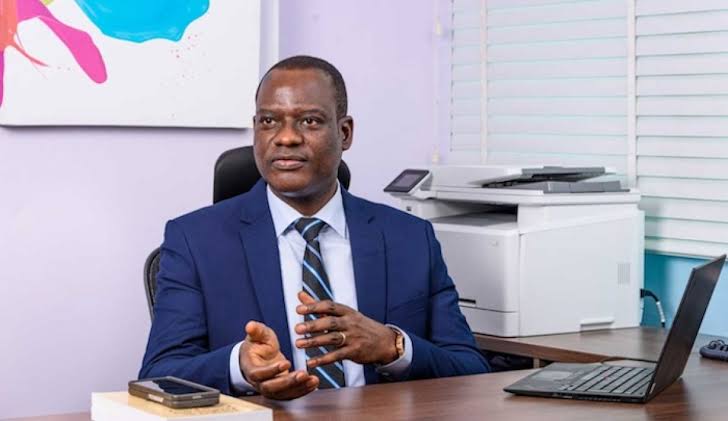
The Nigerian Senate on Wednesday confirmed the appointment of Taiwo Oyedele as Minister of State for Finance after nearly three hours of questioning by lawmakers on key economic and fiscal issues.
Oyedele’s confirmation followed a rigorous screening session during which senators across party lines questioned him on strategies to strengthen government revenue, stabilise fuel prices and improve fiscal management.
Responding to questions, Oyedele suggested that forward sales of crude oil could help shield Nigeria’s economy from volatile international oil prices while providing more predictable government revenue and fuel pricing for citizens.
“One strategy used in several countries is selling crude forward. Nigeria can lock in a price for a portion of our crude for a period of time,” he said.
Read also:Experts urge bold privatisation to revive Nigeria’s power sector
According to him, such an arrangement would guarantee budget financing and protect the country from sudden fluctuations in global oil prices.
On the challenge of unpaid government contractors, Oyedele advocated awarding contracts strictly in line with available funds to prevent what he described as a “trust deficit premium.”
He explained that when contractors anticipate delayed payments from government, they often inflate project costs, noting that a contract originally valued at N1 billion could rise to about N2 billion to cover potential losses.
Speaking on Nigeria’s revenue base, Oyedele said the country had historically focused too heavily on taxation and oil revenues, while other sectors such as solid minerals remained underdeveloped despite their huge potential.
“For many years as a country, we have disproportionately focused on taxation and oil and gas, and that has taken our attention away from other areas where we can generate revenue,” he said.
He noted that policy uncertainty had remained a major obstacle to the growth of the mining sector and hinted that the government might approach the National Assembly to address regulatory gaps.
Oyedele also emphasised the importance of realistic budgeting and improved project execution, pointing out that many federal budgets in recent years had been overly ambitious compared to actual revenue generation.
He added that nearly half of Nigeria’s budgets are currently deficit-financed when both federal and state spending are considered, stressing the need to prioritise revenue generation and prudent spending.
On the impact of fuel subsidy removal, Oyedele said increased government revenue from the policy must be spent on projects that directly benefit Nigerians, particularly infrastructure that links farms to markets.
“If the government gets more revenue because subsidy has been removed, it is actually a transfer from the people to the government.
The only way we can make that sacrifice worthwhile is to spend that money in areas of priority for the people,” he said.
Following the confirmation, Senate President Godswill Akpabio commended President Bola Ahmed Tinubu for appointing Oyedele, describing him as a seasoned professional with the expertise required to support the country’s economic management.