By Seun Ibiyemi
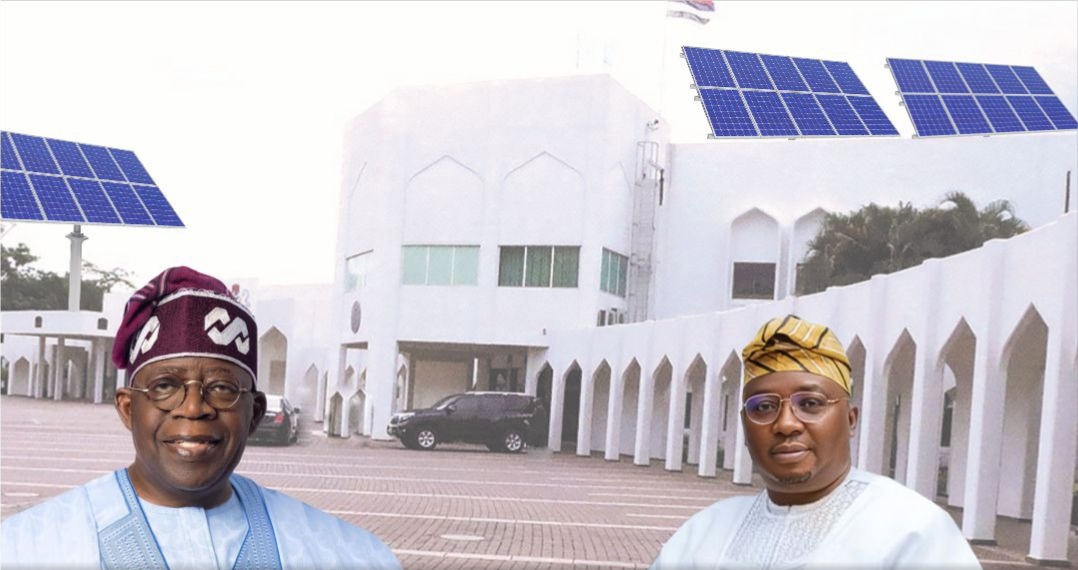
Nigeria’s decision to power the Aso Rock Presidential Villa with its own solar energy system marks a symbolic and potentially transformative moment for the nation’s beleaguered electricity sector.
While the move has drawn praise for its environmental foresight, it also lays bare deep structural problems in the country’s energy supply and carries significant economic and political implications.
For decades, Nigeria’s national electricity grid has struggled to provide consistent power. Frequent outages, low generation capacity, technical inefficiencies and transmission bottlenecks have left the country largely dependent on diesel generators a costly and polluting alternative.
That even the nation’s highest office is abandoning the grid underscores how dire the situation has become for ordinary Nigerians and institutions alike.
Analysts say this shift reflects a “vote of no confidence” in current energy infrastructure. Aso Rock’s move to solar suggests that government leaders are prioritising reliable and sustainable power for critical operations, even if it means bypassing the very system they oversee.
While precise figures vary across reports, the federal government has budgeted billions of naira for the solar installation at Aso Rock, with estimates ranging from ₦10 billion to ₦17 billion.
Critics argue this raises questions about priority spending in a country where millions still experience daily blackouts. If such funds were allocated directly to strengthen the national grid or support community‑level renewable projects, the impact might be more widespread.
However, proponents contend that reducing reliance on costly diesel generators which contribute significantly to government operating expenses could offer long‑term savings. Ministries, agencies and public institutions spend large sums annually on fuel, reflecting the failure of grid supply.
Investing in solar may be financially prudent over time if it reduces these recurring costs.
Policy Implications for Energy Reform
Aso Rock’s solar initiative could accelerate broader energy policy reform.
Read also: Epileptic power: Tinubu moves to establish Grid Asset Management Company
Nigeria has vast renewable potential, particularly in solar capacity, yet adoption has lagged due to high import costs for equipment and policy uncertainty.
The presidency’s endorsement of solar could prompt:
increased private sector investment in renewable energy; more robust incentives for off‑grid solar solutions; and renewed focus on decentralised energy systems.
Energy experts suggest that if the government couples high‑profile projects like this with supportive regulatory frameworks, it could help drive scale and affordability for solar solutions nationwide.
Public reaction has been mixed. Supporters view the shift as a practical response to chronic grid failures and a step toward sustainability. Critics, however, see it as highlighting the disconnect between leadership and citizen experience.
They argue that ordinary Nigerians should benefit first from reliable grid improvements before elite institutions install independent power systems.
Some political voices have framed the move as emblematic of a broader governance challenge: leadership that adjusts for comfort without adequately addressing systemic issues affecting the masses.
The implications of Aso Rock’s decision extend beyond the Villa’s compound walls. It has thrust Nigeria’s electricity challenges back into national discourse and could serve as a catalyst for more urgent action.
But whether it leads to meaningful, inclusive reform hinges on what follows: policy commitments, budgetary allocations, sector accountability, and a genuine prioritisation of reliable power for all Nigerians.
In a country with one of the lowest access rates to consistent electricity among emerging economies, the presidency’s solar pivot shines a light on both the promise and the shortcomings of Nigeria’s energy landscape.
For millions who still lack dependable power at home and work, the real test will be whether this initiative inspires broader, transformative change not just in policy rhetoric, but in power flowing to every town and city.