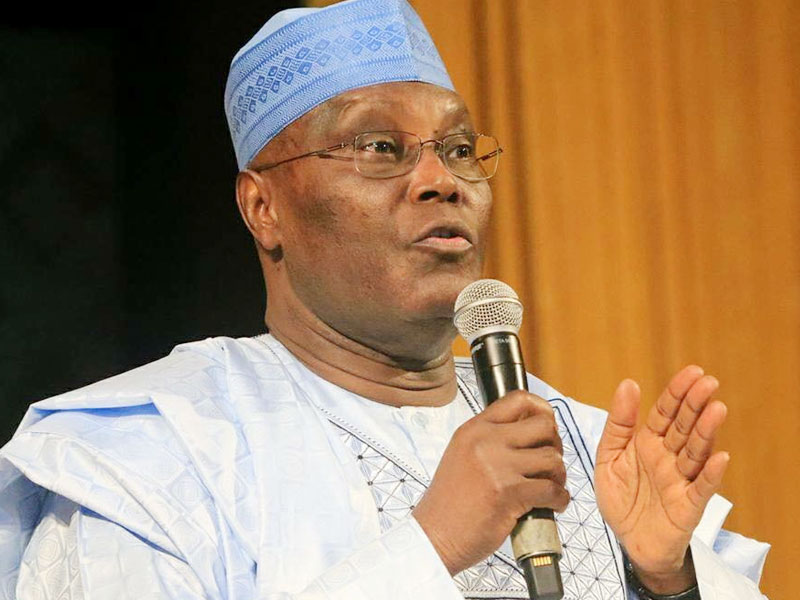
Former Vice President and African Democratic Congress (ADC) chieftain, Atiku Abubakar, has cited United States President Donald Trump’s support for domestic energy production and refining as backing for his proposal to reintroduce a targeted production subsidy in Nigeria.
Atiku made the remarks in a statement issued by his Senior Special Assistant on Public Communication, Phrank Shaibu, in which he accused President Bola Ahmed Tinubu of worsening the cost-of-living crisis through his economic policies.
The former vice president argued that Trump’s measures to bolster American energy production and refining demonstrated the importance of government support for strategic sectors, a position he said was consistent with the advocacy of the Crude Oil Refinery Owners Association of Nigeria (CORAN).
“Major economies like the United States recognise the necessity of safeguarding strategic energy sectors,” Atiku said.
He questioned why government intervention should be considered “bad economics” when it was intended to benefit ordinary Nigerians, while tax waivers, incentives and concessions were offered to multinationals and politically connected conglomerates.
Atiku said the administration’s decision to end the petrol subsidy had contributed to higher transport, fuel and food costs, while its rejection of the proposed production subsidy would further burden ordinary citizens.
He argued that supporting local production and refining could boost supply, reduce consumer prices and restore disposable income.
“By supporting what is produced and refined locally, boosting supply, and regulating consumer prices, Nigerians will see tangible relief at the pumps,” he said.
The ADC chieftain also highlighted increases in fertiliser prices from approximately ₦9,000 to nearly ₦50,000 and petrol prices from about ₦199 to around ₦1,400 per litre.
He further criticised the administration over unreliable electricity, student loans, persistent security challenges and the stalling of social safety-net programmes such as N-Power.
Atiku said businesses were also struggling with declining consumer purchasing power, using the example of a frozen food vendor in Kubwa who faced higher transport, electricity and restocking costs while customers bought less or purchased on credit.
READ ALSO: Customs board confirms six management appointments, reviews N4.3trn revenue
He said the resulting cash-flow pressure could spread across the entire supply chain, affecting businesses and households.
Atiku maintained that the proposed production subsidy was designed to put money back into Nigerians’ hands and help address the economic hardship.
He said the policy would support local production and refining, boost supply and help regulate consumer prices.
“After enduring all this hardship, what has the ordinary citizen gained?” he asked.
The former vice president said the proposed intervention was intended to provide tangible relief to Nigerians, rather than relying solely on macroeconomic indicators.