
By Seun Ibiyemi
The Nigeria Customs Service says its newly acquired inspection scanners and electronic cargo tracking technology will help reduce physical cargo checks, minimise diversion, improve revenue collection and strengthen border security.
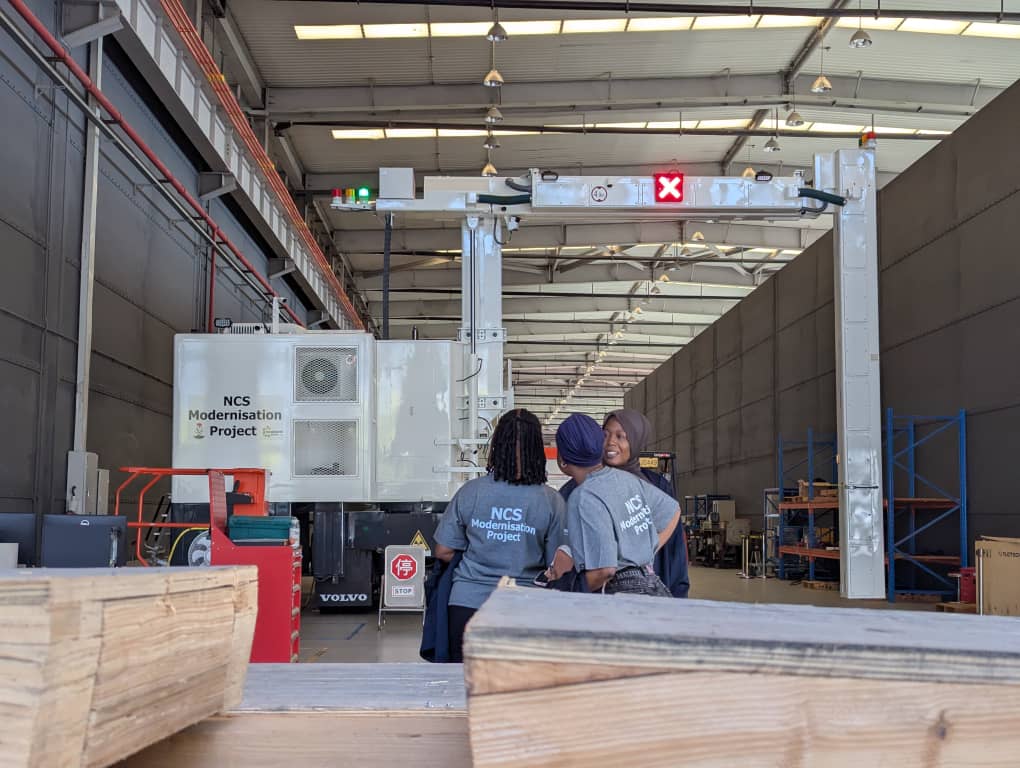
The Nigeria Customs Service (NCS) and Trade Modernisation Project Limited (TMPL) have completed a two-week Factory Acceptance Test (FAT) for newly acquired Non-Intrusive Inspection (NII) equipment and an Electronic Cargo Tracking System (ECTS) in China.
The exercise, which took place from October 9 to 20, 2026, was conducted at the facility of Nuctech Company Limited, the manufacturer of the equipment.
The delegation was led by the Deputy Comptroller-General of Customs in charge of Information Communication and Technology/Modernisation, Oluyomi Adebakin, and comprised technical experts from the Customs Service and TMPL.
The tests involved technical verification of the scanners and electronic tracking system, which are designed to work together to improve cargo examination and enable real-time monitoring of consignments from ports to their final destinations.
According to the NCS, the factory assessment was intended to confirm that the equipment met contractual specifications and international operational standards before shipment to Nigeria.
Speaking during the exercise, Adebakin reaffirmed Comptroller-General of Customs Adewale Adeniyi’s commitment to deploying technology to improve trade facilitation, optimise revenue collection and strengthen national security.
She said the inspection was a critical quality-assurance measure to ensure that the equipment was fit for purpose before deployment.
Adebakin stated that the technology would help accelerate cargo examination, reduce cargo dwell time, improve the detection of concealed and prohibited items, and facilitate legitimate trade.
She said the Customs Service remained committed to deploying advanced technological solutions capable of improving operational efficiency across its formations.
The integration of non-intrusive inspection scanners with electronic cargo tracking is expected to give officers additional tools to monitor cargo movements and identify potential irregularities without relying solely on physical inspections.
The Acting Comptroller of Non-Intrusive Inspection, Deputy Comptroller of Customs Umar Madugu, said the new scanners and ECTS would reduce the need for 100 per cent physical examination of cargo and minimise human contact during inspection.
He added that the systems would help curb cargo diversion and improve operational efficiency across Customs formations.
Non-intrusive inspection technology enables officers to examine cargo using scanning equipment rather than physically opening every consignment, while electronic tracking provides visibility into cargo movements along designated routes.
The combined deployment is intended to strengthen cargo monitoring and support more efficient Customs procedures.
Speaking on behalf of TMPL, the company’s General Manager, Bamidele Chinedu, described the Factory Acceptance Test as a significant milestone in the implementation of the Trade Modernisation Project.
READ ALSO:Lagos Blue Economy Adviser pledges action on riverine women’s concerns
He said integrating non-intrusive inspection scanners with the electronic tracking system was central to building a transparent, technology-driven Customs administration.
The project is expected to support more efficient cargo processing and improve monitoring across the supply chain through the use of modern inspection and tracking systems.
Niu Chao, Project Manager at Nuctech Company Limited, said the company was committed to delivering world-class equipment, technical support, capacity building and after-sales services.
As part of the two-week exercise, technical experts from the NCS and TMPL received training on handling, operating and maintaining the scanners and electronic tracking system.
The training is intended to prepare personnel for the equipment’s deployment and ensure its effective operation and long-term sustainability in Nigeria.
The completion of the Factory Acceptance Test marks a key stage in the process of preparing the equipment for shipment and eventual deployment, although the statement did not specify a delivery date or the number of scanners involved.
The Customs Service is seeking to leverage technology to improve cargo examination, strengthen enforcement and facilitate legitimate trade while addressing challenges associated with cargo diversion and prohibited goods.
The effectiveness of the new systems will ultimately depend on successful deployment, reliable maintenance, adequate personnel training and integration with existing Customs operations.

