
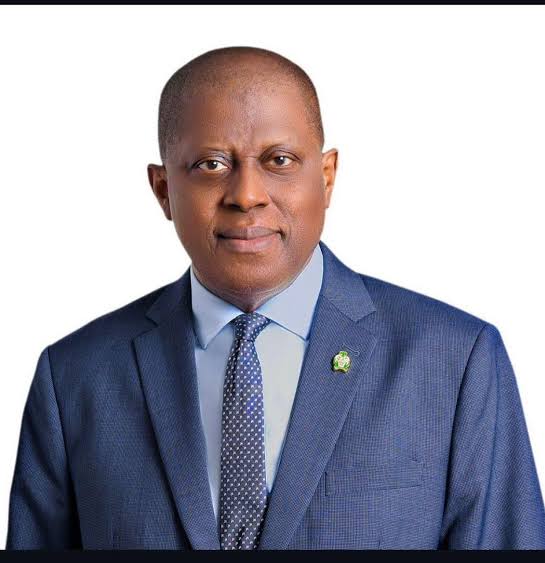
The Central Bank of Nigeria (CBN) has assured Nigerians that improvements recorded in the country’s macroeconomic indicators will increasingly translate into better living conditions for households and businesses as ongoing fiscal and monetary reforms take effect.
The CBN Governor, Olayemi Cardoso, gave the assurance on Tuesday at the 19th Annual Banking and Finance Conference of the Chartered Institute of Bankers of Nigeria (CIBN) in Abuja.
Cardoso, represented by the Deputy Governor, Economic Policy Directorate, Philip Ikeazor, acknowledged concerns that recent improvements in economic indicators had yet to fully reflect in the daily experiences of Nigerians.
Ikeazor said the CBN was working with fiscal authorities to ensure that the gains from economic stabilisation were transmitted to households and businesses.
He said, “All watchers of the economy have acknowledged the macroeconomic stability we have today. But the question that remains on everyone’s mind is, when will the common man feel the full benefits? That is on its way because of this same collaboration that I’m talking about.”
According to him, fiscal reforms currently being implemented would soon begin to complement the monetary measures introduced by the CBN.
He specifically cited the National Single Window and other ongoing government initiatives as measures expected to improve economic activity and deliver tangible benefits to Nigerians.
The CBN official attributed the improvement in macroeconomic conditions partly to stronger coordination between monetary and fiscal authorities, describing the current level of collaboration as unprecedented.
He also credited President Bola Ahmed Tinubu with allowing the apex bank to concentrate on its statutory mandate.
READ ALSO: MDGIF denies N94.4bn gas flare penalty shortfall, seeks audit review
President Tinubu, represented at the conference by the Minister of Finance and Coordinating Minister of the Economy, Taiwo Oyedele, said the country’s return to macroeconomic stability should not be mistaken for economic prosperity.
“Stability has returned. Credibility is rising. Prosperity is coming,” Tinubu said.
He said the next phase of the government’s reform programme would focus on converting economic stability into investment, production, job creation and improved living standards.
According to him, the banking and financial services industry will have a critical role to play in financing the real economy and supporting businesses.
The President and Chairman of Council of CIBN, Dr. Dele Alabi, said Nigeria had recorded significant progress at the macroeconomic level but needed to ensure that the gains reached individuals, households and businesses.
Alabi said the country had not yet reached its final destination and urged policymakers to ensure that improvements in macroeconomic fundamentals translated into better business conditions and household finances.
He noted that MSMEs continued to face high operating costs, infrastructure challenges and limited access to finance.
Also, the Chairman of the Body of Bank CEOs and Group Managing Director/Chief Executive Officer of United Bank for Africa Plc, Oliver Alawuba, said recent economic indicators showed that Nigeria was moving in the right direction.
He cited 4.43 per cent year-on-year GDP growth in the second quarter of 2026, easing inflation and stronger external reserves as evidence of improving economic conditions.
However, Alawuba said greater fiscal and monetary coordination remained necessary to sustain the gains and increase credit to productive sectors.
“These are signposts. They are mileposts. They are not the destination,” he said.
He urged recapitalised banks to deploy their stronger balance sheets towards providing affordable credit to MSMEs, agriculture, manufacturing, infrastructure and export-oriented businesses.
Similarly, the World Bank Country Director for Nigeria, Mathew Verghis, represented by Senior Private Sector Specialist, Bertine Kamphuis, said the next major test of Nigeria’s economic reforms should be job creation.
The World Bank noted that domestic credit to the private sector remained at about 13 per cent of GDP, while MSMEs received only about one per cent of credit, despite their major contribution to employment.
The bank therefore called for greater movement of capital towards productive enterprises capable of expanding operations, creating jobs and driving sustainable economic growth.