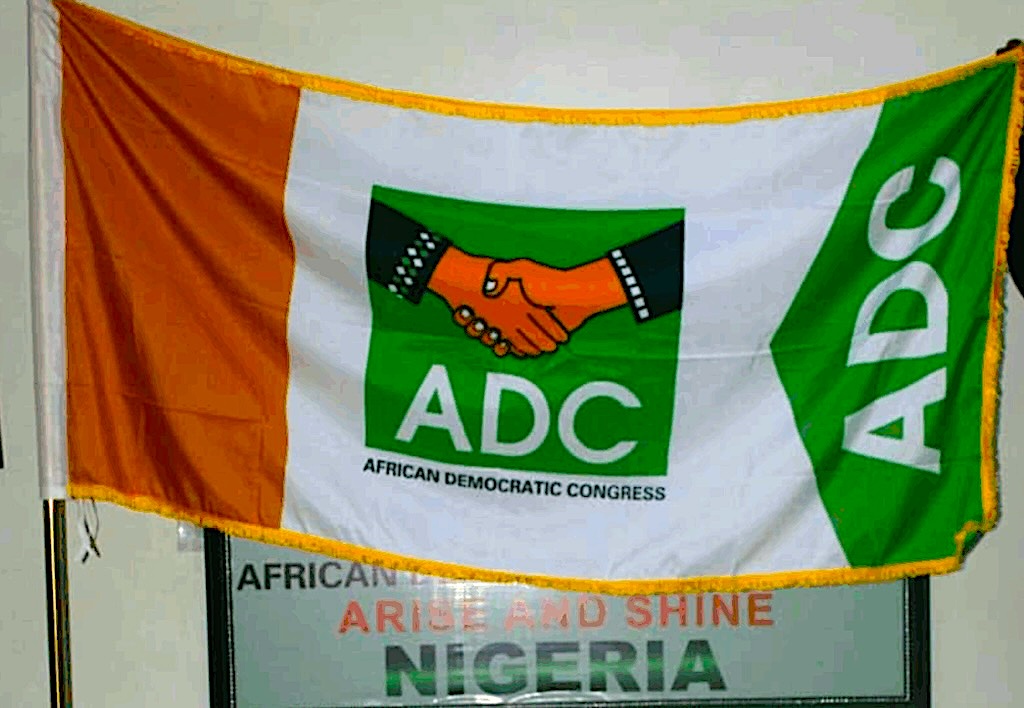
The African Democratic Congress (ADC) has rejected the Presidency’s claim that its presidential candidate, Atiku Abubakar’s proposal to reduce fuel prices through a production subsidy could cost the Federal Government about N19.1 trillion annually.
The opposition party described the estimate as speculative, arguing that the Presidency arrived at the figure by constructing a subsidy model that Atiku did not propose.
In a statement issued by its National Publicity Secretary, Bolaji Abdullahi, the ADC said the Presidency’s calculation was based on assumptions that crude oil would sell at about $80 per barrel and that the government would subsidise a $40-per-barrel price differential.
The party challenged the Presidency to provide the basis for the calculation, insisting that Atiku had never proposed a permanent $40-per-barrel subsidy.
According to the ADC, Atiku’s proposal envisages the government setting a benchmark crude price at the beginning of each budget cycle, linked to a targeted maximum domestic price for petroleum products.
Under the proposed arrangement, government intervention would only apply when market prices rise above the benchmark and would remain subject to a predetermined fiscal ceiling.
The party said the model would represent a shift from Nigeria’s former import-based petrol subsidy regime to a production-linked intervention designed to encourage domestic refining and reduce dependence on imported petroleum products.
“While the old model spends foreign exchange importing petroleum products, the Atiku model seeks to conserve foreign exchange by producing those products locally,” the ADC said.
The opposition party said the proposed system would also provide mechanisms for tracking crude from allocation to refinery intake, production and domestic distribution.
It said the framework would be supported by verified refinery capacity, audited production records, digital tracking, domestic supply obligations and penalties for diversion.
The ADC also challenged the Presidency to account for the cost and economic value of existing government interventions in the petroleum sector.
It cited the audited 2024 accounts of the Nigerian National Petroleum Company Limited, which recorded about N7.13 trillion under “Energy Security”.
The party also referenced broader petroleum-related expenditures and receivables estimated at about N17.5 trillion, depending on the accounting categories.
The ADC stressed that it was not equating these figures with conventional petrol subsidy but argued that Nigerians deserved to know what the expenditures represented, what they delivered and their economic value.
The party further cited the Federal Government’s Deep Offshore Oil and Gas Projects Incentives (Tax Remission) Order 2026, which provides production tax credits of up to $11.50 per barrel for qualifying projects.
It questioned why the government could offer production incentives to upstream oil projects to attract investment while dismissing a controlled production incentive for domestic refineries as economically irresponsible.
The ADC also referred to import-duty exemptions approved by the Nigeria Customs Service, reportedly valued at about N34 trillion.
While acknowledging that the figure represented approved exemptions rather than direct government expenditure, the party said the policy demonstrated that government already recognised that foregoing revenue could be justified where it generated broader economic or social benefits.
The ADC argued that the Presidency’s N19.1 trillion estimate failed to account for potential foreign-exchange savings that could result from increased domestic refining.
According to the party, greater local production of petroleum products would reduce imports, conserve foreign exchange, retain more value within Nigeria and potentially generate additional export earnings.
It said the impact of fuel prices should also be assessed beyond the pump price because expensive petrol affects transportation, food distribution, agriculture, manufacturing, construction, logistics and household purchasing power.
The party therefore challenged the government to calculate not only the projected fiscal cost of Atiku’s proposal but also the broader economic cost of the existing system.
This, it said, should include higher transportation and food distribution costs, foreign-exchange demand and the impact of elevated energy costs on industrial competitiveness.
The ADC maintained that Atiku’s proposal should not be confused with the former petrol subsidy regime, which it acknowledged was vulnerable to opacity, import arbitrage and unverifiable claims.
Instead, the party said the proposed intervention would be capped, audited and traceable, tied directly to domestic production and gradually phased out as local refining becomes more competitive.
The ADC said the central issue was not whether government should intervene in the petroleum sector, but what should be subsidised, why the intervention was necessary and who would ultimately benefit.
READ ALSO:Court restrains NMDPRA from shutting down Dangote Refinery
“What Nigerians need is cheaper fuel, because Nigerians are too poor not to be subsidised. Nigerian crude should create Nigerian value for Nigerians,” the party said.
The opposition party also challenged the Presidency to explain why an upstream production incentive of up to $11.50 per barrel was economically defensible while a controlled incentive targeted at domestic refineries and lower fuel prices was not.
It said Nigerians deserved a coherent economic policy rather than what it described as a politically driven argument against its candidate’s proposal.
“If the Presidency truly believes that even such an intervention is too expensive, then it must answer the question it has so far avoided: why is cheaper energy for Nigerians less deserving of public investment than the other multi-trillion-naira expenditures that this government has made?” the ADC asked.