
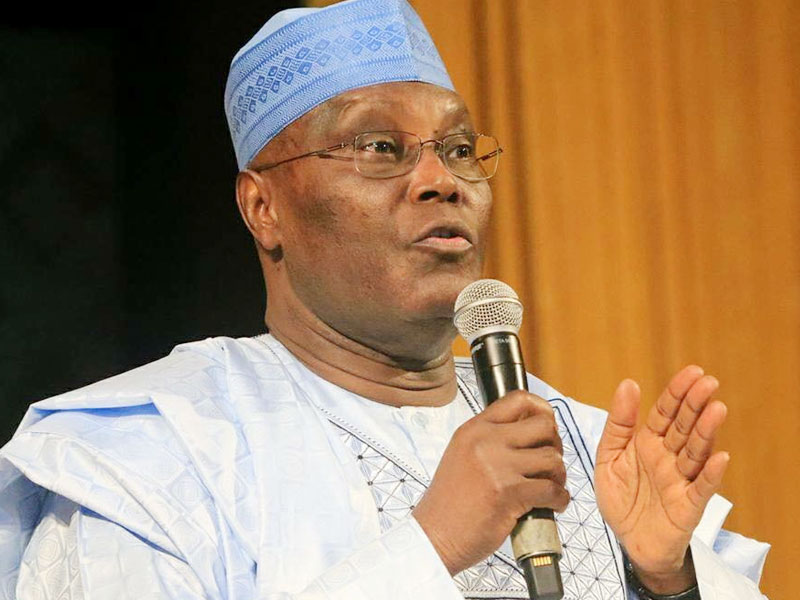
By Seun Ibiyemi
Former Vice President and African Democratic Congress (ADC) presidential candidate, Atiku Abubakar, has challenged the Federal Government to account for the ₦144.86 billion allocated to the National Plan on Financing Safe Schools amid reports that insecurity has forced the closure of schools in about 40 local government areas.
Atiku, in a statement issued on Tuesday by his Senior Special Assistant on Public Communication, Phrank Shaibu, questioned the impact of the Safe Schools programme, arguing that its effectiveness should be measured by whether pupils and teachers can safely return to classrooms.
He said the continued disruption of education by terrorists, bandits and other armed groups was worsening Nigeria’s out-of-school crisis and exposing weaknesses in the government’s approach to school security.
“At a time when Nigeria is already battling a severe out-of-school crisis, insecurity is driving even more children from the classroom,” Atiku said.
He demanded a comprehensive breakdown of the ₦144.86 billion programme, including the amount mobilised and released, the agencies and contractors that received the funds, the schools covered, security infrastructure provided and measurable outcomes achieved.
The former vice president, however, stressed that accountability for the funds alone would not solve the security crisis.
“Budgeting money is not the same thing as securing schools. Announcing programmes is not the same thing as protecting children,” he said.
According to Atiku, the government should adopt a decentralised, intelligence-led security model that incorporates information from communities where vulnerable schools are located.
He proposed functional early-warning and rapid-response mechanisms around high-risk schools, improved intelligence sharing among schools, communities and security agencies, as well as clearly defined emergency-response arrangements.
The ADC candidate argued that local residents often have information about suspicious movements and emerging threats before such intelligence reaches federal security agencies.
“Local communities know their terrain. They know when unfamiliar people enter their communities and often see the warning signs before Abuja does,” he said.
Atiku also called for greater transparency in school-security spending, insisting that every naira allocated should be linked to a specific and measurable outcome.
“Safe Schools will be measured by children in classrooms, not billions in government documents,” he said.
His comments came amid renewed concerns over attacks and abductions involving educational institutions, particularly in Borno State.
Atiku cited reports of the abduction of 36 students and a staff member of Government Day Secondary School, Lassa, in Askira/Uba Local Government Area, as well as reports that 42 pupils remained missing following an attack in Mussa.
He warned that prolonged school closures could expose children to poverty, child labour, early marriage, exploitation and radicalisation.
“Protecting education is therefore itself a national security strategy,” he said.
The former vice president also challenged President Bola Tinubu over reports that government forces had identified forests where terrorists and kidnappers operate, asking why the criminal elements remained at large if their locations were known.
READ ALSO:Osun 2026: Fadahunsi clarifies ‘Kill Accord’ comment, says he meant ballot victory
He urged the government to deploy security forces to such locations, rescue abducted students and bring their captors to justice.
Atiku further linked the Safe Schools debate to his broader proposal for restructuring Nigeria’s security architecture around community intelligence, rapid response and local participation.
“Our alternative is straightforward: secure the communities, empower local intelligence, protect vulnerable schools, respond rapidly to threats, measure results, and account for every naira,” he said.
He maintained that protecting schools should be treated as a core national security responsibility, arguing that criminal groups should not be allowed to determine when Nigerian children attend school.

