… Court warrant needed to produce Adeyemi, Police tell Reps
….House probe is mere grandstanding, let ICPC work – CACOL
By Seun Ibiyemi
The Head of the Civil Service of the Federation (HoSF), Didi Esther Walson-Jack, has accepted responsibility for an administrative lapse that led her office to approve an authorised establishment and recruitment waiver for a fake presidential agency after relying on forged documents.
This is even as the Nigeria Police Force (NPF) informed the House of Representatives that it cannot produce Prince Adeyemi Adeniyi before an investigative committee without a valid court production warrant.
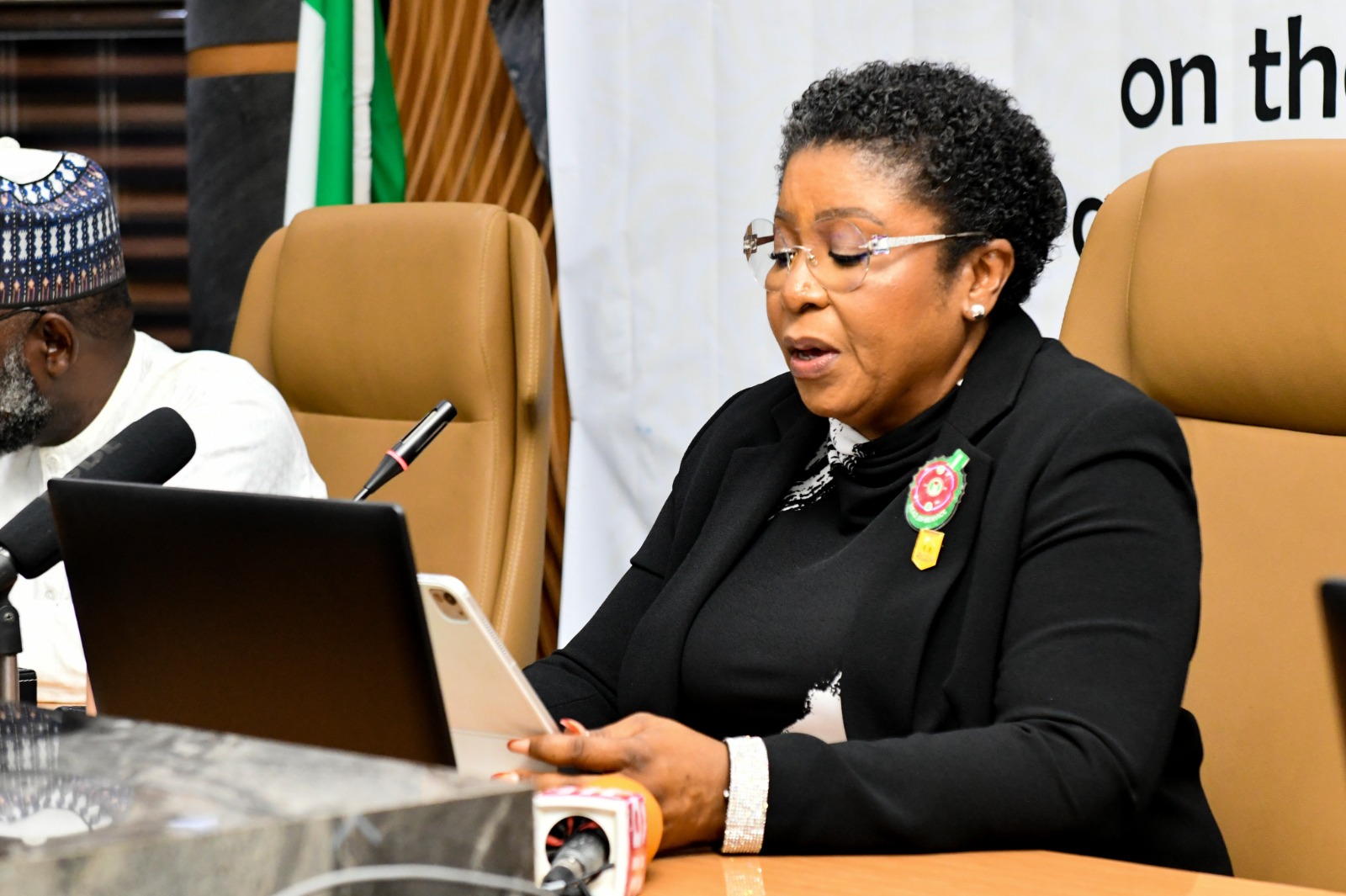
Walson-Jack made the admission on Wednesday while appearing before the House of Representatives Ad-hoc Committee investigating the activities of the purported Presidential Foreign Intervention Promotion Council (PFIPC), chaired by Yusuf Gagdi.
Addressing lawmakers, the Head of Service acknowledged that her office failed to carry out adequate due diligence before granting approvals to the organisation.
“We now, having seen all the facts and observed all the documents, concede that we ought to have carried out more due diligence in the discharge of the duties of the office in issuing an authorized establishment and a recruitment waiver to the PEAC/PFIPC,” she said.
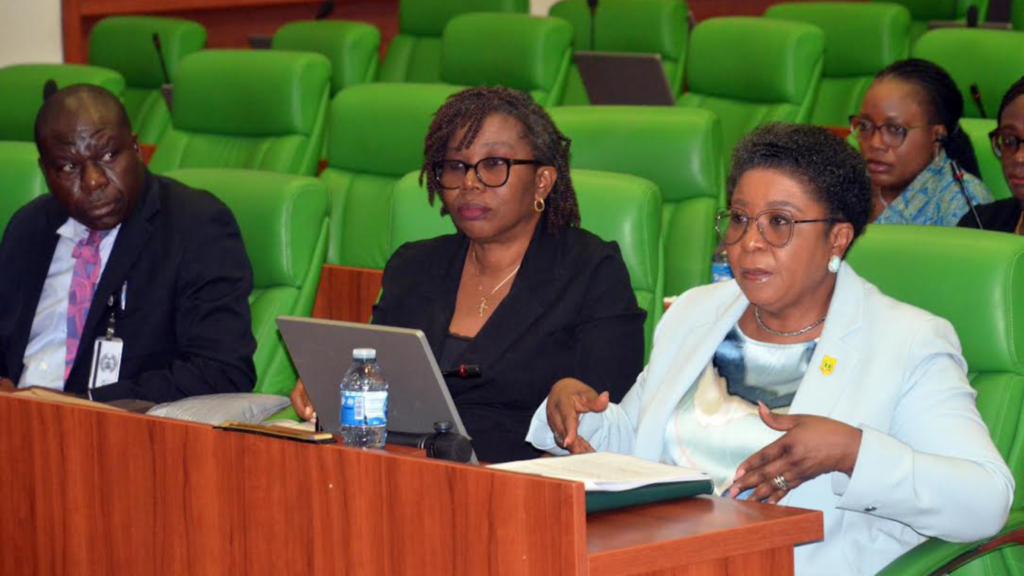
Representative of Inspector General of Police (IGP), Olufemi Akinola (left); Permanent Secretary, Career Management Office, Nkiruka Jones-Nebo, and Head of Civil Service of the Federation, Didi Esther Walson-Jack, during their session with the House of Representatives Ad-hoc Committee to Investigate the Unestablished Presidential Foreign Investment Promotion Council (PFIPC), at the National Assembly, Abuja, yesterday. PHOTO: NAN
She described the incident as an unprecedented security and administrative breach in the history of Nigeria’s public service, noting that her office had processed requests from hundreds of federal agencies over the years without encountering a similar case.
“Over the years, this office has dealt with hundreds of requests from both permanent and ad hoc federal government agencies for authorized establishments and recruitment waivers. We have never encountered a situation like this one in almost a century since the beginning of the Federal Civil Service,” she stated.
Walson-Jack, however, clarified that despite the issuance of the authorised establishment and recruitment waiver, the fake agency never became operational within the civil service.
According to her, no civil servants were deployed to the organisation, no office accommodation was allocated, and no organisational structure was approved.
“Regarding the issue of deployment, there was no deployment. As for office accommodation, we did not provide any office accommodation. As for organizational structure, we did not issue any organizational structure,” she explained.
The Head of Service said officials were misled after representatives of the purported agency presented what appeared to be genuine appointment letters and an enabling law during the verification process.
“My office received the letter of appointment and the Establishment Act. Based on those documents and interaction with the representatives of the PEAC and PFIPC, the office went on to issue the authorized establishment and, later, the recruitment waiver,” she told the committee.
She explained that the authorised establishment provides the approved staffing structure for a government agency, while a provisional recruitment waiver allows the agency to process approvals with the Budget Office of the Federation and the Federal Character Commission before returning to the Office of the Head of the Civil Service for final recruitment clearance.
Walson-Jack also outlined the standard documentation required before such approvals are granted, including the appointment letter of the chief executive officer and the agency’s enabling Act or other legal instrument.
Following her testimony, Chairman of the committee, Yusuf Gagdi, disclosed that investigations had confirmed that both the appointment letter and the enabling law presented by the suspects were forged.
The committee said it would continue its investigation to determine how the fake council succeeded in bypassing government verification processes and to recommend measures to prevent a recurrence.
Also, the Nigeria Police Force (NPF) informed the House of Representatives that it cannot produce Prince Adeyemi Adeniyi, the alleged Director-General of the purported Presidential Foreign Investment Promotion Council, before an investigative committee without a valid court production warrant.
The position was conveyed to the House Ad-Hoc Committee probing the activities of the controversial council on Wednesday on behalf of the Inspector-General of Police, Olatunji Disu.
Adeniyi was expected to appear before the committee, chaired by Yusuf Gagdi, following an earlier directive issued to the police to produce him after testimonies from several government agencies.
Representing the Inspector-General, the Deputy Director of the Nigeria Police Force National Cybercrime Centre, Deputy Commissioner of Police Olufemi Akinola, accompanied by Assistant Commissioner of Police Bashir Abdullahi, explained that the suspect is currently being held under a subsisting order of the Federal High Court.
According to Akinola, the existing court order makes it legally impossible for the police to release or present the suspect before the lawmakers without first obtaining a production warrant from a court of competent jurisdiction.
“The Nigeria Police Force recognizes the constitutional oversight powers of the National Assembly and remains committed to cooperating with the committee in the discharge of its mandate.
However, in this case, it will be appreciated if a production warrant could be obtained from a court of competent jurisdiction to enable the police to comply with this request,” he said.
READ ALSO:Reps issue 48 hours ultimatum to MDAs in controversial PFIPC probe
Responding, Gagdi said the committee appreciated the legal position of the police and would immediately commence the process of obtaining the necessary court order.
He added that the Inspector-General of Police would be formally notified once the production warrant had been secured.
The House constituted the ad hoc committee to investigate the activities of the purported Presidential Foreign Investment Promotion Council following allegations that it operated without any legal backing while presenting itself as a government institution.
During previous hearings, several key federal institutions, including the Office of the Head of the Civil Service of the Federation, the Office of the Accountant-General of the Federation, the Central Bank of Nigeria, the Budget Office of the Federation and the Nigeria Police Force, distanced themselves from the organisation, stating that they had no official relationship with it.
Lawmakers are seeking to determine how the alleged fake council was established and operated, identify those behind its activities and recommend appropriate legal and legislative sanctions.
Meanwhile, Chairman of the Centre for Anti-Corruption and Open Leadership (CACOL), Debo Adeniran, has dismissed the House of Representatives’ investigation into the controversial PFIPC as unnecessary grandstanding and a duplication of the ongoing investigation being conducted by the ICPC.
Speaking on the controversy surrounding PFIPC, a body that has come under public scrutiny over questions regarding its legal status, operations, and claims of government affiliation, Adeniran argued that the National Assembly should allow the ICPC to carry out its statutory responsibilities without interference.
According to him, lawmakers’ decision to launch a separate probe while the anti-corruption agency is already investigating the matter raises concerns about attempts to complicate or influence the process.
While he declined to speculate on whether there was a deliberate effort to cover up wrongdoing, he maintained that the circumstances surrounding the parallel investigations create unnecessary uncertainty.
“I don’t want to speculate on whether there is an attempt to cover up the matter, but the ICPC should be allowed to do its work without interference,” he said.
Adeniran questioned the need for the House of Representatives to undertake what he described as a parallel investigation, stressing that the ICPC possesses the legal mandate, technical expertise, and investigative capacity to examine allegations involving financial impropriety, abuse of office, and related offences.
The anti-corruption campaigner noted that if the National Assembly had effectively exercised its oversight functions over public institutions and government-related activities, concerns surrounding PFIPC might have been identified much earlier. He argued that proper due diligence is essential whenever organisations claim links to government institutions or seek to engage with investors and public agencies in the name of the Federal Government.
The PFIPC controversy has drawn national attention following allegations that the organisation presented itself as a presidential initiative for promoting foreign investment, despite questions about its official status and authorisation.
The matter has also generated public debate because of alleged links to prominent public figures, including the Chief of Staff to the President, Femi Gbajabiamila, and Matthew Adeniyi Adeyemi.
Adeniran stressed that all allegations, whether against individuals associated with PFIPC or those who promoted its activities, should be thoroughly investigated by the appropriate law-enforcement agencies. He maintained that no individual should be presumed guilty, but neither should anyone be shielded from scrutiny because of political influence or connections.
He further argued that the House investigation risks giving the impression of an attempt to “hijack” a matter already before a competent investigative agency. According to him, criminal investigations should be left primarily to institutions empowered by law to gather evidence, establish facts, and determine whether prosecutions are warranted.
“The National Assembly has oversight responsibilities, but it does not possess prosecutorial powers over criminal matters. The ICPC is the agency specifically mandated to investigate corruption-related allegations and should be allowed to complete its work,” he stated.
Adeniran also called for greater transparency and accountability in dealings involving organisations that claim government backing, particularly in financial transactions, investment facilitation, or representations to local and foreign investors.
He warned that failures in due diligence can damage public trust and potentially expose investors and government institutions to reputational risks.
He concluded by urging all relevant authorities to cooperate with the ICPC’s investigation and allow the facts to emerge through a transparent, professional, and independent process.
According to him, any individual found culpable after due investigation should be held accountable, while those wrongly accused should be cleared through the same process of impartial inquiry.