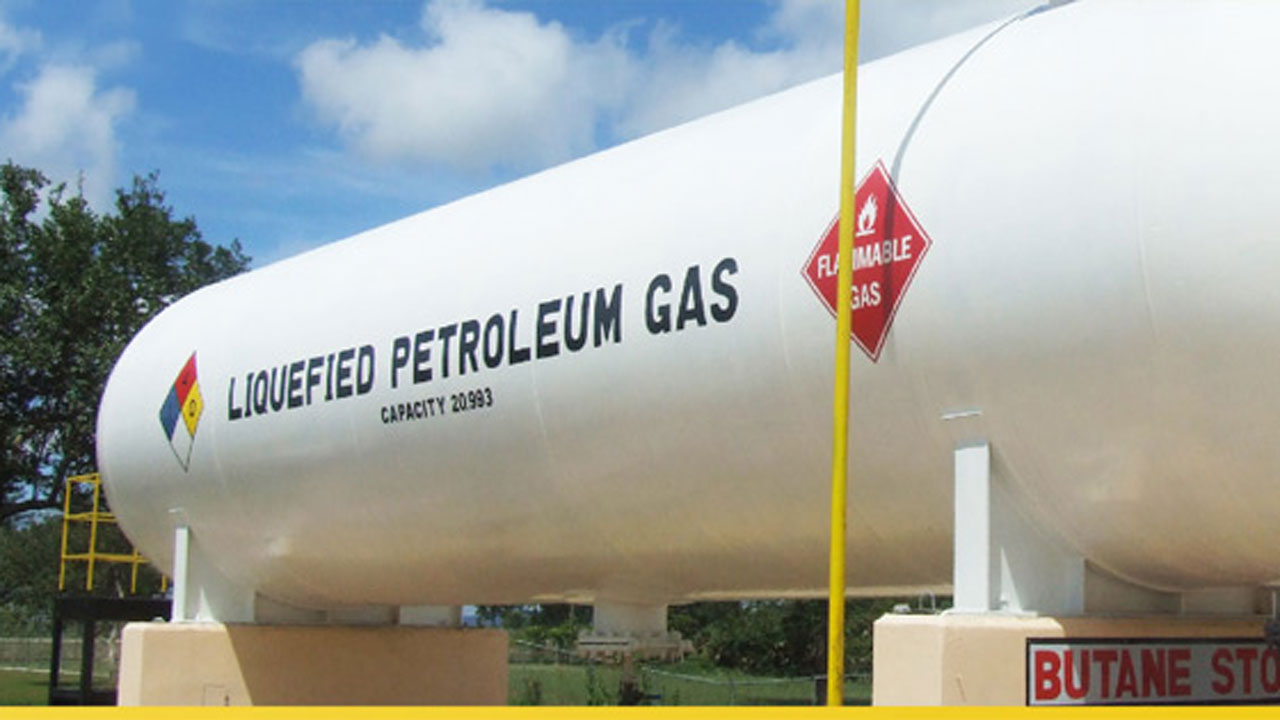
The supply of Liquefied Petroleum Gas (LPG), popularly known as cooking gas, rose by 24 per cent month-on-month to 5.1 metric tonnes per day in June 2026 from 4.1 metric tonnes per day recorded in May.
The latest figures were contained in the June 2026 fact sheet released by the Nigerian Midstream and Downstream Petroleum Regulatory Authority (NMDPRA).
According to the report, domestic consumption of the product declined by about 10 per cent to 4.1 metric tonnes per day in June, compared to 4.5 metric tonnes per day in the preceding month.
The increase in supply came as the ex-depot price of cooking gas dropped sharply by 28.4 per cent month-on-month to N20.4 million per 20 metric tonnes in July 2026 from N26.2 million in June.
The decline in wholesale prices has already filtered into the retail market, with checks at several accredited gas plants in Lagos showing that the price of one kilogramme of cooking gas currently ranges between N1,100 and N1,400, down from between N1,900 and N2,400 per kilogramme in June.
Commenting on the development, the National President of the Nigerian Association of Liquefied Petroleum Gas Marketers, Inyang Edu, said depot prices had fallen to N20.4 million from N22.2 million per 20 metric tonnes, leading to lower prices across gas plants nationwide.
Edu attributed the reduction to sustained engagements among the Federal Government, regulators and industry stakeholders, which resulted in the approval of supply margins for marketers and depot owners to import the product.
According to him, industry players had earlier raised concerns over the possibility of artificial scarcity in the market.
“Before now, we got an intel of possible artificial scarcity. Some marketers hoard their products and store them at their plants, while others gave excuses of selling to their clients.
This poses a risk of artificial scarcity because the business is dependent on demand and supply,” he said.
He explained that limited product availability often drives up demand and prices, adding that the intervention by government agencies helped to stabilise the market.
READ ALSO:NMDPRA hosts Tanzania’s EWURA delegation to deepen gas sector collaboration
“When there is limited supply of the product, the demand for it will be high, which results in scarcity. This was why we made noise to the Federal Government and its agencies.
Marketers now have an order to sell depending on their specific supply margin,” Edu added.
On product availability, the LPG marketers’ chief said supplies from Dangote Refinery and the Nigeria LNG Limited (NLNG) remained stable, while other suppliers were also expected to receive fresh consignments.
Edu expressed optimism that cooking gas prices would continue to decline in the coming weeks, noting that marketers would sustain engagements with the government and other stakeholders to ensure affordability for consumers.
The latest development is expected to provide relief for households and businesses that rely on cooking gas, amid broader efforts to deepen the adoption of cleaner energy sources across the country.