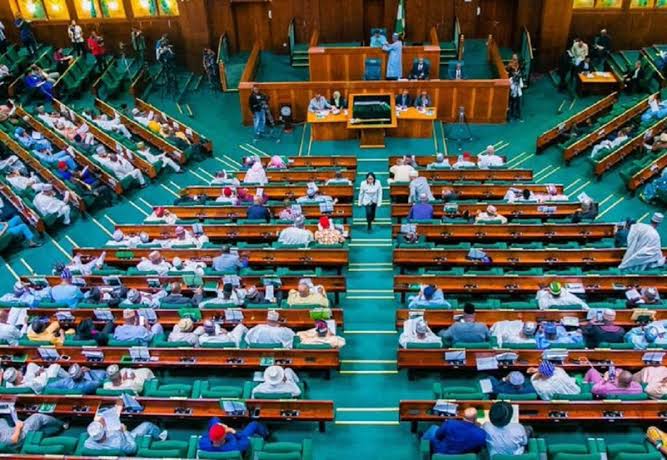
The House of Representatives has resolved to withdraw its earlier State Police Bill and adopt the executive proposal transmitted by President Bola Tinubu, marking a significant shift in the National Assembly’s ongoing constitutional amendment process aimed at restructuring Nigeria’s security architecture.
Speaker of the House, Tajudeen Abbas, announced the decision on Tuesday during the opening of the 2026 National Assembly Open Week in Abuja, describing the President’s proposal as “more robust and more comprehensive” than the version previously passed by the Green Chamber.
The decision effectively suspends plans to harmonise the House and Senate versions of the earlier proposal, with lawmakers now set to begin fresh legislative consideration of the executive bill.
Explaining the development, Abbas said the presidential proposal incorporated additional safeguards recommended by a committee established by President Tinubu and chaired by the Chief of Staff to the President and former Speaker of the House, Femi Gbajabiamila.
“The deeper lesson of Oyo is that a nation of this magnitude cannot be policed in perpetuity from a single command in Abuja. On this question, this House has already acted,” Abbas said.
“In the course of the constitutional reform ably led by our Deputy Speaker, this House passed a State Police Bill and placed the matter squarely before the nation.”
He disclosed that the executive bill represented the outcome of extensive deliberations by the presidential committee and reflected the administration’s commitment to addressing Nigeria’s worsening security challenges.
“His Excellency the President has now transmitted to the National Assembly an executive version of the State Police Bill, one that is more robust and more comprehensive than the version this House earlier passed,” he added.
Abbas assured Nigerians that the House would give the bill expedited consideration due to its urgency.
“The House will therefore recall the version it earlier passed and accord the executive bill the expedited consideration that a matter of this urgency deserves,” he stated.
The Speaker also dismissed concerns that the legislation was being rushed through the National Assembly without adequate public engagement, insisting that the bill would undergo extensive legislative scrutiny.
“To the thoughtful citizens and members who have observed that they are yet to see the draft bills and who fear that this matter is being settled beyond public view, I offer this reassurance: nothing here is concealed. The bill will pass through a public hearing and open scrutiny,” he said.
According to Abbas, the proposed legislation contains strong safeguards to prevent the abuse of state policing powers.
He said states seeking to establish police services would be required to meet strict constitutional conditions, while mechanisms would be put in place to guarantee accountability, protect fundamental rights and maintain a clear division of authority between federal and state institutions.
“There will be accountability, the protection of fundamental human rights, and firm boundaries between federal and state authority, so that no state police force may ever be reduced to the private instrument of a governor,” he said.
President Tinubu formally transmitted the Constitution of the Federal Republic of Nigeria (Alteration) (State Police) Bill, 2026, to the House of Representatives in a letter dated June 15, urging lawmakers to treat the proposal as a priority.
The President explained that the legislation seeks to create a constitutional framework for the establishment of state police services capable of complementing the Nigeria Police Force in tackling terrorism, banditry, kidnapping and other security threats.
“This bill builds on the significant work already done by the House of Representatives and incorporates additional safeguards to ensure that the creation of a dual policing structure can be achieved quickly and effectively for the benefit of all Nigerians,” Tinubu stated in the letter.
Prior to the executive intervention, both chambers of the National Assembly had separately advanced constitutional amendment bills proposing the establishment of state police.
The House proposal, championed by the Constitution Review Committee chaired by Deputy Speaker Benjamin Kalu, sought constitutional recognition for state police while retaining the Nigeria Police Force as the country’s federal policing institution.
Similarly, the Senate endorsed the concept of decentralised policing but proposed safeguards, including limits on the deployment of state police outside their jurisdictions, stronger oversight mechanisms and clear guidelines on recruitment, funding and operational accountability.
READ ALSO:Tinubu send amendment bill for State Police to N/Assembly
The executive bill is expected to consolidate these proposals while introducing additional constitutional safeguards recommended by the presidential committee.
The proposed legislation represents Nigeria’s most ambitious attempt to decentralise policing since the country returned to democratic rule in 1999.
Supporters of state police have argued that decentralised policing would strengthen intelligence gathering, improve response times and enhance community participation in security management.
Critics, however, have expressed concerns that state police could be abused by governors to intimidate political opponents and interfere in electoral processes if adequate constitutional protections are not entrenched.
Under Section 9 of the 1999 Constitution, the amendment must secure the support of two-thirds of members of both chambers of the National Assembly and subsequently be ratified by at least 24 of the 36 state Houses of Assembly before it can become law.
With the House now aligning with the executive proposal, attention is expected to shift to public hearings and stakeholder consultations as lawmakers commence deliberations on what could become the most far-reaching reform of Nigeria’s internal security system in more than two decades.