By Seun Ibiyemi
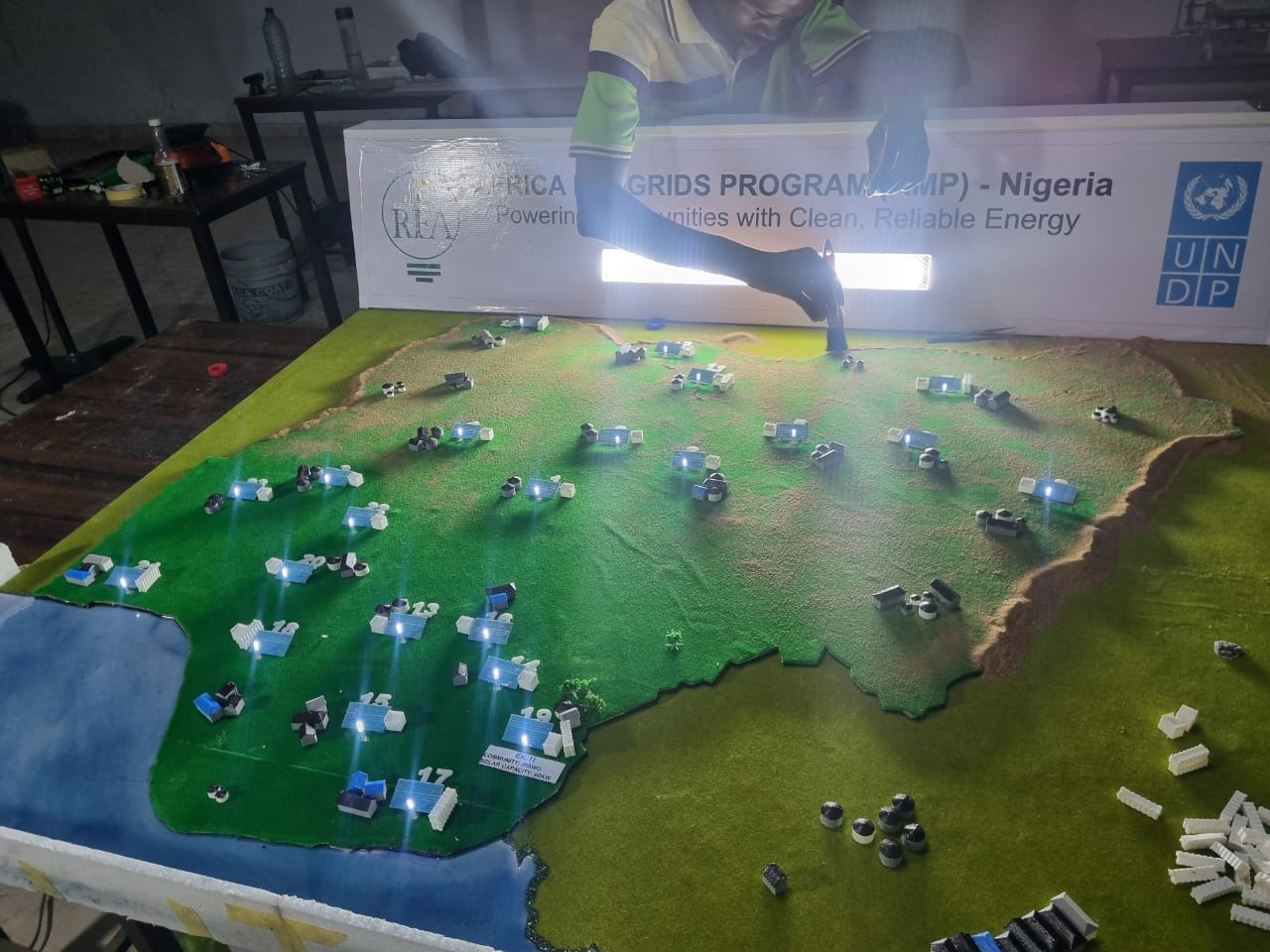
No fewer than 23 solar-powered mini-grids have been deployed across Nigeria to strengthen food security, improve agricultural productivity and drive economic development in underserved communities, the Minister of Power, Joseph Tegbe, has disclosed.
Speaking at the media launch of the Africa Mini-Grid Programme (AMP) in Abuja, Tegbe described the initiative as a major milestone in Nigeria’s drive towards achieving universal electricity access through renewable energy solutions.
He commended the partnership between the Rural Electrification Agency (REA), the United Nations Development Programme (UNDP) and the Global Environment Facility (GEF), describing it as a strong demonstration of collaboration, innovation and a shared commitment to expanding sustainable energy access across the country.
READ ALSO:You are measurably changing lives — Minister commends REA
According to the minister, the collaboration is accelerating Nigeria’s journey towards universal electricity access while supporting the Federal Government’s broader agenda of rural development and food security.
Tegbe said the Ministry of Power, under the leadership of President Bola Ahmed Tinubu, has deliberately prioritised innovative renewable energy solutions to electrify unserved and underserved communities, as well as critical agricultural clusters.
He noted that the Africa Mini-Grid Programme has gone beyond providing electricity infrastructure by transforming rural livelihoods, stimulating local economies and creating opportunities for sustainable development.
Also speaking, the Managing Director of the Rural Electrification Agency, Dr. Abba Aliyu, said the project’s ultimate objective is to deliver lasting structural economic benefits that strengthen Nigeria’s food systems.
Aliyu stressed that measuring energy access should no longer be limited to the number of households connected to electricity but should also reflect its impact on productivity and economic growth.
He observed that energy poverty and agricultural poverty have historically existed side by side, adding that the Africa Mini-Grid Programme is addressing both challenges simultaneously by integrating productive-use appliances into rural electrification projects.
According to him, the 23 solar-powered mini-grids have been deployed in previously underserved communities, enabling local rice processors to double their daily production while stimulating the growth of local supply chains.
READ ALSO:REA, Jigawa, NCX, Astound power Sign MoU to deliver 7MW for seven agro-industrial clusters
“Farmers can now process and preserve their produce on-site, which eliminates expensive logistics and prevents agricultural spoilage.
The steady electricity supply is also driving rural income diversification, providing extended operating hours for women entrepreneurs and local tech artisans whose businesses can now remain open long after sunset,” Aliyu said.
The programme is expected to further support Nigeria’s efforts to expand clean energy access, improve agricultural value chains and enhance food security through sustainable rural electrification