

By Seun Ibiyemi
The Inspector-General of Police, Olatunji Disu, has submitted a comprehensive framework for the establishment of state police to the Deputy Senate President, Jibrin Barau, as part of ongoing efforts to decentralise policing in Nigeria.
The framework was presented on Thursday at the National Assembly in Abuja. Barau, who also chairs the Senate Committee on the Review of the 1999 Constitution, received the document in his office.
According to a statement by Barau’s Special Adviser on Media and Publicity, Ismail Mudashir, the 75-page report was submitted on behalf of the IGP by Olu Ogunsakin, Chairman of the seven-man committee established to examine modalities for creating state police in the country.
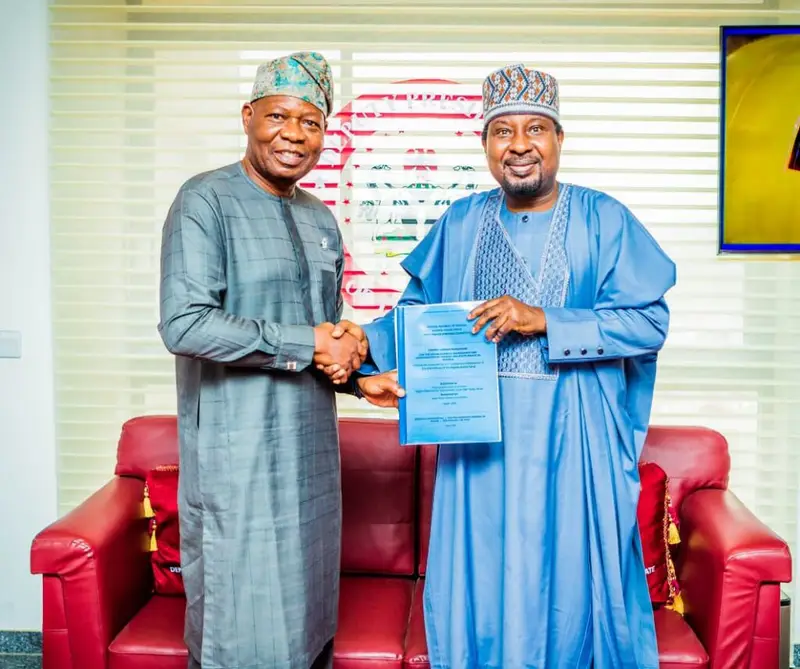
The document, titled “A Comprehensive Framework for the Establishment, Governance and Coordination of Federal and State Police,” outlines the proposed structure and operational guidelines for state policing.
Disu said the report reflects extensive consultations and careful assessment of the legal, operational, and administrative implications of instituting state police in Nigeria.
“The report covers the considered views, professional insights and strategic recommendations of the Force, derived from extensive consultations,” he said, expressing optimism that it would contribute meaningfully to ongoing constitutional review deliberations.
He noted that the submission represents the Nigeria Police Force’s official input to the Senate Committee reviewing the 1999 Constitution on the issue of state policing.
In his response, Barau commended the IGP for his proactive approach, noting that the move aligns with the security agenda of President Bola Tinubu.
Read also:Oyetola seeks stronger EU partnership to tackle maritime threats in Gulf of Guinea
He assured that the committee would thoroughly examine the framework alongside other memoranda submitted as part of efforts to amend the nation’s constitution and strengthen Nigeria’s security architecture.