
By Seun Ibiyemi
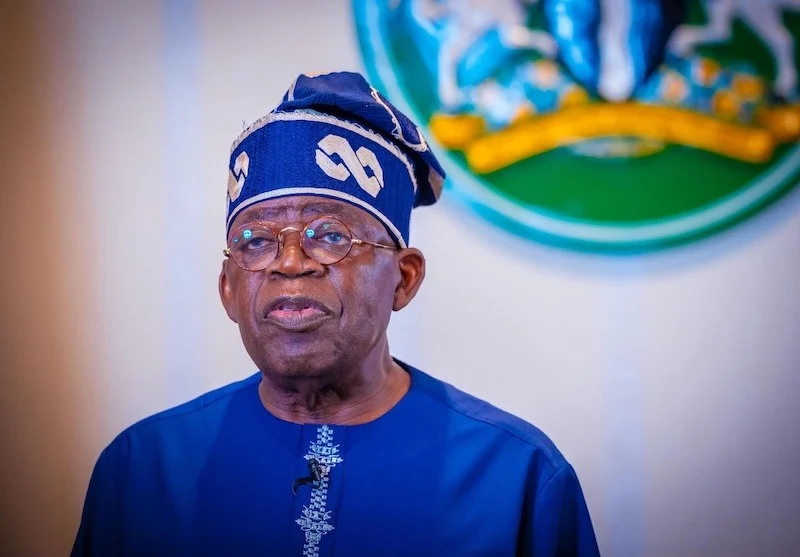
President Bola Tinubu has pledged to recruit 28,000 additional military personnel and 50,000 police officers as part of his administration’s proposed security reforms ahead of the 2027 general elections.
The commitments are contained in the All Progressives Congress (APC) 2027–2031 Presidential Election Manifesto, titled From Reform to Prosperity Agenda 2027–2031, which outlines the President’s development targets if re-elected for a second term.
The 109-page document also sets targets of six per cent annual economic growth, the construction of 200,000 affordable homes, expansion of electricity generation towards 10,000 megawatts and sustained reductions in inflation and food prices by 2031.
The APC leadership is scheduled to unveil the manifesto on Tuesday, November 10, 2026, at the Shehu Musa Yar’Adua Centre in Abuja, beginning at 11 am.
Under the security component, Tinubu promised to strengthen the Armed Forces and other security agencies through increased recruitment, specialised training, modern equipment, improved intelligence gathering and better welfare for personnel.
The President said the proposed measures would intensify efforts against terrorism, banditry, kidnapping and organised crime while improving the protection of lives, property and national borders.
According to the manifesto, the administration plans to recruit and train 28,000 additional military personnel already approved, while completing the establishment and equipping of four new Army divisions in Makurdi, Ilorin, Jalingo and Benin City.
It also pledged to train and deploy 50,000 newly recruited police officers and expand tactical training towards achieving a police-to-citizen ratio of 1:400.
The manifesto stated that the recruitment drive would be supported by intelligence-led military operations, specialised zonal counter-terrorism capabilities and stronger protection of schools, markets, places of worship and major transport corridors.
Tinubu also promised to strengthen surrender, rehabilitation and deradicalisation programmes, facilitate the resettlement of internally displaced persons and improve community-based peacebuilding initiatives.
On policing, the President proposed a nationwide reform programme involving digital record management systems, officers’ body cameras, geographic mapping tools, emergency response channels and modern forensic facilities.
The document further proposed recruiting 30,150 personnel into the Nigeria Security and Civil Defence Corps (NSCDC) to take over static security responsibilities from the police.
It added that the administration would work with federal and state lawmakers and governors to establish a legal framework for accountable state and community policing.
The APC manifesto also outlined plans to complete electronic surveillance coverage of mapped national borders, extend electronic gates and passenger-data systems to more entry points and strengthen intelligence-sharing among security agencies.
It disclosed that 31 of the 190 mapped border areas remained uncovered by electronic surveillance systems.
The administration also pledged to expand the deployment of Mining Marshals across identified mining sites, noting that more than 530 sites had been identified, with 420 already protected.
Other proposed measures include deploying trained Forest Guards and Agro-Rangers to protect agricultural communities, grazing routes, forest reserves and mineral deposits.
Tinubu also promised to strengthen the protection of critical national assets, including electricity grids, energy pipelines, railways, schools and healthcare facilities.
The manifesto further proposed expanding domestic production of ammunition, protective equipment, armoured vehicles and tactical drones through technology partnerships to strengthen Nigeria’s defence supply chains and create skilled employment opportunities.
The President also pledged to implement approved salary increases for security personnel, improve their housing and working conditions and fast-track insurance and pension payments to families of fallen officers.
Beyond security, the manifesto outlines an ambitious economic agenda targeting annual economic growth of six per cent by 2031, alongside efforts to halve youth unemployment and expand access to affordable credit.
The President said his second term would focus on translating the economic reforms and foundations established during his first tenure into tangible improvements in the living conditions of Nigerians.
Under the housing component, Tinubu promised to facilitate the construction of 200,000 affordable homes for Nigerian workers through the Tinubu Mass Social Housing Scheme, mortgage financing and partnerships with licensed private developers.
He said the initiative would expand access to decent housing for working households while strengthening regulations to protect property buyers.
The manifesto also promised to sustain a downward trajectory in inflation and food prices through increased domestic food production, improved storage and processing facilities and efforts to halve post-harvest losses.
It further outlined plans to improve the movement of goods across states by reducing transportation costs and strengthening logistics infrastructure.
In the power sector, Tinubu pledged to scale available electricity generation towards 10,000 megawatts by 2031 while extending metering towards full coverage and reinforcing transmission and distribution networks.
The administration also plans to expand clean energy access to underserved communities to improve electricity supply for households, businesses and industries.
READ ALSO:2027 elections: INEC removes 1.6m invalid voter records
The manifesto further outlines plans to recruit and train 20,000 additional teachers, halve the number of out-of-school children and improve school completion rates.
Building on the 80,284 teachers already certified and licensed, the administration said recruitment would prioritise female educators and underserved rural communities.
It also promised to strengthen foundational learning, science, technology, engineering, mathematics and digital education, while expanding technical and vocational training programmes.
On healthcare, Tinubu pledged to increase the proportion of functional primary healthcare centres nationwide from the current 53 per cent to 90 per cent by 2031.
The administration also plans to expand active health insurance coverage from more than 23 million enrollees to 40 per cent of Nigerians and reduce out-of-pocket spending from 71 per cent to below 50 per cent of total health expenditure.
Other healthcare commitments include completing the revitalisation of about 1,000 remaining primary healthcare centres, expanding free emergency obstetric care across all 774 local government areas and improving electricity access in healthcare facilities through solar installations.
The manifesto also promises to improve the recruitment, training and welfare of healthcare workers, increase local production of essential medicines to 50 per cent by 2031 through BioVaccines Nigeria and complete cancer treatment centres across the six geopolitical zones.
Additionally, Tinubu pledged to complete the National Health Information Exchange to enable portable electronic medical records by 2031 and expand Emergency Operations Centre coverage across all states.
On governance, the President promised to strengthen accountability by extending digital case management systems to magistrate courts, tracking public service delivery and ensuring local governments receive their constitutional allocations under clear performance standards.
The manifesto also proposed enrolling 95 per cent of Nigerians in the National Identity Database, alongside modernisation of fire stations, stronger maritime surveillance and improved cybersecurity.
Tinubu further pledged to expand the Mandatory School Sports Programme and the National Sports and Education Excellence Programme nationwide, building on an ongoing pilot involving 61 schools, 3,500 teachers and 15 trained students.
The APC said the proposed programmes and targets were designed to consolidate the administration’s ongoing reforms and deliver measurable improvements in security, economic prosperity, infrastructure, education and healthcare between 2027 and 2031.

One thought on “Tinubu pledges to recruit 78,000 security personnel, targets 10,000MW power by 2031”