By Seun Ibiyemi
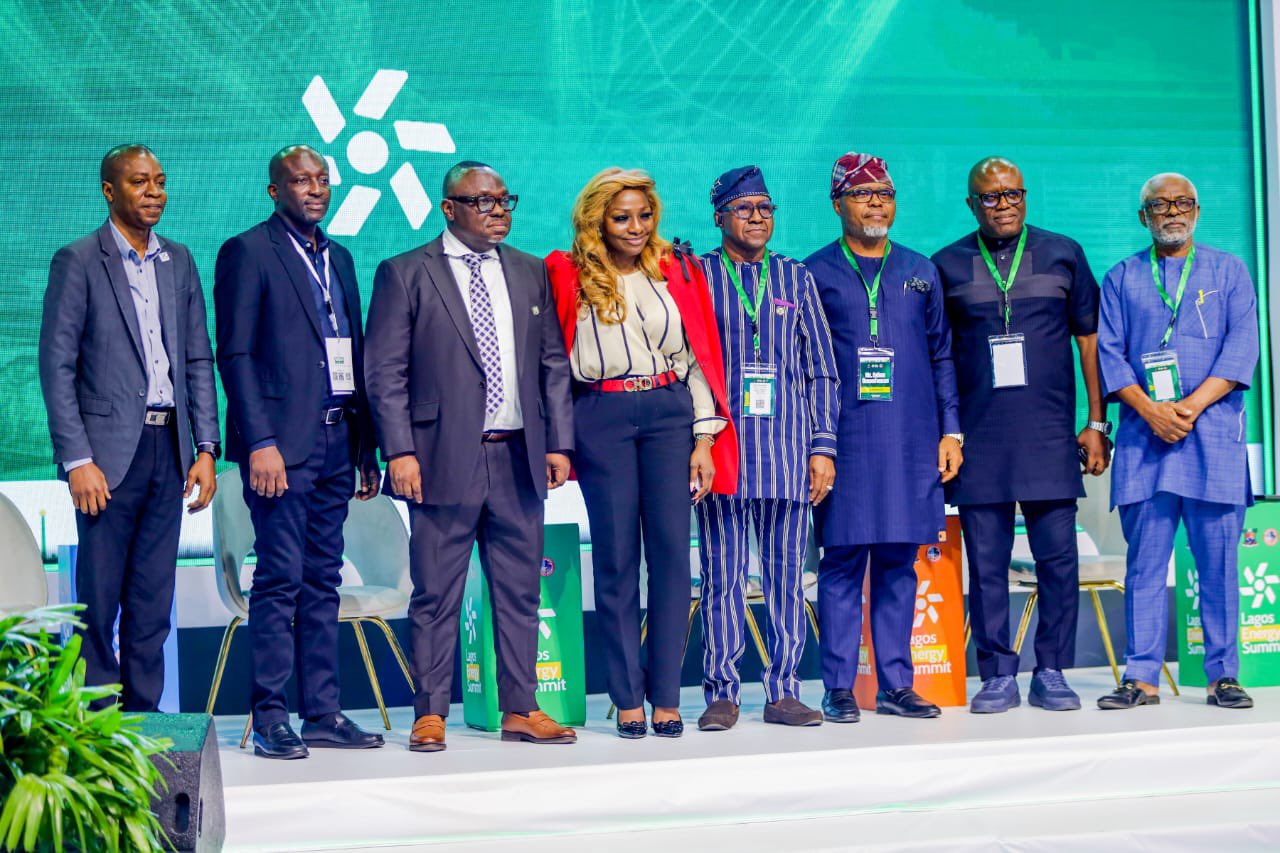
The Lagos State Government has reaffirmed its commitment to building a reliable, affordable and sustainable electricity market as government officials, regulators, industry leaders and investors gathered at the Lagos Energy Summit 2026 to explore practical strategies for achieving a 24-hour electricity economy.
The two-day summit, held at the Landmark Event Centre, Lagos, under the theme, “Lagos Energy Evolution – Transforming the Future,” brought together stakeholders across the electricity value chain to discuss investment opportunities, regulatory reforms, infrastructure development and innovative solutions to the state’s growing energy needs.
Speaking at the opening session, Lagos State Commissioner for Energy and Mineral Resources, Biodun Ogunleye, described electricity as a critical foundation for economic competitiveness, industrialisation and sustainable development.
He urged participants to move beyond discussions and establish practical partnerships, clear responsibilities and measurable targets that would translate into improved electricity supply across the state.
Highlighting Lagos’ energy requirements, Ogunleye said the state needs approximately 12,000 megawatts of electricity, while supply from the national grid remains significantly below demand.
He also drew attention to the Beyond Gensets study, which identifies substantial commercial and investment opportunities in Lagos’ existing off-grid electricity generation market.
The commissioner outlined the state’s Seven-Point Energy Agenda, which focuses on federal-state regulatory cooperation, electricity market sustainability, wheeling and off-grid generation frameworks, embedded generation, distribution infrastructure and metering expansion, effective subnational regulation and the deployment of modern technology.
Representing the Minister of Power, Chief Joseph Olasunkanmi Tegbe, the Special Adviser on Finance, Taiwo Ajetunmobi, highlighted the Federal Government’s priorities, including stabilising electricity supply, improving liquidity in the power sector, optimising existing infrastructure and expanding the national grid to meet rising demand.
Similarly, a representative of the Special Adviser on Power to the President, Engr. Achinaya, stressed the need for stronger collaboration between the Federal Government and subnational governments to advance electricity reforms and deliver sustainable power solutions.
He said coordinated interventions and strategic partnerships would be essential to achieving the country’s electricity objectives.
The Chairman of the Lagos State House of Assembly Committee on Energy and Mineral Resources, Hon. Sabur Akanbi Oluwa, also reaffirmed the legislature’s readiness to support policies and initiatives aimed at providing reliable, affordable and sustainable electricity for residents and businesses.
On the role of gas in the electricity market, Engr. Alonge Longe, representing Seplat Energy Chief Executive Officer, Engr. Effiong Udofia Okon, highlighted the importance of gas-to-power in supporting industrial development, manufacturing and critical infrastructure.
He advocated energy solutions that take into account customer needs, long-term costs and operational sustainability.
READ ALSO:Opeifa urges young biomedical scholars to embrace research, AI, homegrown innovation
Technical and plenary sessions at the summit examined major challenges confronting the electricity market, including sustainable metering, reduction of distribution losses, investment financing, accurate billing, customer confidence and infrastructure development.
A dedicated session on urban mobility also explored opportunities in Compressed Natural Gas (CNG) conversion, electric vehicle adoption, affordable financing and the development of supporting infrastructure.
The summit clarified that Lagos State is not disconnecting from the national grid but is strengthening its local electricity networks and exploring diversified supply arrangements to improve energy security and system resilience.
The Lagos State Electricity Regulatory Commission (LASERC), established under the Lagos State Electricity Law 2024, was identified as central to the development of the state’s electricity market through regulatory oversight, consumer protection and the promotion of a transparent and sustainable operating environment.
Another highlight was the Lagos Cleaner Energy Schools Innovation Challenge (LCESIC) 2026, which featured students from 15 secondary schools presenting innovative ideas to promote cleaner energy solutions.
As the summit moves into its second day, stakeholders are expected to continue discussions on project financing, gas pricing, infrastructure development and practical strategies for expanding reliable electricity supply across Lagos.
The discussions underscored the need for institutional collaboration, effective regulation, sustained investment and shared responsibility to achieve a 24-hour electricity economy.
For Lagos, the energy transition goes beyond increasing electricity supply to building a resilient power market capable of supporting businesses, empowering communities and driving sustainable economic growth.