
By Seun Ibiyemi
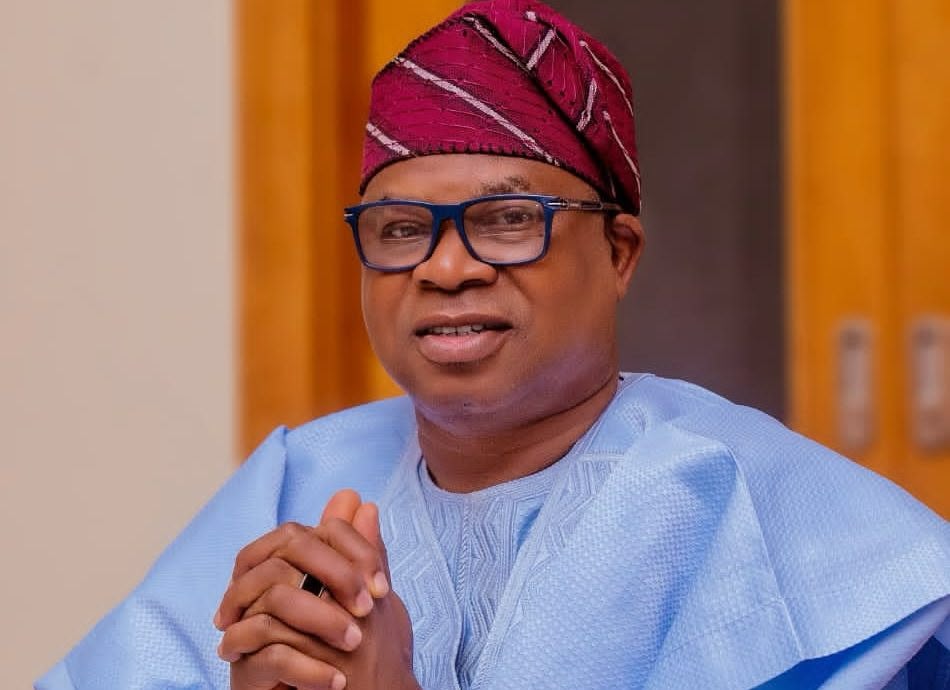
The Minister of Marine and Blue Economy, Adegboyega Oyetola, has secured a $200 million commitment from the World Bank Group to boost fisheries and aquaculture production as part of efforts to address Nigeria’s fish supply deficit and reduce dependence on imports.
The funding, which will be made available to state governments as concessional loans, is expected to strengthen investment in fisheries and aquaculture, expand domestic production and improve national food security.
Oyetola’s initiative also seeks to deepen collaboration between federal and state governments, investors and development partners to reposition Nigeria as a fish-sufficient nation.
The minister’s position was conveyed by the Senior Special Assistant to the President on Marine and Blue Economy, Professor Busayo Fakinlede, who represented him at a high-level executive training on Aquaculture Investment Guide organised by the Federal Ministry of Marine and Blue Economy in collaboration with the World Bank Group in Abuja.
The training brought together policymakers and technical officials, including commissioners from Rivers, Bayelsa, Delta and Cross River states, as well as permanent secretaries and directors of fisheries and aquaculture from across the country.
It was designed to equip state-level decision-makers with the knowledge required to develop bankable aquaculture projects, with emphasis on viable business models, risk management, environmental and social safeguards, and public-private partnerships.
Speaking through his representative, Oyetola said achieving fish sufficiency would require deliberate participation by state governments, stressing that sub-national authorities must take greater responsibility for expanding domestic production.
“Fish is a pillar of food security, household nutrition and rural livelihoods. No nation can call itself food secure while it imports most of the fish it eats. Our ambition is to produce more, import less and, in time, become a net exporter. That ambition can be achieved only when every state plays its part,” he said.
Nigeria requires approximately 3.6 million tonnes of fish annually but produces only about 1.4 million tonnes, leaving a supply gap of more than 2.2 million tonnes.
The deficit is largely covered through imports, which cost the country close to $1 billion annually in foreign exchange.
To address the challenge, the ministry is pursuing a state-driven aquaculture development framework under which each state is expected to identify priority value chains, assess investment readiness, develop bankable projects and establish measurable production targets.
The $200 million World Bank financing is expected to support states in implementing these priorities, expanding production capacity and accelerating Nigeria’s drive towards fish sufficiency.
The ministry is also working towards establishing a Federal-State platform to coordinate an inclusive national fish security strategy and ensure that government targets translate into measurable production and investment outcomes.
READ ALSO:Tinubu targets December 3 inauguration for Kaduna-Kano railway, project hits 90% completion
Oyetola commended the World Bank Group for its partnership and sustained support for Nigeria’s marine and blue economy, particularly in analytical studies, cluster-based development, capacity building and the Aquaculture Investment Guide.
He also pledged to oversee a post-training stakeholders’ roundtable to strengthen engagement with state governments and other industry players, improve implementation arrangements and translate the initiative into tangible investments.
Earlier, Fakinlede attributed the ministry’s progress to Oyetola’s leadership, highlighting the inauguration of the Technical Committee on Accelerating Fish Production in August 2026, the digitisation of fish import licensing and the increase in national fish production from 1.1 million tonnes to 1.4 million tonnes.
He also cited Nigeria’s attainment of US shrimp-export certification through compliance with Turtle Excluder Device requirements and the development of the Fish City and Fish Terminal investment portfolio to attract private-sector investment.
Fakinlede said the combined efforts of government and private-sector stakeholders would help close the country’s fish supply deficit, create jobs, increase household incomes and strengthen Nigeria’s position in the global fisheries market.